

Poland has extended restrictions on applications for international protection at its border with Belarus for another 60 days, continuing one of the country’s most significant and contested responses to migration pressure on its eastern frontier.
The latest period began on 18 September and applies along the entire Polish-Belarusian border. A regulation signed by Prime Minister Donald Tusk’s government on 15 September states explicitly that the restriction is extended for 60 days from that date. It was published in the Dziennik Ustaw, Poland’s official Journal of Laws, on 16 September.
The mechanism was first introduced on 27 March 2025 and has since been repeatedly renewed. The September decision is the ninth extension of the original measure.
- Find more news from Poland on our Homepage .
Under Polish law, each extension may last no longer than 60 days and requires the consent of the Sejm, the lower house of parliament.
MPs approved the latest government request on 4 September by 418 votes to 16, with four abstentions.
What the restriction actually does
The legislation does not abolish Poland’s asylum system nationwide.
Instead, it allows the government temporarily to restrict the right to lodge an application for international protection on a specified section of the state border when several statutory conditions are met.
Those include what Polish law calls the “instrumentalisation” of migration, a serious and genuine threat to national or public security, and a finding that the restriction is necessary because other measures would not sufficiently remove that threat.
While the restriction applies, Border Guard officers generally do not accept applications for international protection from people covered by the measure on the Belarusian frontier.
There are, however, statutory exceptions.
Applications can still be accepted from unaccompanied minors, pregnant women and people requiring special treatment because of factors such as age or health. The law also provides exceptions for people whom Border Guard officers assess as facing a real risk of serious harm in the country from which they directly entered Poland, and for citizens of the state considered responsible for instrumentalising migration — in this case Belarus.
The exceptions may themselves be withheld in certain circumstances involving violent attempts to cross the border.
Government says pressure has fallen but not disappeared
The government argues that the restrictions remain necessary despite a sharp decline in recorded attempts to cross directly from Belarus.
Figures presented to parliament showed 377 attempted irregular crossings of the Polish-Belarusian border between 1 January and 16 August 2026, compared with 21,937 during the comparable period a year earlier.
Since the restriction was introduced in March 2025 and up to 16 August this year, applications were not accepted from 492 foreigners, while applications from 178 people falling within vulnerable categories were accepted, according to figures cited from the government submission to parliament.
The Border Guard separately said earlier this month that more than 410 attempted irregular entries had been recorded in 2026 in the area covered by its Podlaskie branch, including more than 50 attempts over several days around Narewka.
Warsaw maintains that Belarusian authorities have deliberately facilitated migration towards the EU’s external frontier as part of broader pressure against Poland and neighbouring states.
The government describes the border situation as a security issue rather than solely a migration-management problem and argues that limiting access to the asylum procedure has reduced the incentive to use the Belarus route.
Parliament gives overwhelming approval
The latest extension attracted support from a large majority of MPs across several political groups.
The Sejm vote produced 418 votes in favour, including support from MPs in Civic Coalition, Law and Justice, PSL, Confederation and other groups. Sixteen MPs voted against the extension.
You May Also Be Interested In

The debate nevertheless included questions about whether such an exceptional measure should continue to be renewed given the dramatic reduction in crossings.
Opponents and sceptical MPs asked the government what measurable conditions would eventually lead to the restriction being lifted and how authorities would ensure that people genuinely requiring protection retained access to the asylum procedure.
Deputy Interior Minister Maciej Duszczyk told the Sejm that the government wanted the measure extended for another 60 days and indicated that future legislative changes could address the need to return to parliament repeatedly for short extensions.
Legal concerns remain
The policy has also drawn criticism from international human-rights institutions.
Before the legislation was adopted in 2025, UNHCR — the UN Refugee Agency — said the proposed restriction, in the form then before parliament, would conflict with the 1951 Refugee Convention and other obligations under international and EU law.
UNHCR acknowledged the security and geopolitical challenges Poland faces on its border with Belarus but argued that access to protection must still be preserved.
The Council of Europe Commissioner for Human Rights has also raised concerns about whether the restrictions adequately protect the principle of non-refoulement, which prohibits returning people to a country where they face a real risk of torture or inhuman or degrading treatment.
In April 2026, Commissioner Michael O’Flaherty again questioned aspects of Poland’s application of the legislation and stressed that removals require an individual assessment of the risks faced by the person concerned.
The Polish government, meanwhile, maintains that the law contains safeguards for vulnerable people and individuals facing a demonstrable risk of serious harm.
Part of a wider border-security system
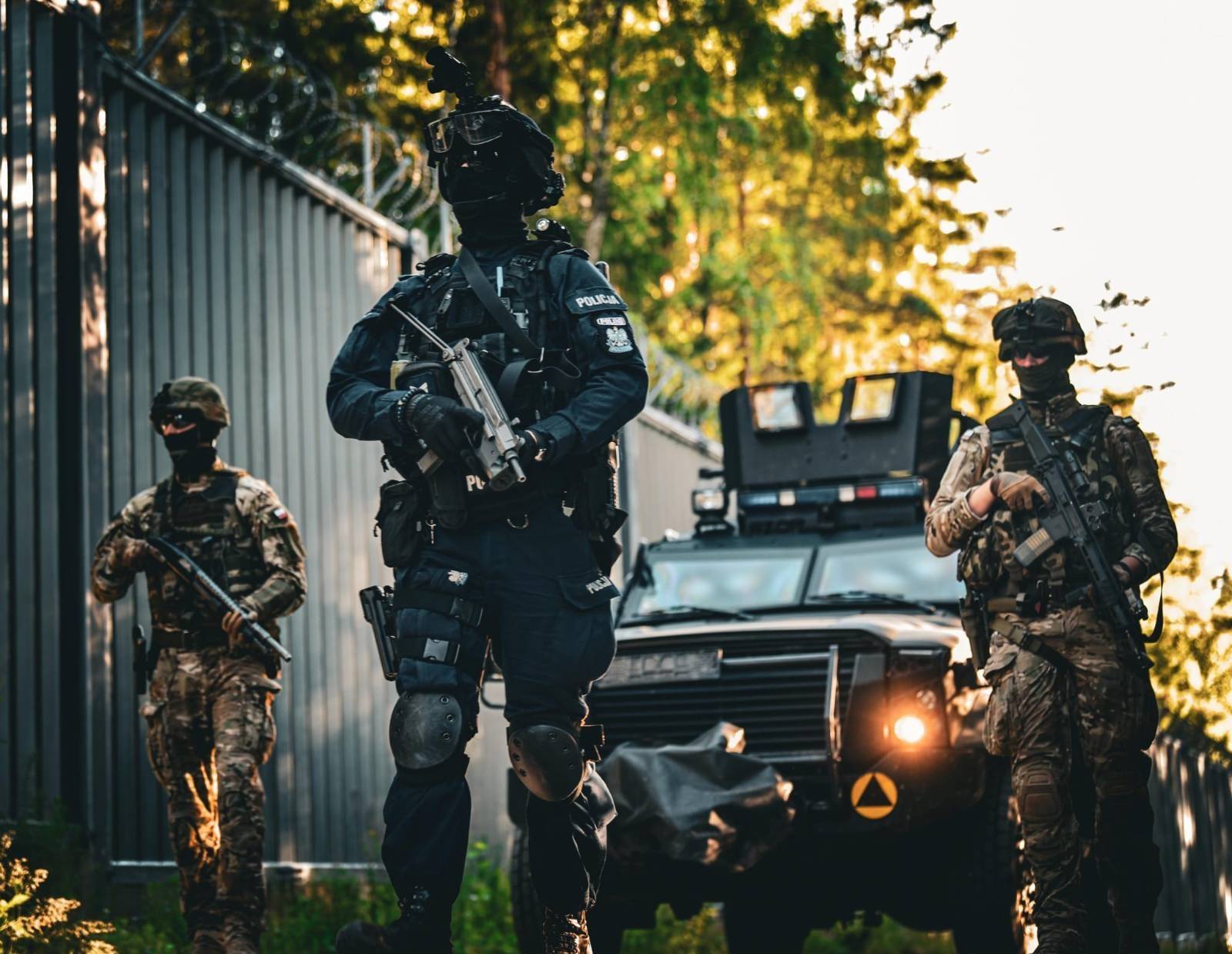
The asylum restriction is only one part of Poland’s increasingly extensive security system along its eastern frontier.
The government has spent almost PLN 3 billion strengthening border infrastructure, including the physical barrier, electronic surveillance, observation towers, additional access roads and drone-detection systems.
A separate buffer zone limiting access to parts of the border area was extended from 1 September until 29 November 2026.
Those measures reflect Poland’s view that developments at the Belarusian border form part of a wider security confrontation involving Minsk and Moscow.
The latest asylum regulation does not make the restriction permanent. Under the present legal framework, if the government wants it to remain in force after the new 60-day period expires, it will once again have to demonstrate that the statutory conditions continue to apply and obtain parliamentary consent for another extension.