Poland is preparing new restrictions on flights near its eastern border to help military pilots identify and respond to aerial threats, Deputy Defence Minister Cezary Tomczyk announced on Wednesday, 25 November. The proposed no-fly zone would extend up to several dozen kilometres into Polish territory, with the government hoping to introduce the necessary regulations by late December 2026 or early January 2027.
The announcement follows a series of Russian airspace violations that have intensified concerns about Poland’s ability to intercept missiles and drones approaching from the direction of Ukraine.
Tomczyk said the new arrangements would support military operations by establishing an area in which unauthorised aircraft could be more readily identified as potential threats.
- Find more news from Poland on our Homepage .
Speaking at a press briefing, the deputy minister described a relatively narrow zone extending approximately a dozen to several dozen kilometres inland from the country’s eastern border.
As Reuters reported, Tomczyk also said Poland would encourage other NATO members along the alliance’s eastern flank to consider comparable measures.
The precise boundaries, altitude limits and exemptions under the proposed regulation have not yet been publicly established.
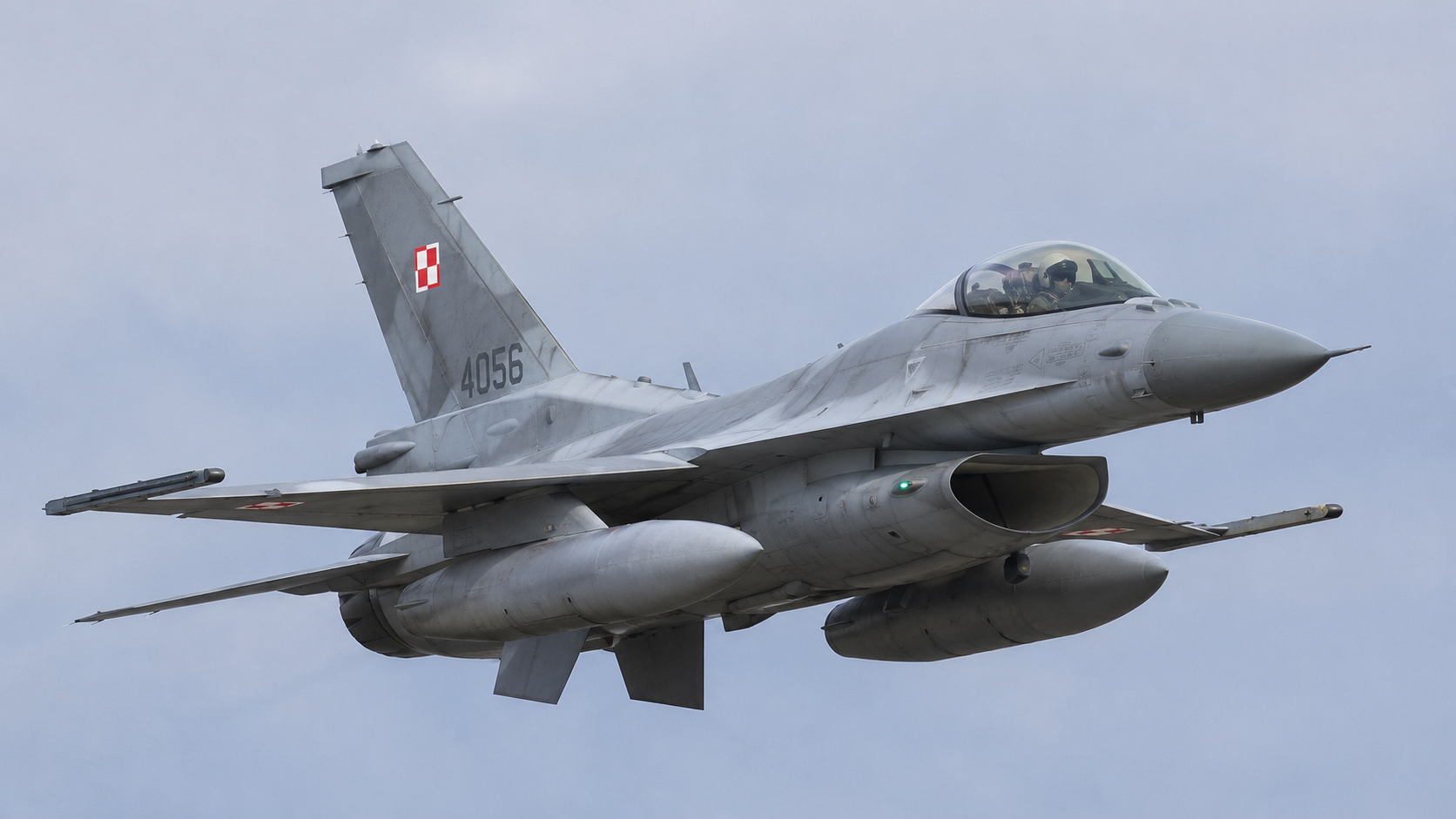
New restrictions intended to help Polish fighter pilots
The proposed zone is intended to give the military an additional means of assessing unidentified aircraft entering Polish airspace.
According to Tomczyk’s explanation reported by Polish Radio 24, Poland has already introduced procedures for what officials describe as positive identification.
These involve assessing several pieces of information before deciding whether an approaching object represents a threat.
Relevant information can include radar observations, intelligence from allied forces, the object’s altitude and speed, and the direction from which it is travelling.
A designated no-fly zone would provide another factor for military personnel to consider.
For example, an unidentified object entering Polish airspace from Ukraine and continuing into a prohibited area could raise additional concerns, particularly if its flight characteristics were consistent with a missile or hostile drone.
However, Tomczyk did not suggest that entering the zone would automatically result in an aircraft being shot down.
Military personnel would still need to assess the object’s identity and the circumstances of the potential threat before taking action.
The distinction is particularly significant following questions about why Polish and allied aircraft have not intercepted every object entering Polish territory during Russian attacks on Ukraine.
Three Russian missiles entered Poland on 20 November
The proposal follows the discovery of wreckage from three Russian Kh-101 cruise missiles that entered Poland during a large-scale attack on Ukraine on Friday, 20 November.
In its official findings published on 22 November, the Lublin Regional Prosecutor’s Office said preliminary examinations had identified Kh-101 missile fragments at three locations in south-eastern Poland.
The debris was recovered near Nowy Lipowiec, Rudnik nad Sanem and Mołodycz.
As Poland-24 previously reported, a Swedish Gripen fighter operating under NATO command had received conditional authorisation to engage a suspected Russian missile during the incident.
However, poor weather prevented the pilot from identifying the object with sufficient certainty to open fire, according to Poland’s operational military commander, Lieutenant General Ireneusz Nowak.


The incident illustrated the challenges involved in distinguishing hostile objects from other aircraft before authorising the use of force.
The circumstances in which the three Russian missiles entered Poland, including whether they were deliberately directed towards Polish territory, remain under investigation.
Poland already has restricted airspace along its eastern border
The latest announcement does not mean Poland is introducing flight restrictions in the area for the first time.
A temporary restricted-airspace zone, designated EP R134, has been operating along Poland’s borders with Ukraine and Belarus since 10 September 2026.
Under the existing published aviation restrictions, the zone extends from ground level to approximately three kilometres in altitude.
It imposes extensive restrictions on civilian aviation, including a general prohibition on flights between sunset and sunrise, subject to specified exceptions.
During daylight hours, certain flights are permitted under defined conditions, including requirements relating to flight plans, transponders and communication with air traffic services.
Aircraft operating above the restricted altitude, including commercial passenger flights at normal cruising levels, are not affected by those particular restrictions.
The existing arrangements are currently scheduled to remain in force until 9 December 2026.
Tomczyk’s latest proposal is therefore best understood as a further development of Poland’s eastern-border airspace controls, rather than the creation of an entirely new system of restrictions.
The government has not yet explained in full how the planned regulations would differ from or replace the existing measures.
Poland wants similar measures across NATO’s eastern flank
Tomczyk also called for comparable restrictions to be considered by other NATO countries bordering areas affected by the war in Ukraine.
Such arrangements could help national air forces identify potential threats approaching the alliance’s eastern borders.
However, any corresponding measures in neighbouring countries would depend on decisions by their respective authorities.
The proposal is also distinct from the wider debate over whether NATO aircraft should intercept Russian missiles while they are still flying over Ukraine.
That issue has resurfaced following the recent incursions into Poland.
As Poland-24 reported earlier, Foreign Minister Radosław Sikorski has argued that intercepting Russian missiles approaching Polish territory could constitute an act of self-defence under certain circumstances.
Tomczyk, however, said on Wednesday that he could not confirm reports of a new Polish request to NATO concerning missile interceptions over Ukraine.
He also indicated that the alliance had previously been unwilling to approve such operations, citing the complications they could create.
A Polish no-fly zone within national territory would not, by itself, authorise military operations in Ukrainian airspace.
When could the new zone take effect?
Tomczyk said the government wanted the relevant regulation to come into force towards the end of December or at the beginning of January.
That remains a government target, rather than a confirmed implementation date.
The final geographical scope and operational rules will depend on the regulations ultimately adopted.
For now, the announcement signals Poland’s intention to strengthen the procedures available to its armed forces as they confront the continuing risk of missiles and drones crossing into NATO airspace.