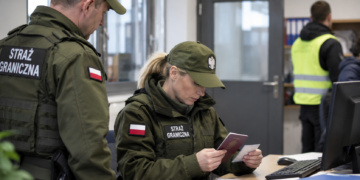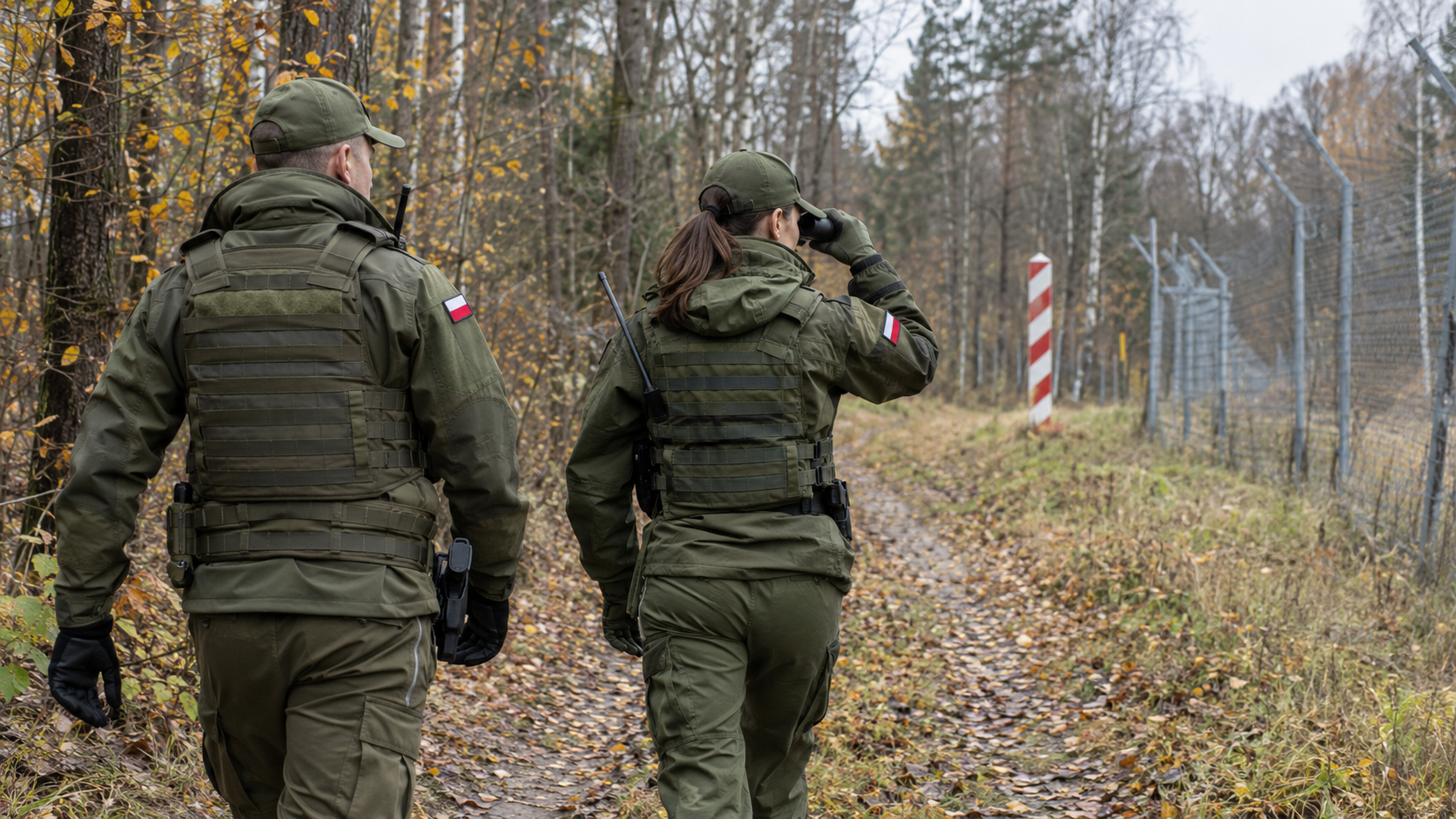
Poland deployed 12 Border Guard officers to Latvia on 9 November 2026 to help protect the country’s border with Belarus, continuing a bilateral security operation aimed at strengthening the European Union’s external frontier. The deployment is the second Polish contingent assigned to Latvia under a recently signed border-security agreement.
The officers were drawn from Poland’s Podlaskie Border Guard unit, which is responsible for a substantial section of the country’s own border with Belarus.
According to the Podlaskie Border Guard’s official announcement, the group departed on 9 November for a planned two-week assignment supporting the Latvian State Border Guard.
- Find more news from Poland on our Homepage .
Their duties were expected to focus primarily on protecting the Latvian-Belarusian border and sharing operational experience with Latvian officers.
Before their departure, the group met Brigadier General Sławomir Klekotka, commander of Poland’s Podlaskie Border Guard unit.
Second Polish deployment to Latvia
The deployment follows an earlier mission involving another 12 Polish officers.
That first contingent operated in Latvia between 19 October and 1 November, assisting with border protection, countering irregular migration and addressing cross-border crime.
In its report on the completed mission, the Polish Border Guard said Latvian authorities had positively assessed the officers’ professionalism and contribution.
Poland’s Border Guard commander, Major General Robert Bagan, also visited the personnel in Latvia on 30 October, accompanied by his deputy, Brigadier General Grzegorz Niemiec.
The second contingent represents a continuation of the same co-operation arrangement rather than an emergency deployment following a specific newly reported border incident.
Poland and Latvia sign border-security agreement
The missions are being conducted under a bilateral agreement signed on 2 October 2026 between the commanders of the Polish and Latvian border services.
The Latvian State Border Guard confirmed the agreement, saying it was intended to improve co-operation on border security, public safety, unlawful migration and cross-border crime.
The agreement allows both countries to exchange information and provide personnel or equipment to support operations in each other’s territory.
It also provides for joint activities involving border surveillance and responses to potential hybrid security threats.
The arrangement has no fixed expiry date, with both sides agreeing to review its effectiveness at least every four years.
Latvia faces continued migration pressure
Like Poland and Lithuania, Latvia shares a border with Belarus and has reported sustained attempts to cross into the European Union outside authorised crossing points.
According to figures published by Latvia’s State Border Guard on 20 November, authorities had recorded 13,021 instances of people being prevented from crossing the Latvian-Belarusian border unlawfully since the beginning of 2026.
The figures reflect Latvia’s reported border-enforcement activity and should not be interpreted as a count of unique individuals.
Latvia has also maintained a reinforced security operation along its eastern frontier, involving border guards, police and the armed forces.
The government has linked the operation to concerns about irregular migration being used as an instrument of pressure from Belarus.

Poland has faced comparable challenges along its own border with Belarus, giving its Border Guard officers experience relevant to Latvia’s security operations.
Strengthening the EU’s eastern frontier
The Polish deployment illustrates growing co-operation between EU member states facing similar border-security challenges.
Rather than concentrating exclusively on its own frontier, Poland is providing personnel and operational expertise to support another member state’s border service.
The latest group was scheduled to spend two weeks in Latvia, with the mission focused on border protection and assistance to Latvian counterparts.
The Polish announcement did not specify how many patrols the officers would conduct or whether they would participate in particular interceptions.
No independently confirmed operational results from the second deployment were available at the time of this report.