

Poland’s government has approved a PLN 102.4 billion ($26 billion) civil-defence and population-protection programme for 2027–2031, committing five years of funding to shelters, emergency infrastructure, warning systems, rescue equipment and secure communications as the country expands its preparations beyond military defence to protecting civilians during war and other major crises.
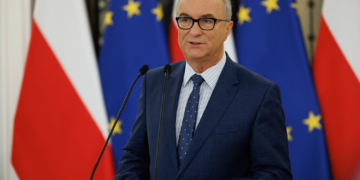
Prime Minister Donald Tusk announced the figure ahead of Tuesday’s cabinet meeting, and the government subsequently confirmed that the Council of Ministers had adopted the programme. “This is five years of guaranteed funding for civil defence,” Tusk said, adding that approximately PLN 30 billion of the total would go to Poland’s regions and local authorities through provincial governors.
The programme will run from 1 January 2027 until 31 December 2031. It replaces the current two-year civil-defence programme covering 2025 and 2026, under which the government allocated almost PLN 34 billion. The new PLN 102.4 billion package is therefore a continuation and expansion of an existing system rather than an entirely new funding stream created from scratch.
- Find more news from Poland on our Homepage .
Its scale nevertheless represents a significant increase in Poland’s long-term civilian-resilience planning. The current programme averages roughly PLN 17 billion a year, while the new five-year package averages about PLN 20.5 billion annually.
An updated Interior Ministry draft published shortly before the cabinet decision put the programme’s five-year value at approximately PLN 102.39 billion. The draft projected spending of about PLN 19.11 billion in 2027, PLN 19.67 billion in 2028, PLN 20.45 billion in 2029, PLN 21.22 billion in 2030 and PLN 21.94 billion in 2031. Those annual amounts remain planning estimates and can be affected by future budgets and GDP assumptions.
The final overall figure is also slightly below an earlier Interior Ministry proposal. In June, the ministry said the programme was expected to be worth at least PLN 105 billion, while explicitly warning that its final shape and funding could change before approval. Tuesday’s PLN 102.4 billion total reflects the later version considered by the government.
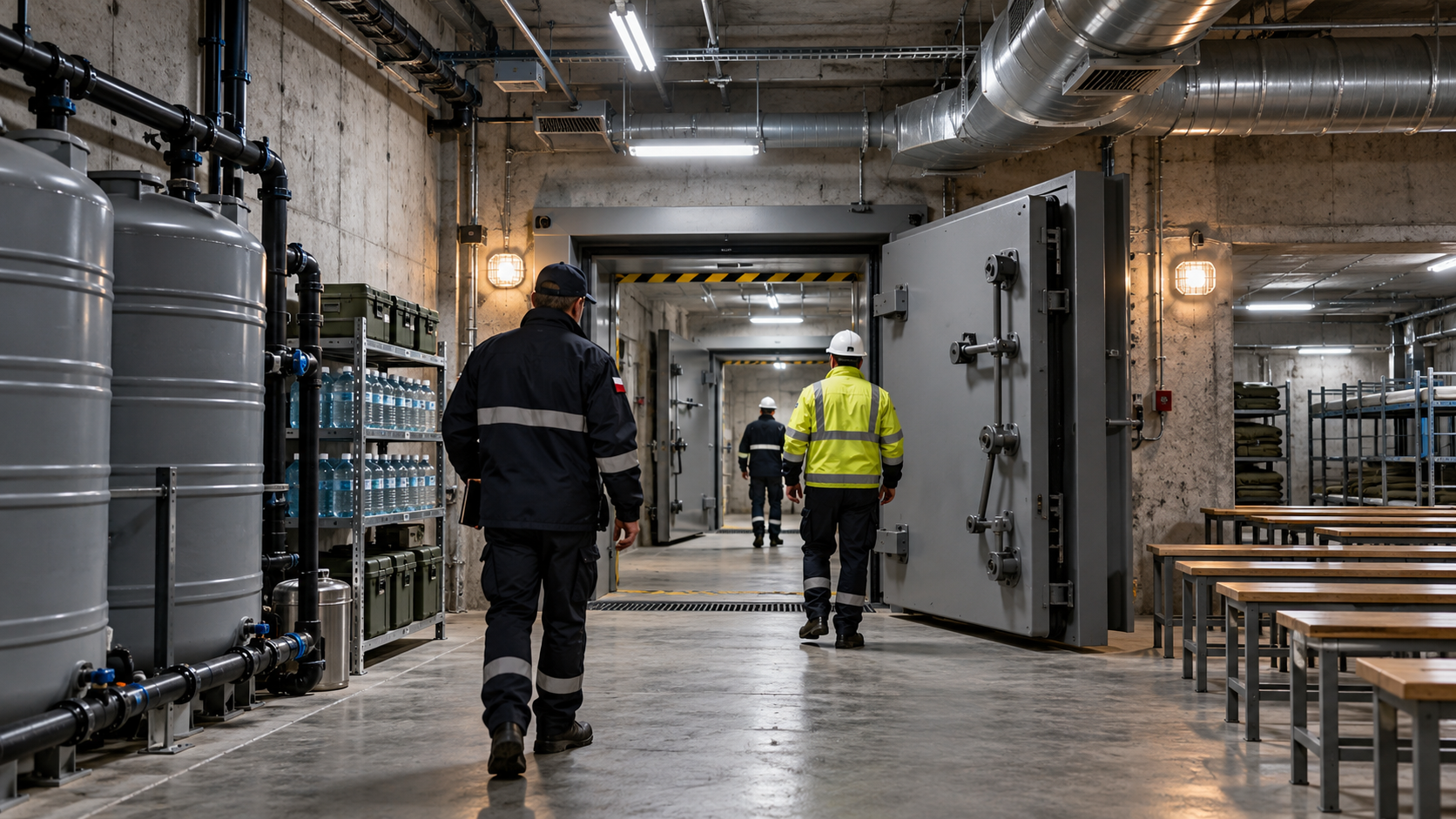
One of the most visible priorities will be protective infrastructure. The government says money can be spent on shelters and other places where civilians can take cover during emergencies, as well as rescue bases and equipment. Around PLN 30 billion routed through provincial governors will give local authorities substantial influence over projects in their own areas, with Tusk citing shelters, fire stations and telecommunications as examples.
The government has not, however, announced a single national figure reserved exclusively for shelter construction. The programme covers a much broader range of civil-protection needs, meaning the PLN 102.4 billion headline total should not be interpreted as a shelter budget alone.
Other priorities include maintaining water and electricity supplies during crises, creating storage facilities for emergency reserves, buying rescue and medical equipment and strengthening the country’s ability to operate if normal infrastructure is disrupted.
A major part of the programme will also focus on communications. The government says the plan will expand warning and alarm systems, improve secure communications between the state, local authorities and emergency services and strengthen IT and cyber-security systems used during emergencies.
The programme is structured around seven broad areas covering civil-defence personnel, emergency stocks and resilience of essential services, rescue capabilities, communications and warning systems, protective infrastructure, public education and training, and medical preparedness. The planned purchases include generators, mobile water-treatment equipment, emergency-storage equipment, protective gear, communications systems and equipment for shelter facilities.
Poland’s civil-defence system is now underpinned by legislation adopted in December 2024. The law requires the state to devote at least 0.3% of GDP each year to population protection and civil defence, drawing funding from the Interior Ministry, provincial administrations, the Government Strategic Reserves Agency, health-sector funding and defence expenditure.
Under the law, the civilian population-protection system also becomes Poland’s civil-defence system if martial law is introduced or the country enters wartime conditions. That makes investments in shelters, emergency stocks and resilient infrastructure relevant both to peacetime disasters and to military contingencies.
The government has repeatedly stressed that the system is not designed exclusively around the threat of war. Flooding, prolonged power failures, infrastructure breakdowns and other major emergencies also fall within the programme’s remit.
That dual purpose reflects recent Polish experience. Severe floods in 2024 exposed vulnerabilities in emergency infrastructure, while Russia’s continuing war against Ukraine and repeated security incidents near Poland’s eastern border have sharply increased attention on civilian preparedness.
The issue of shelters has become particularly prominent. Poland spent decades after the end of the Cold War allowing much of its civil-defence infrastructure to deteriorate, and the country currently has far fewer fully protected shelter places than would be needed for its population in a major emergency.
Authorities have begun reversing that trend. Earlier programmes have financed surveys, designs and construction work for protective structures, while cities including Lublin have begun reopening and modernising Cold War-era shelters. Reuters reported last week that a renovated shelter in Lublin can accommodate around 200 people for up to 72 hours with independent supplies of air, water and electricity.
The new five-year programme is intended to move that work from short-term projects towards sustained investment. The government says the longer funding horizon was partly introduced at the request of local authorities, which argued that large infrastructure projects could not realistically be planned and completed within the existing two-year cycle.
The result is one of Poland’s largest civilian-security programmes since the end of the communist era. Alongside record spending on the armed forces, Warsaw is now directing tens of billions of zlotys towards the civilian side of national resilience — from places to shelter and emergency water supplies to warning networks capable of functioning during a major crisis.