On the evening of 19 October 1984, Father Jerzy Popiełuszko left Bydgoszcz for Warsaw after celebrating Mass. He never made it home.
Near the village of Górsk, outside Toruń, his Volkswagen was stopped by men dressed as traffic police. They were not conducting an ordinary roadside check. They were officers of Poland’s communist Security Service, or SB — the political police operating within the Ministry of Internal Affairs.
Popiełuszko was dragged from the car, overpowered and forced into the boot of the officers’ vehicle.
- Find more news from Poland on our Homepage .
His driver, Waldemar Chrostowski, was also detained, but escaped during the journey by jumping from the moving car despite being handcuffed. His testimony triggered the search for the priest.
Eleven days later, on 30 October, Popiełuszko’s body was recovered from the reservoir beside the dam at Włocławek.
He was 37.
A priest the authorities could not silence
Popiełuszko had become one of the most recognisable Catholic priests associated with Solidarity, the independent trade-union movement that challenged Poland’s communist system.
After martial law was imposed in December 1981 and Solidarity was driven underground, Catholic churches became some of the few spaces in which opposition communities could gather with a degree of protection.
At St Stanislaus Kostka Church in Warsaw’s Żoliborz district, Popiełuszko began celebrating monthly Masses for the Homeland. His sermons spoke about truth, human dignity, political repression and the moral obligation to reject hatred.
They drew enormous crowds.
Security Service records cited by the Institute of National Remembrance show attendance growing from several thousand people in 1982 to tens of thousands by 1984.
For the authorities, this made Popiełuszko more than a troublesome cleric. He had become a public figure capable of bringing together workers, opposition activists, Catholics and ordinary people frustrated by the regime.
The SB placed him under surveillance, monitored his sermons and contacts, repeatedly harassed him and subjected him to criminal proceedings. Institute of National Remembrance documentation also records efforts by security officers to manufacture evidence against him.
The department responsible for much of this activity was Department IV of the Ministry of Internal Affairs, which specialised in monitoring and disrupting religious organisations.
The three men who abducted Popiełuszko belonged to its clandestine Group D, whose name derived from the Polish word dezintegracja — disintegration.
The road from Bydgoszcz
Popiełuszko had travelled to Bydgoszcz on 19 October to take part in a religious service at the parish of the Holy Polish Martyr Brothers.
On the return journey, shortly after 9.30pm according to later investigative records, the car carrying him and Chrostowski was stopped near Górsk.
The kidnappers were Grzegorz Piotrowski, Leszek Pękala and Waldemar Chmielewski, all officers of the Security Service.
The established findings of the subsequent criminal proceedings were that the priest was abducted, brutally assaulted and murdered. His body was eventually thrown into the water near the Włocławek dam and weighted down.
Precisely what happened during every stage of the journey became the subject of later arguments and alternative theories, but the criminal responsibility of the three direct perpetrators was established in court.

The disappearance immediately became a national crisis.
Within days, the communist authorities publicly acknowledged that officers from their own security apparatus had been detained in connection with the abduction.
For a system accustomed to denying or concealing abuses committed by its political police, that admission was extraordinary.
A trial that exposed the Security Service
The so-called Toruń trial began on 27 December 1984.
Piotrowski, Pękala and Chmielewski were prosecuted for the abduction, torture and murder of Popiełuszko. Their superior, Adam Pietruszka, deputy director of Department IV, was also prosecuted and convicted for his directing role in the crime.
On 7 February 1985, the court imposed prison sentences ranging from 14 to 25 years.
The proceedings revealed to the public unusually detailed evidence about the methods and structure of the communist security apparatus.
But the trial did not settle every question.
One of the most persistent controversies concerns whether the decision to kill Popiełuszko originated solely among the officers who were prosecuted or whether people higher in the party-state hierarchy inspired or authorised the crime.
Post-communist investigations examined possible wider responsibility. The Institute of National Remembrance has acknowledged those questions while also stating that investigations did not produce sufficient evidence to establish additional criminal responsibility in court.
That distinction remains important: the guilt of the convicted perpetrators is established; theories about a broader chain of command remain contested.
A funeral became a demonstration
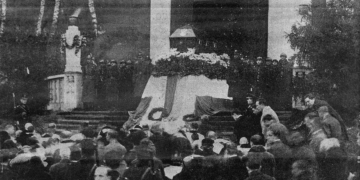
Popiełuszko was buried on 3 November 1984 beside St Stanislaus Kostka Church in Warsaw.
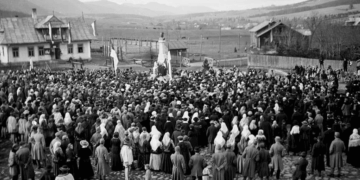
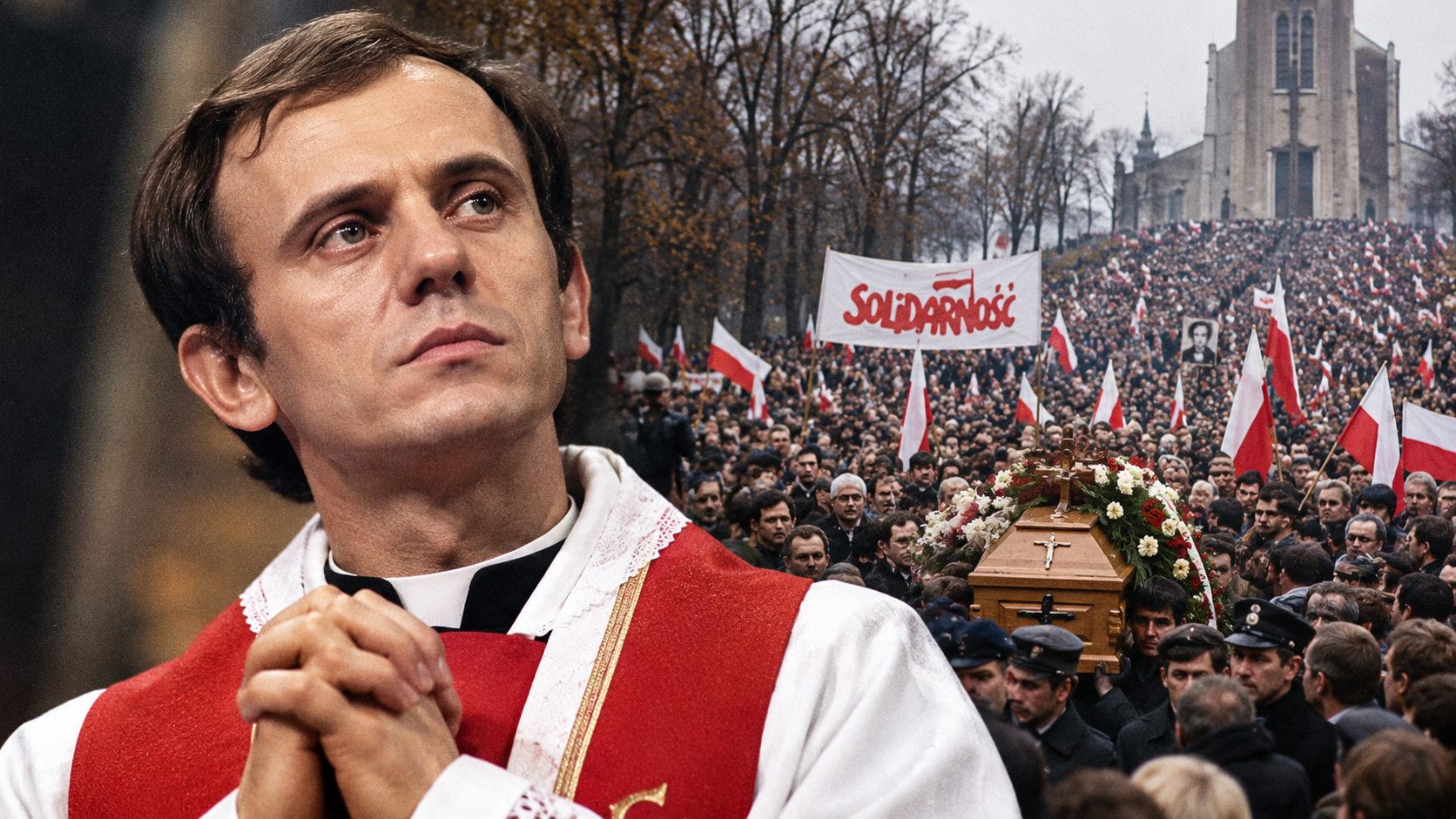
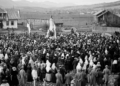
His funeral became one of the largest public gatherings of the final years of communist rule.
Estimates cited by the Institute of National Remembrance range from roughly 600,000 to one million people. Opposition leaders, workers, clergy, foreign diplomats and people who had travelled from across Poland joined the crowds.
Solidarity banners appeared openly. Participants raised their hands in the movement’s familiar victory sign.
The authorities had murdered a priest they regarded as politically dangerous. His death instead gave the opposition one of its most powerful symbols.
Popiełuszko’s grave in Żoliborz quickly became a place of pilgrimage.
In 2010, the Catholic Church beatified him in Warsaw as a martyr.
More than four decades after the killing, the case remains significant not merely because of the brutality of one murder. It exposed the extent to which institutions of the communist state had been used to surveil, intimidate and attack people regarded as political threats.
On 19 October 1984, that machinery targeted a priest travelling home from Bydgoszcz.
The attempt to silence him instead made the workings of that machinery far harder to hide.