Two Polish architects who once worked in London on the design of Warsaw’s Varso Tower, the European Union’s tallest building, are now working inside the very building they helped create. Their return home is part of a much bigger story about a country whose economic fortunes have changed dramatically within a generation.
British newspaper The Guardian has devoted the final instalment of a major reporting series to Poland’s transformation, examining how the former communist state became a trillion-dollar economy and why some of the professionals who once sought opportunities abroad are now choosing to return.
In his report published on 15 October, senior economics correspondent Richard Partington explores the country’s rising prosperity through interviews with business leaders, returning emigrants and people who have witnessed decades of economic change.
- Find more news from Poland on our Homepage .
The article portrays a country that has moved from the shortages and economic difficulties of the 1980s to a position of growing economic and technological importance within Europe.
From economic hardship to a trillion-dollar economy
The scale of Poland’s transformation is visible in the statistics.
In the mid-1990s, economic output per person, adjusted for purchasing power, stood at roughly 40% of the European Union average. By 2025, it had reached 81%, according to figures published by Statistics Poland using Eurostat data.
That represents an extraordinary narrowing of the economic gap with Western Europe in just three decades.
The country’s total gross domestic product also surpassed $1 trillion in 2025, a milestone independently recognised by the World Bank.
The Guardian describes Poland as having entered the world’s 20 largest economies. However, revised International Monetary Fund estimates placed it 21st, narrowly behind Switzerland. The distinction does not diminish the substantial expansion of the Polish economy.
The transformation followed the end of communist rule in 1989 and the introduction of market reforms, with Poland’s accession to NATO in 1999 and the European Union in 2004 supporting closer integration with Western economies.
International investment, infrastructure development, manufacturing and a growing services sector helped change the country’s economic landscape.
The return of Polish talent
One of the report’s most compelling themes is the changing relationship between Poland and its emigrants.
For years, moving abroad offered many Polish workers and university graduates the prospect of substantially higher salaries and wider career opportunities. The United Kingdom became a particularly important destination after Poland joined the EU.
The Guardian now points to a different pattern.
British migration figures cited by the newspaper show that more Polish nationals have been leaving the UK than arriving in recent years, although those figures do not establish how many have returned specifically to Poland.
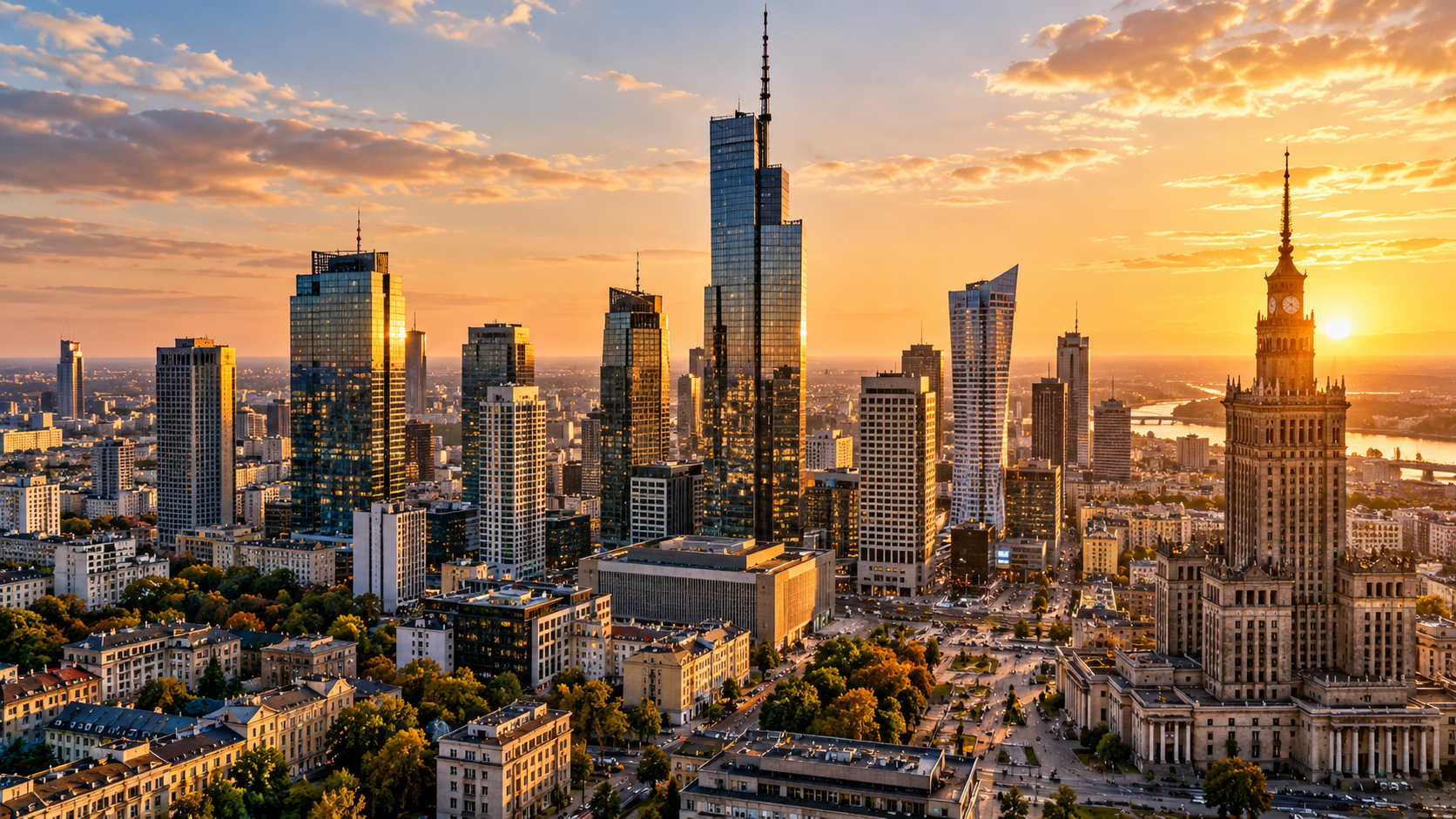
Among the people interviewed are architects Jędrzej Kolesiński and Krzysztof Górnicki, who worked in London for Foster + Partners and helped design Warsaw’s Varso Tower, which at 310 metres is the tallest building in the European Union.
They now work from the firm’s Warsaw office in the same skyscraper.
Their experience demonstrates how international careers no longer necessarily require Polish professionals to live outside their home country. Global projects can increasingly be undertaken from Warsaw, while living closer to family and maintaining connections with Poland.
The Guardian uses their story to illustrate an important change: Poland is no longer simply a country exporting talent in search of opportunity.
Polish companies competing internationally
The report also examines Poland’s ambitions to move beyond its traditional position as a relatively low-cost manufacturing and business-services centre.


In Warsaw’s Praga district, Partington visits CD Projekt Red, the Polish video game developer behind The Witcher and Cyberpunk 2077.
The company began in the 1990s importing and distributing computer games. Today, it develops internationally recognised titles and competes for creative and technical talent in the global gaming industry.
The Guardian also highlights Polish-founded artificial intelligence company ElevenLabs as another example of the country’s growing presence in advanced technology.
Investment is being directed towards that ambition. The Innovate Poland programme, announced in November 2025, aims to mobilise at least PLN 4 billion (roughly €920 million) through public and private capital for investment in growth-oriented Polish businesses.
The initiative reflects a wider effort to develop companies capable of creating sophisticated products, intellectual property and higher-value employment rather than relying principally on lower labour costs.
Prosperity brings new challenges
The Guardian’s reporting is not an unqualified celebration.
It also documents how rising prosperity has brought higher living costs, particularly in Warsaw, where housing, services and everyday expenses have become increasingly expensive.
The country’s narrowing wage gap with Western Europe is a sign of Poland catching up with Western European living standards, but it also means that Polish businesses must compete through productivity, technology and innovation.
Rafał Brzoska, founder of the Polish parcel-locker company InPost, is among the business figures interviewed about the need to develop a more productive, higher-value economy.
The report forms the conclusion of a wider Guardian series that also examined Poland’s defence investment and its efforts to strengthen energy security amid tensions with Russia.
Together, the articles present a country whose economic development has become increasingly relevant to Europe’s future.
A different Poland for a new generation
Perhaps the strongest impression from the Guardian’s reporting is not the size of the economy or the height of Warsaw’s skyscrapers.
It is the change in expectations.
For an earlier generation, Western Europe represented opportunities and living standards that could seem distant from everyday life in Poland. For a growing number of young professionals, the question is no longer simply how to leave, but whether they need to leave at all.
Poland still faces difficult choices over productivity, housing, energy and long-term economic growth. Its prosperity is neither complete nor evenly distributed.
Yet the contrast remains striking.
Within the working lives of many Poles, the country has moved from a centrally planned economy marked by shortages to one producing globally successful businesses, attracting investment and offering internationally connected careers at home.
The return of professionals who once built their futures abroad is one of the most tangible signs of that transformation.