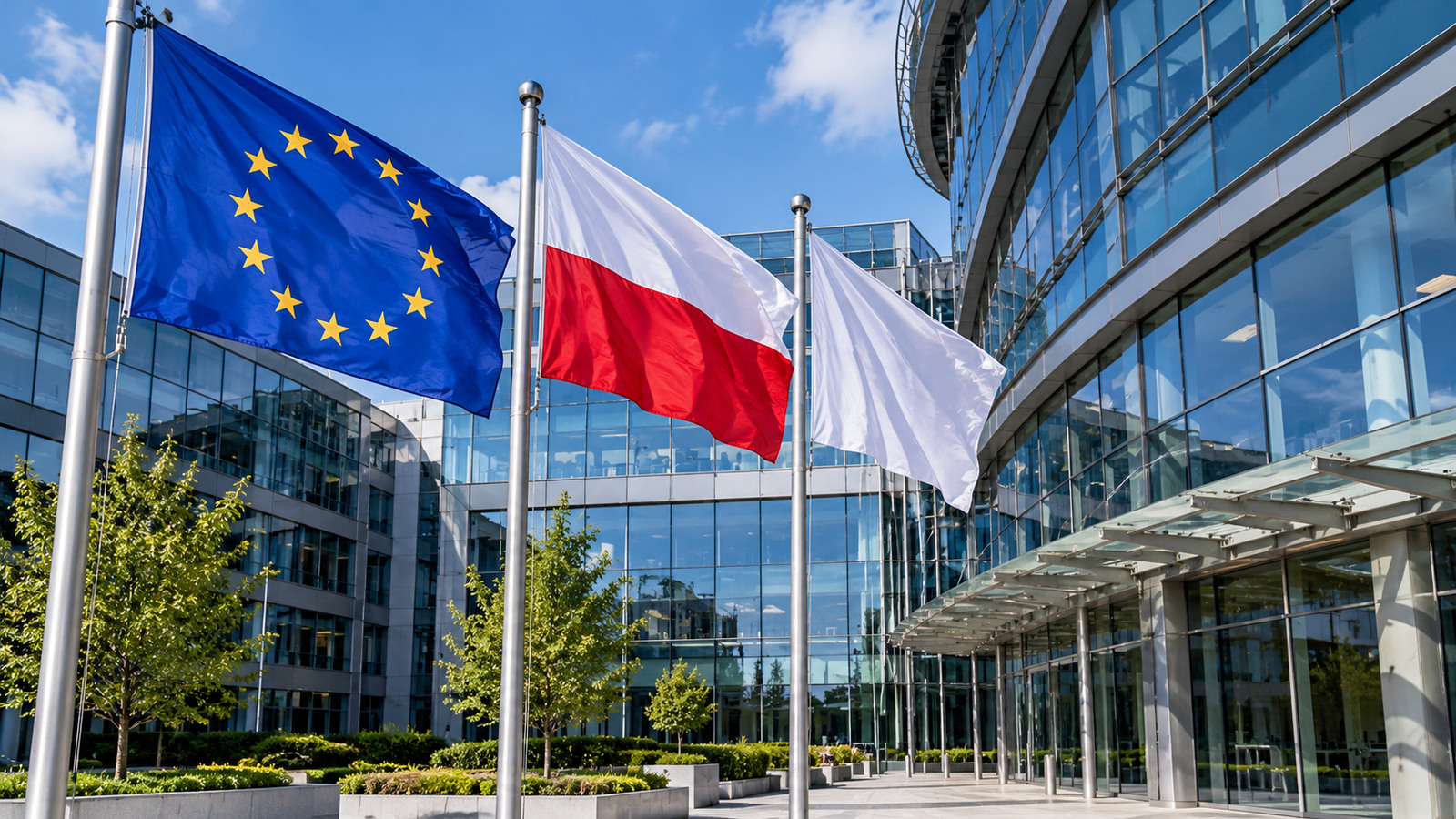
The European Commission has proposed tripling the operational force available to Frontex, the EU border and coast guard agency headquartered in Warsaw, to 30,000 personnel by 2041. The plans, announced on Tuesday, 27 October, would also give the agency a larger role in organising migrant returns, establish an emergency border-response force and introduce new online monitoring capabilities. The proposed overhaul would significantly expand the agency’s responsibilities, but it remains draft legislation requiring approval by the European Parliament and EU governments.
The Commission unveiled the reform as part of a wider effort to strengthen the European Union’s external borders and improve cooperation between national authorities.
According to the Commission’s official announcement, the package focuses on three priorities: increasing operational capacity, coordinating returns more effectively and responding faster to emergencies.
- Find more news from Poland on our Homepage .
The proposal would reshape the agency’s existing workforce, combining directly employed European officers with personnel supplied by participating countries.
It would also provide Frontex with greater access to equipment and technology and allow it to take a more active role in coordinating procurement.
The Commission has proposed allocating €11.888 billion to Frontex under the EU’s next seven-year budget, covering 2028–2034.
That figure remains subject to negotiations over the bloc’s future spending plans.
How Frontex would grow to 30,000 personnel
The proposed expansion is intended to increase the operational capacity available to Frontex from the existing 10,000-person framework target for 2027 to 30,000 by 2041.
The increase would be phased in over two additional EU budget periods.
The future force would comprise three principal groups:
| Personnel category | Proposed strength |
|---|---|
| Directly employed Frontex officers | 6,000 |
| National officers seconded or deployed by participating countries | 7,000 |
| New European border and return reserve | 17,000 |
| Total | 30,000 |
The 7,000 national officers would continue to be provided through established long-term and short-term deployment arrangements.
The new reserve would consist of trained national border and return officers who would normally remain with their domestic authorities.
They could be mobilised when operational circumstances required additional personnel.
Consequently, the 30,000 figure does not represent 30,000 newly recruited employees or officers who would all work in Warsaw.
The full legislative proposal, COM(2026) 1030, provides an indicative implementation schedule.
By 2034, the Commission envisages increasing directly employed operational personnel to 4,500 and developing a 6,000-strong reserve.
The reserve would eventually expand to 17,000, while the number of directly employed officers would reach 6,000.
The final target is 2041, although the timetable may change during negotiations.
Why Warsaw matters to the expansion
Frontex has been headquartered in Warsaw since the agency began operating in 2005.
It is among the most prominent EU institutions based in Poland, coordinating border-management operations involving countries throughout Europe.
You May Also Be Interested In

The proposed increase in staffing and responsibilities would strengthen the role of an institution already closely associated with the Polish capital.
However, the Commission has not announced that all the additional staff would be based in Poland.
The agency’s operational personnel work at border crossings, airports, seaports and other locations where participating countries request assistance.
The legislative proposal also envisages treating the locations of long-term deployments as officers’ normal places of employment rather than automatically linking their employment arrangements to the Warsaw headquarters.
One element of the proposed expansion could nevertheless have a direct connection to the Polish capital.
The Commission’s financial planning assumes that a Frontex training centre in Warsaw would provide training for directly employed officers and members of the proposed reserve.
Those arrangements remain part of the wider proposal, not a completed investment decision establishing a particular number of new Polish jobs.
Frontex already has a new Warsaw headquarters planned
The proposed reform comes shortly after an important development in Frontex’s existing Warsaw infrastructure plans.
On 22 September, the Mazovian regional governor granted a building permit for a new headquarters complex in the capital’s Mokotów district.
According to the regional government’s official announcement, the planned development at 136 Racławicka Street will cover almost 70,000 square metres and accommodate more than 2,000 employees.
The project includes office space, training facilities, underground parking and associated infrastructure.
A consortium belonging to the Eiffage group is responsible for its design and construction.
The regional authorities described the development as a significant addition to Warsaw’s role in European security cooperation.
However, this headquarters project is separate from the 27 October legislative proposal.
The building’s planned capacity of more than 2,000 employees should not be confused with the proposed 30,000-person operational force.
Nor has the Commission confirmed that its latest expansion proposal will require a change to the existing headquarters construction plans.
Stronger powers to organise migrant returns
One of the most consequential elements of the reform concerns Frontex’s role in returning people who do not have permission to remain in the European Union.
Currently, the agency assists national authorities with return operations, including logistical arrangements and other practical support.
The Commission wants Frontex to take on a more strategic role in coordinating these activities across participating countries.
A dedicated Return Coordination Centre would gather operational information, assess requirements and help organise assistance.
Its responsibilities would extend across several stages of the return process.
These would include identifying people subject to return procedures, providing voluntary-return counselling, coordinating transport and supporting reintegration assistance.
The Commission argues that greater coordination could reduce duplication between national authorities and improve the use of available resources.
The reform would also allow Frontex to support returns involving countries outside the EU more extensively.
Under specified conditions, the agency could help organise returns from one non-EU country to another.
Such operations would require an appropriate agreement and compliance with applicable EU and international law.
The proposal does not authorise unrestricted deportations or allow Frontex to disregard decisions by competent national authorities.
New rapid-reaction force for border emergencies
The Commission also wants Frontex to respond more quickly when participating countries face sudden border emergencies.
The reform would establish a dedicated Quick Reaction Force trained and equipped for deployment at short notice.
The agency’s executive director could authorise its deployment following a request from a member state facing an emergency.
This could include situations involving an unexpected increase in arrivals, serious disruption at a border or other developments requiring urgent assistance.
The Commission has cited recent events in Ceuta, Spain’s territory on the North African coast, as an example of the challenges motivating the reform.
The proposed mechanism would allow Frontex to provide immediate support while countries and EU institutions considered whether longer-term measures were necessary.
It would supplement existing arrangements for joint operations and rapid border interventions.
The proposal also strengthens information-sharing requirements.
Participating countries would be expected to report events with potentially significant effects on EU borders through the EUROSUR information network within 24 hours.
EUROSUR enables national authorities and Frontex to share information relevant to border surveillance and security.
New online monitoring centre
Another proposed development is an Online Monitoring and Response Centre.
The centre would analyse publicly accessible online information, including social-media content, to identify developments relevant to border management.
According to the Commission, the objective is to detect emerging risks and improve the exchange of information between authorities.
The proposal also envisages a role in identifying illegal online content associated with certain border-security threats.
This could involve notifying online platforms about material believed to violate applicable rules.
However, identifying or flagging content does not itself give Frontex unrestricted authority to remove material from the internet.
Any such arrangements would need to operate within the relevant European legal framework.
The creation of an online monitoring function also raises questions about privacy, the processing of personal information and appropriate oversight.
The Commission says the new powers would remain subject to EU data-protection and fundamental-rights requirements.
Their final scope will depend on the legislation adopted.
Why the reform matters to Poland’s eastern border
The proposal has particular relevance to Poland because of its responsibility for a substantial section of the EU’s external land border.
Poland borders Ukraine, Belarus and Russia’s Kaliningrad region.
The frontier with Belarus has been a major security and migration concern since 2021.
Successive Polish governments have accused Belarusian authorities of deliberately facilitating irregular migration towards the Polish border as a means of exerting pressure on the European Union.
The Polish authorities have also maintained substantial security measures in the border region.
Frontex’s proposed expansion could increase the resources available to Poland and other participating states during serious border emergencies.
A larger reserve, improved intelligence-sharing and faster deployment arrangements could be relevant to situations involving organised pressure at the external frontier.
However, the Commission has not announced a new deployment specifically to Poland under the proposed arrangements.
Nor does the package establish how many additional national officers Poland would be required to contribute.
Those questions would depend on the final legislation, national contributions and subsequent operational planning.
Almost €12 billion proposed for Frontex
The Commission’s plans carry substantial financial implications.
Its legislative proposal sets out a proposed allocation of €11.888 billion for Frontex during 2028–2034.
The funding would support a broader range of activities than personnel recruitment alone.
It would cover training, deployments, technical equipment, surveillance capabilities, return operations and the development of supporting information systems.
The Commission wants Frontex to have greater flexibility to acquire, lease or jointly own equipment.
The agency could also act as a central purchasing body for participating countries, including for certain digital and AI-enabled tools.
This approach is intended to allow countries to share equipment and coordinate purchases rather than duplicate expenditure.
The proposed budget also includes approximately €1.886 billion for technical capabilities and around €2.029 billion for return-related activities.
These amounts form part of the Commission’s financial planning assumptions.
They are not separate approved spending commitments, and their final values could change during EU budget negotiations.
A separate proposal to digitalise return procedures
The Commission presented another legislative proposal alongside the Frontex reform.
This second measure would modernise how authorities record and exchange information concerning returns, readmission and reintegration.
The digitalisation proposal, COM(2026) 1037, envisages connected case-management systems for national authorities and Frontex.
The objective is to reduce administrative duplication and improve the handling of return cases across participating countries.
The draft sets out responsibilities for managing data and accessing relevant records.
It also contains provisions intended to protect personal information.
Under the proposed implementation arrangements, participating countries would have up to four years after the regulation entered into force to establish the required national case-management systems.
The Commission links the proposal to the EU’s broader reform of return procedures.
A separate regulation establishing a common return system was adopted earlier in October and entered into force on 16 October 2026, although most of its provisions will apply later.
That adopted measure must not be confused with the two proposals presented on 27 October.
Neither the expanded Frontex mandate nor the new digital case-management system has yet been enacted.
Fundamental rights and accountability
The proposed expansion also brings questions about how greater operational powers would be supervised.
Frontex operates in areas where border security, migration control and fundamental rights frequently intersect.
These include access to asylum procedures, protection against unlawful returns and the treatment of vulnerable people.
The principle of non-refoulement prohibits returning people to places where they would face certain serious risks, including persecution.
The Commission says the new regulation would preserve the applicable protections under EU and international law.
The proposal maintains mechanisms involving Frontex’s Fundamental Rights Officer, independent fundamental-rights monitors and complaints procedures.
According to the agency’s explanation of its existing safeguards, these structures monitor compliance with relevant standards and allow complaints about alleged violations.
The new legislation also addresses oversight of operations outside the European Union.
Greater responsibilities for organising returns and processing information will make those safeguards an important aspect of parliamentary scrutiny.
The European Parliament and member states may seek further changes to accountability, data protection or operational rules during negotiations.
What happens next?
The Commission has now submitted the proposals for consideration by the European Parliament and the Council of the European Union.
Both institutions must agree on the legislation before the proposed new framework can take effect.
The negotiations could affect the agency’s powers, operational procedures, staffing commitments and timetable.
The future budget is also subject to a separate EU negotiation process.
For Poland, the immediate significance is that a Warsaw-headquartered agency has become the focus of one of the EU’s most substantial proposed border-security reforms.
The country’s role as host of Frontex headquarters, combined with its responsibility for the EU’s eastern frontier, gives the proposals a direct Polish dimension.
However, neither the operational expansion nor the new powers have yet been approved.
The Commission’s ambition is to build a 30,000-person European border and return force by 2041.
Whether that structure is ultimately established in its proposed form will depend on the legislation, funding and implementation decisions made over the coming years.