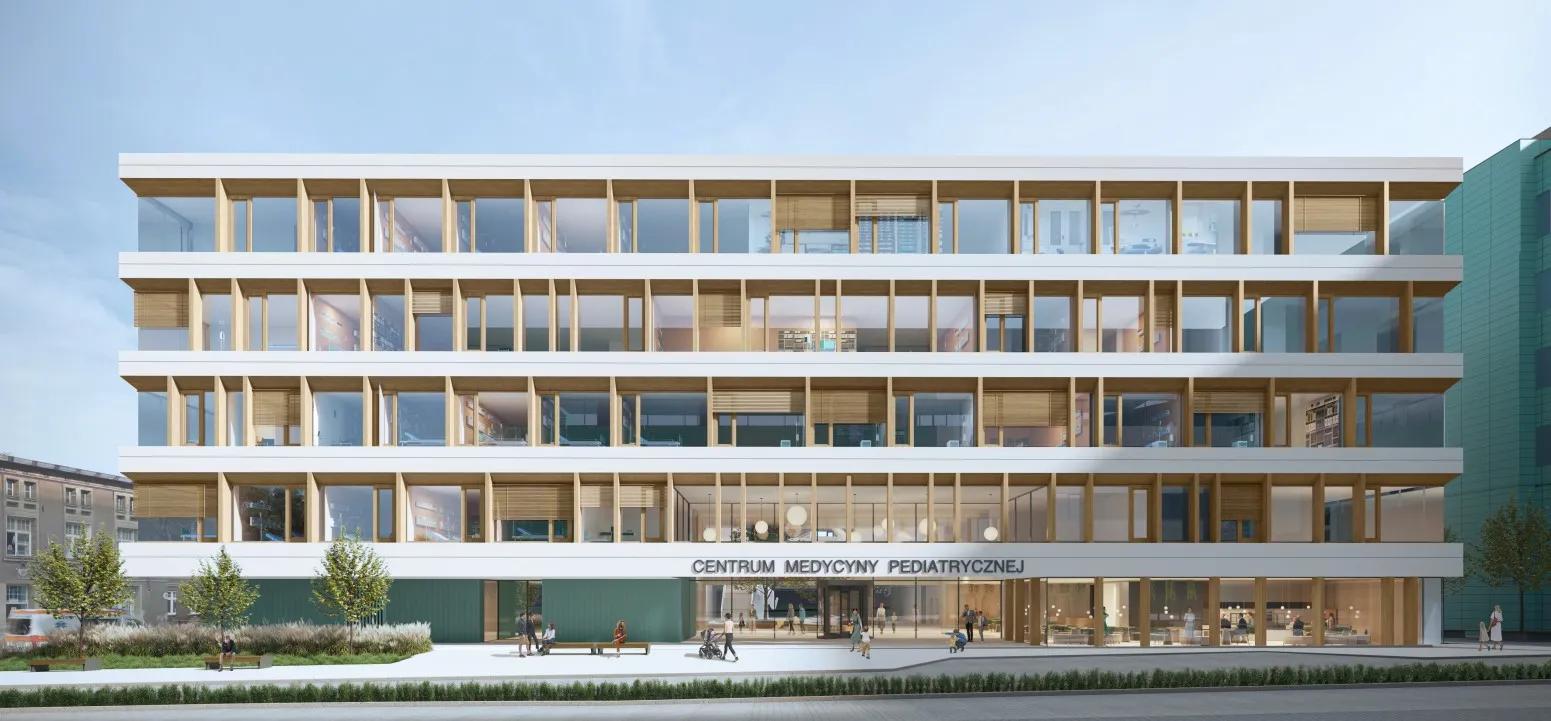
A new hospital dedicated to treating some of Poland’s youngest patients is set to rise in Gdańsk, bringing specialist surgery, intensive care, diagnostics and rehabilitation together in one modern medical complex.
The University Clinical Centre (UCK), the teaching hospital of the Medical University of Gdańsk, signed a construction contract with Polish contractor NDI Group on 24 November 2026.
The approximately PLN 365 million project will create a six-storey Centre for Paediatric Medicine, offering more coordinated care for children from the Pomeranian region and elsewhere in Poland.
- Find more news from Poland on our Homepage .
Construction is expected to finish in 2029, followed by several months of installing equipment and moving hospital departments into their new premises.
A hospital designed around children’s needs
The planned centre will occupy approximately 30,000 square metres within UCK’s existing hospital campus.
Unlike a standalone facility, the new building will be connected to neighbouring hospital buildings through enclosed links, allowing patients and medical staff to move between specialist services more efficiently.
Its facilities will include four operating theatres, a 12-bed paediatric intensive care unit, a 37-bed paediatric surgery department and a 25-bed developmental neurology department.
The centre will also accommodate outpatient clinics, day-treatment services, rehabilitation facilities, diagnostic units and a dedicated paediatric radiology department.
Advanced equipment is planned, including MRI and CT scanners, X-ray systems, angiography equipment, endoscopes and specialised surgical technology. At a national level, Poland is also preparing to introduce AI-assisted hospital diagnostics through a centrally managed platform.
For families, one of the most significant improvements will be the ability to receive different forms of specialist treatment within a more integrated hospital environment.
The new building is intended to provide more suitable accommodation for young patients and improve the conditions in which parents can remain close to their children during treatment. Separately, Poland has proposed additional paid care days for parents of seriously ill children, addressing the challenges families face during prolonged treatment.
It will also allow the hospital to separate adult and paediatric treatment pathways, reducing the need for children to use facilities shared with adult patients.
Bringing specialist care together
The investment addresses a longstanding challenge at the University Clinical Centre, where children’s medical services have operated across facilities that hospital management considers increasingly inadequate for modern requirements.
Jakub Kraszewski, UCK’s chief executive, explained in the Medical University of Gdańsk’s official announcement that existing spaces had become too small.
The new centre is intended to provide the infrastructure needed for specialist paediatric surgery while bringing outpatient clinics, day wards and other essential services into a more coordinated setting.
The development will also support the training of future healthcare professionals.
As the teaching hospital of the Medical University of Gdańsk, UCK combines patient care with medical education and clinical research.
The university’s rector, Professor Michał Markuszewski, has emphasised that the new infrastructure will strengthen opportunities to train healthcare professionals in paediatric medicine.
This means the investment is expected to serve two closely related purposes: improving treatment for children and helping prepare the medical specialists who will care for future generations.
A major investment in northern Poland
The construction contract is valued at approximately PLN 365 million.


Of that amount, around PLN 299 million will come from Poland’s Ministry of Health through the Medical Fund, a public financing mechanism supporting healthcare investment.
The University Clinical Centre will cover the remainder of the construction cost.
Additional medical equipment is expected to cost between PLN 50 million and PLN 60 million, bringing the hospital’s planned contribution from its own resources to approximately PLN 110–120 million.
According to UCK, those funds are available because of financial surpluses generated by the hospital in recent years.
The project will also present a significant logistical challenge.
The new centre will replace older buildings within an operational hospital campus. Construction teams must therefore carry out demolition, infrastructure works and building operations while neighbouring hospital departments continue treating patients.
The contractor is expected to establish the construction site and begin initial works shortly after receiving access to the land.
The new complex will include two underground levels, with technical facilities and parking, beneath four above-ground storeys accommodating clinical departments and patient services.
Towards a new chapter in paediatric care
The Centre for Paediatric Medicine is part of a broader effort to modernise specialist healthcare infrastructure in Gdańsk. Similar hospital modernisation projects elsewhere in Poland include a fully automated hospital pharmacy in Kraków, designed to improve the preparation and distribution of medicines.
The University Clinical Centre already operates major facilities dedicated to invasive and non-invasive medicine, and the new paediatric building will become another component of its interconnected hospital campus.
The investment follows years of planning to bring children’s specialist services into a more suitable, coordinated environment.
While the signing of a construction contract does not mean the hospital is already operating, it represents a concrete step towards delivering the long-planned project.
If construction proceeds according to the latest timetable, work should be completed in 2029, after which the hospital will begin equipping the building and relocating its departments.
For children requiring complex treatment — and for the families accompanying them — the long-term ambition is straightforward: more specialist services, better facilities and a hospital environment designed with young patients at its centre.