


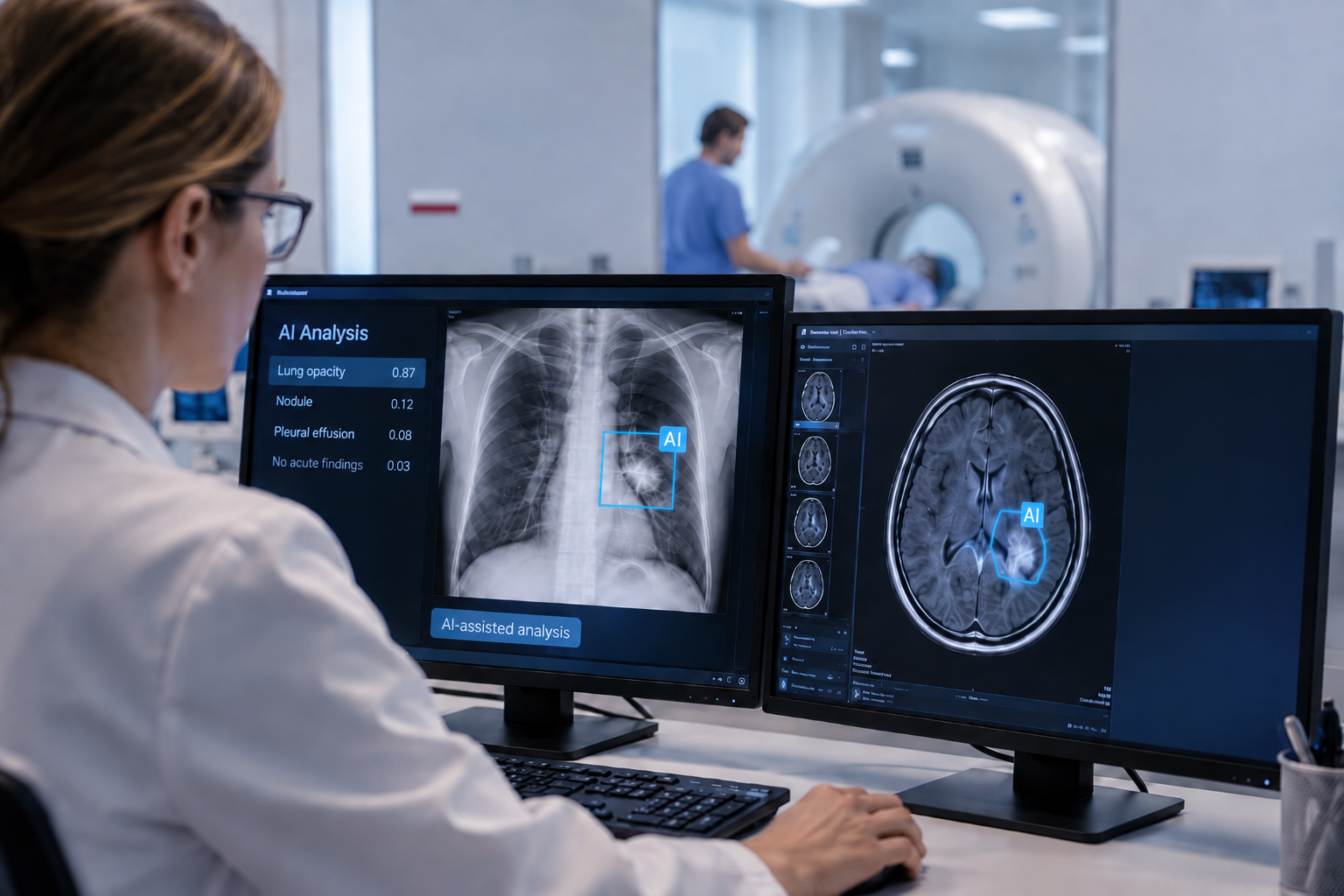
Poland is preparing to introduce centrally supplied artificial-intelligence tools into hospital diagnostics on a national scale, with publicly funded hospital providers expected to gain access to the system.
The Health Ministry said on 22 September that Polish hospitals would begin receiving access before the end of 2026 to a national AI platform using certified algorithms to support medical imaging diagnostics.
The system is the Platforma Usług Inteligentnych, or Intelligent Services Platform (PUI), being developed by the state-run Centrum e-Zdrowia as part of Poland’s EU-backed e-health programme.
- Find more news from Poland on our Homepage .
Rather than replacing doctors, PUI is intended to function as a digital assistant for radiologists. Centrum e-Zdrowia says the tools are designed to help specialists analyse medical images, identify subtle abnormalities and prioritise cases requiring urgent intervention.
The Health Ministry has now formally identified five diagnostic services that are to be made available through the platform:
- detection of abnormalities in chest CT scans;
- detection of ischaemic and haemorrhagic changes in brain imaging;
- diagnosis of traumatic skeletal injuries using conventional X-rays;
- detection of breast cancer through mammography;
- detection of abnormalities on chest X-rays.
Centrum e-Zdrowia says the first stage of the platform will support analysis of X-rays, computed tomography and magnetic resonance imaging, with radiologists retaining responsibility for diagnosis and clinical decisions.
The ministry’s formal notice establishes an initial access ceiling of 400 healthcare providers, which must be hospitals providing publicly financed healthcare services.
That means the programme is national in infrastructure and scope, but it will not immediately provide every Polish hospital with access.
The government has not yet published a definitive list of the first hospitals that will use PUI.
Individual hospitals have, however, already been preparing their systems for connection to the platform. Public procurement records show, for example, that Kociewskie Centrum Zdrowia in Starogard Gdański conducted a procurement in 2026 involving integration of its medical imaging infrastructure with PUI.
The central system is being financed through Poland’s National Recovery and Resilience Plan.
Centrum e-Zdrowia launched procurement for the platform’s software components in October 2025. A preferred bid was selected in February 2026, and the National Appeals Chamber subsequently rejected a challenge to that procurement in June.
The distinction between the platform and the AI models that will operate through it is significant.
Centrum e-Zdrowia has explained that PUI’s core infrastructure is an integration and orchestration environment rather than an AI model in itself. It will subsequently connect hospitals with selected AI models classified as certified medical devices and meeting regulatory requirements for medical use.
Only those approved medical models are intended to be available to hospitals through PUI.
The Health Ministry has identified the diagnostic functions that the platform will offer, but the September notice does not name the individual algorithms, manufacturers or suppliers that will provide each service.
The rollout was highlighted during an international conference on AI, health data and cybersecurity hosted by the Health Ministry and Centrum e-Zdrowia in Warsaw this week.
Opening the event, Health Minister Jolanta Sobierańska-Grenda said artificial intelligence, growing volumes of health data and cybersecurity requirements were forcing healthcare systems to rethink how they operate.
The ministry said Centrum e-Zdrowia already provides digital-security support to around 1,000 hospitals and other healthcare institutions, while the health services supported by Poland’s digital infrastructure affect nearly 37 million people.
PUI is part of a broader expansion of Poland’s digital-health infrastructure that also includes electronic medical documentation, centralised patient information, e-registration and other services financed partly through the EU recovery programme.


The legal framework for the AI platform was strengthened earlier this year.
An amendment to Poland’s e-health legislation adopted on 15 May and signed by President Karol Nawrocki in June formally introduced the Intelligent Services Platform into the healthcare information system. The law defines PUI as a system giving eligible hospitals access to certified tools using artificial-intelligence systems and models.
On 1 September, the Health Minister then formally published the five categories of AI-supported diagnostic service and the 400-provider access ceiling.
The programme therefore represents a shift from isolated AI deployments at individual hospitals towards centrally organised access to regulated diagnostic tools.
However, several implementation details remain outstanding.
The ministry has not announced a specific national launch date beyond saying access will begin before the end of 2026. Nor has it published a full list of participating hospitals or publicly identified the particular certified AI products that will perform each of the five diagnostic functions.
Those details will determine how quickly the platform moves from national infrastructure into routine clinical use.