In traditional Polish homes, a tiled stove was once much more than a way to keep warm.
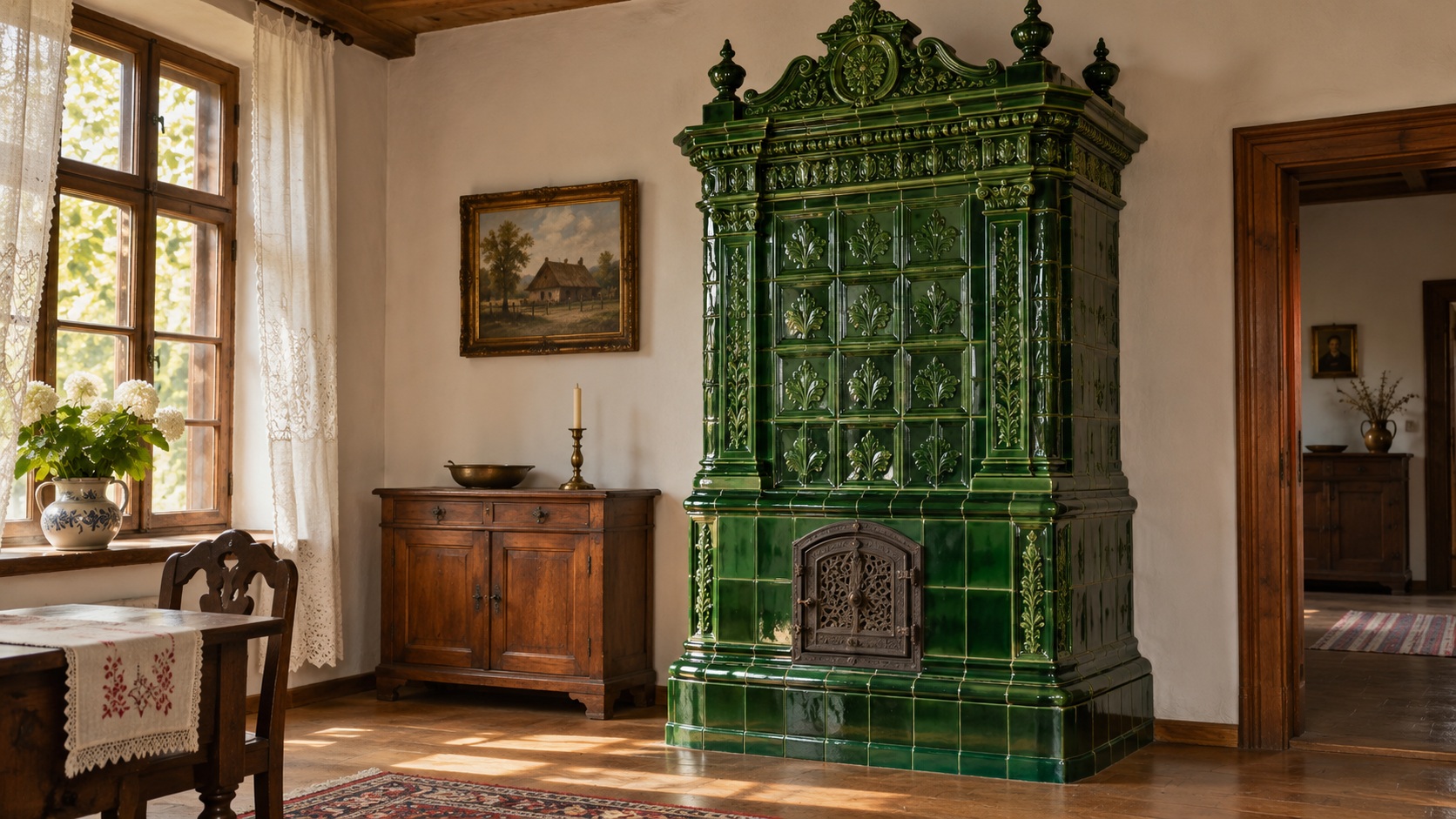
It was often among the most distinctive objects in the room: a towering structure of glazed ceramic tiles, sometimes decorated with elaborate patterns, ornamental crowns and carefully shaped details.
Behind its beautiful exterior lay an intricate heating system designed to store warmth and release it gradually long after the fire had gone out.
- Find more news from Poland on our Homepage .
Constructing one required a specialised craftsperson whose expertise combined building, ceramics and an understanding of how heat moves through a structure.
In Poland, the craft is known as zduństwo, and its practitioners are called zduni — traditional stove-builders.
Although central heating and modern heating systems have transformed Polish homes, the profession has not disappeared.
Across the country, skilled craftspeople continue to construct, repair and restore tiled stoves, traditional cooking ranges, bread ovens and fireplaces.
In July 2026, their work received official recognition when traditional stove-building was added to Poland’s National List of Intangible Cultural Heritage.
The decision acknowledged a form of expertise that has been passed between generations and remains relevant today.
The people who built warmth into Polish homes
Before central heating became widespread, traditional stoves played an essential role in domestic life.
In older Polish houses, a tiled stove could be the centrepiece of a sitting room or bedroom, while a separate cooking stove or bread oven served the kitchen.
Some buildings contained several stoves, each designed for a particular room or purpose.
These structures were often made individually rather than purchased as ready-made products.
A stove-builder needed to understand the size and arrangement of a house, its chimney, the available fuel and the heating requirements of the people living there.
The result was a construction intended to serve both a practical and an architectural purpose.
Some tiled stoves were comparatively plain, consisting of rows of simple ceramic tiles.
Others were highly decorative, with coloured glazes, intricate reliefs and carefully proportioned architectural details.
Their appearance could reflect changing fashions, local traditions and the prosperity of the household.
Yet beneath the decorative surfaces, even the simplest stove depended on careful technical design.
How a traditional tiled stove works
A tiled stove operates differently from a conventional open fireplace.
You May Also Be Interested In


Rather than relying primarily on heat produced while a fire is burning, a traditional masonry stove is designed to retain some of that heat within its substantial structure.
Inside, hot combustion gases pass through carefully arranged channels, transferring heat to the surrounding masonry before reaching the chimney.
Materials such as brick, clay and fireclay absorb the energy.
The warmed structure then releases heat into the room over an extended period.
The National Institute of Cultural Heritage explains that designing a stove capable of storing and gradually releasing heat is central to the traditional craft.
The size and proportions of the firebox, the internal gas channels and the choice of materials all influence its performance.
Too little attention to these elements can affect both how the stove heats a room and whether it operates safely.
The work therefore requires much more than arranging decorative tiles into an attractive shape.
A traditional stove-builder must understand the relationship between combustion, masonry, airflow and the building in which the stove will operate.
The hidden skill behind the ceramic tiles
The construction process begins long before the first tile is installed.
A craftsperson must assess the proposed location, examine the condition of the chimney and consider the building’s heating requirements.
The design must account for the intended use, the available space and the structural demands of the finished stove.
Traditional materials include clay, sand, brick, fireclay and ceramic tiles.
Fireclay, often known by the Polish term szamot, is valued for its ability to withstand high temperatures.
The firebox and internal heating channels require particular care because they determine how the gases move through the structure.
The ceramic exterior is also important.
Tiles contribute to the stove’s appearance and form part of its heat-storing construction.
In a traditional workshop, a stove-builder uses specialised knives, trowels, measuring tools, spirit levels, hammers and equipment for shaping ceramic materials.
Every component must fit correctly.
Some tiles form simple flat surfaces, while others create corners, cornices or decorative finishing elements.
The finished stove must combine these separate pieces into a stable structure.
This is why the craft has traditionally depended so heavily on practical experience.
A person can study plans and technical principles, but the judgement required to construct a reliable stove develops through repeated work with real materials.
Restoring a piece of Polish domestic history
Today, one important part of the profession involves repairing and restoring historic tiled stoves.
In older houses and heritage interiors, these structures can be significant surviving examples of traditional craftsmanship.
Their tiles may contain decorative details that are difficult to reproduce exactly.
Some have distinctive coloured glazes or relief patterns that reflect the period in which they were made.
Restoration can involve examining the condition of the stove, assessing its internal structure, repairing damaged masonry and carefully preserving reusable ceramic elements.
Depending on the condition of the original construction, some components may need to be dismantled, repaired or replaced.
The challenge is to preserve the stove’s historic appearance while addressing structural and operational problems.
Not every historic stove can safely be returned to use.
Some are better preserved as architectural features, while others require substantial reconstruction and assessment against modern safety and environmental rules.
This creates an important distinction between preserving a historic object and certifying it as a functioning modern heating appliance.
For stove-builders, the work can nevertheless provide an opportunity to keep traditional interiors intact while maintaining the specialist knowledge needed to understand them.
A craft passed from master to apprentice
One of the defining characteristics of zduństwo is the way its skills have been transmitted.
For generations, aspiring stove-builders learned by observing experienced craftspeople and working alongside them.
The master-apprentice relationship remains central to the traditional craft.
The knowledge involved is not limited to measurements or technical instructions.
It includes recognising how different materials behave, choosing suitable construction methods and identifying problems during repairs.
The national heritage listing also recognises the social dimension of the profession, including craft traditions, professional gatherings and shared customs.
Today, formal workshops and training courses help sustain those skills.
In 2025, for example, a traditional stove-building workshop in Kierz, in Łódź Voivodeship, introduced participants to the construction of tiled stoves and bread ovens.
The event was documented by the Łódź regional government as part of a wider programme exploring traditional crafts.
Participants learned about the working principles of the structures and observed practical construction techniques.
Specialist training organisations also offer courses that combine technical instruction with hands-on building.
The Academy of Stove-Building, for example, has organised courses covering traditional tiled cooking ranges, materials, tools and construction methods.
Such initiatives illustrate that the craft is not maintained solely through the preservation of old buildings.
It continues through people learning how to build and repair these structures themselves.
National heritage recognition in 2026
Traditional stove-building was added to Poland’s National List of Intangible Cultural Heritage on 17 July 2026.
The recognition was announced publicly by the National Institute of Cultural Heritage later that month and confirmed by the Ministry of Culture on 30 July.
The entry covers the knowledge and techniques involved in designing, constructing, repairing and maintaining tiled stoves, cooking ranges, bread ovens, fireplaces and related heating structures.
The ministry highlighted the combination of practical experience, appropriate materials and technical solutions required to ensure safe operation.
It also recognised the importance of master-apprentice training and educational activities in preserving the craft.
The recognition was part of a wider announcement that included three other living traditions: the pottery and figurative ceramics of Chałupki, the Lemko language as a carrier of Lemko cultural heritage, and traditional straw decorations from communities in the Lublin region.
For stove-builders, the recognition received a further public celebration on 16 October 2026.
During a ceremony in Ludźmierz, southern Poland, representatives of the profession received documents confirming its inclusion on the national list.
According to specialist industry reporting, those attending included Jacek Ręka, Ryszard Buczek, Jan Biegański, Marcin Wudniak, Dawid Pokorski and Krzysztof Czerniawski.
The listing acknowledges the cultural importance of the skills themselves, rather than declaring every tiled stove to be a protected historical monument.
It is also a Polish national designation, not an inscription on UNESCO’s international intangible heritage lists.
A traditional craft adapting to modern homes
Although the principles of tiled-stove construction have deep historical roots, the profession has continued to evolve.
Modern stove-builders may use electric cutting equipment, new refractory materials and certified combustion components alongside traditional masonry methods.
Contemporary research into combustion and heat storage also informs how some stoves are designed.
Professional organisations have sought to support training and technical standards while promoting the continuation of traditional expertise.
Among them are the Cech Zdunów Polskich, or Polish Stove-Builders’ Guild, and the Cech Zdunów i Kominkarzy, a guild representing stove and fireplace specialists.
The latter organisation describes education and professional development as important parts of its work.
But preserving the profession does not mean treating every old heating technology as suitable for contemporary use.
Solid-fuel heating can contribute to harmful air pollution, particularly where appliances are inefficient, poorly maintained or operated with unsuitable fuel.
Polish regions have introduced anti-smog regulations affecting the use of various solid-fuel heating devices, including older tiled stoves.
The specific requirements vary by location.
Consequently, restoring or building a functioning stove today requires consideration of applicable local rules, emissions standards and professional safety requirements.
The heritage value of the craft and the environmental performance of a particular appliance are separate questions.
What survives is the specialist ability to understand, construct and restore these complex masonry structures.
Keeping a living tradition alive
A traditional tiled stove is easy to admire for its appearance.
Rows of glazed ceramics, carefully shaped corners and intricate decorative details can make it look more like a piece of architectural furniture than a heating appliance.
But its real complexity is hidden inside.
The structure must be planned, built and maintained by someone who understands both the materials and the movement of heat.
That combination of artistry and practical engineering explains why traditional stove-building has earned recognition as part of Poland’s living cultural heritage.
It is a profession rooted in the country’s domestic history, but one that continues to be practised and taught.
As winter returns, surviving tiled stoves remain reminders of how earlier generations heated their homes and organised everyday life.
And behind those structures stands a tradition of skilled Polish craftspeople whose knowledge is still being passed on.
The July 2026 recognition celebrates not simply the beauty of old ceramic stoves, but the people who know how to make them.
Featured image: AI-generated editorial illustration of a traditional Polish tiled stove, not a photograph of a documented interior.