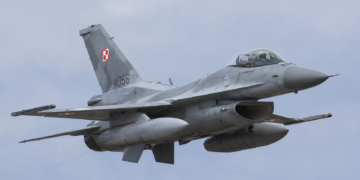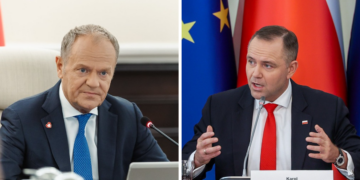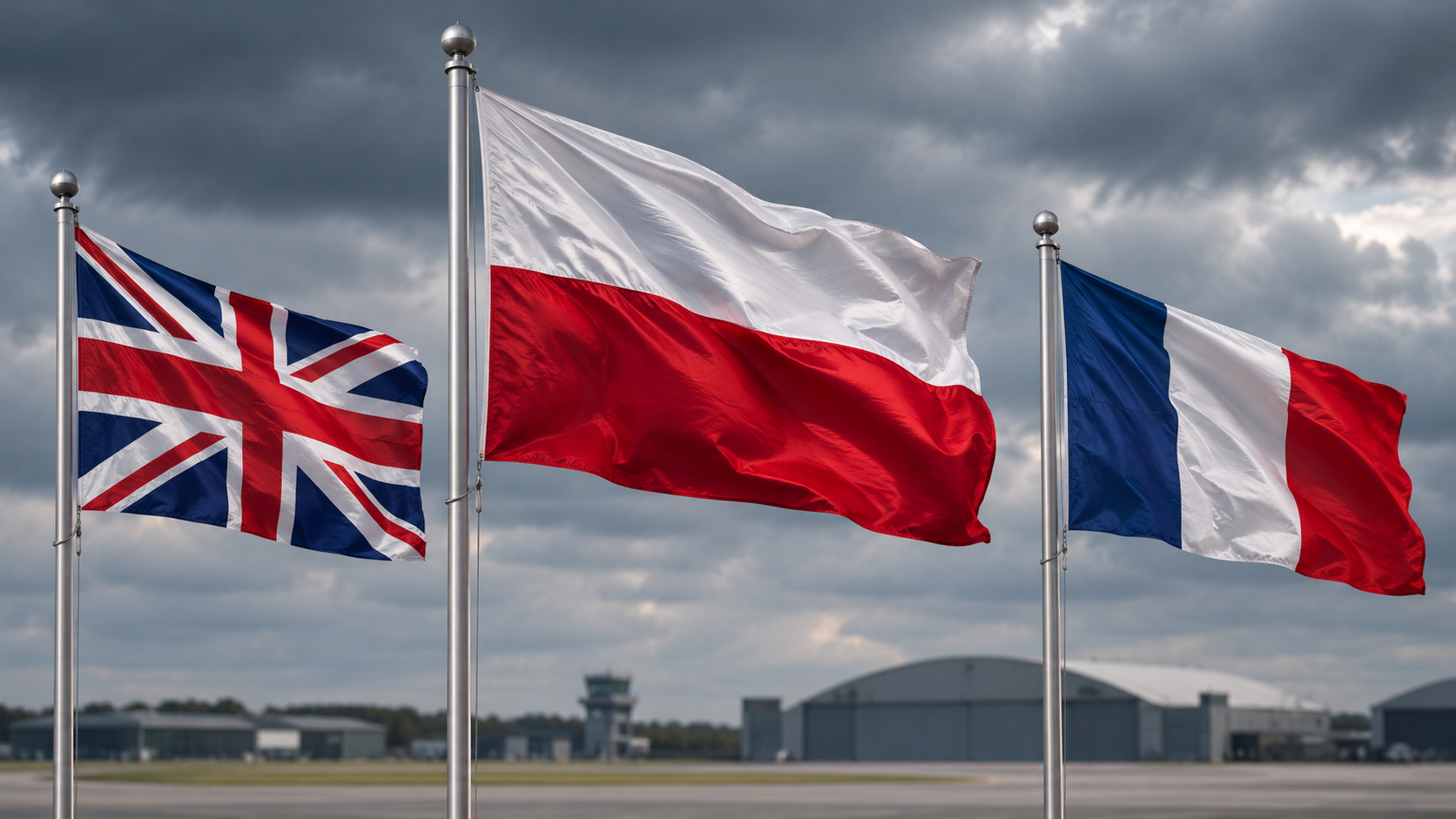
Poland’s Defence Minister Władysław Kosiniak-Kamysz has called on Britain and France to turn their security commitments into practical military support after three Russian cruise missiles entered Polish airspace. Speaking on Wednesday, 25 November, he identified air defence, missile defence and reconnaissance as priorities, arguing that allied solidarity must be demonstrated through action as well as political declarations.
The remarks place renewed pressure on two of Poland’s most important European defence partners, both of which have signed bilateral security agreements with Warsaw.
However, the minister did not announce a new British or French deployment, and there has been no confirmation that either government has agreed to provide additional equipment in response to the latest incident.
- Find more news from Poland on our Homepage .
Poland puts its defence partnerships to the test
Speaking in an interview with RMF FM, Kosiniak-Kamysz said Poland expected its allies to demonstrate their ability to provide assistance at a time of heightened security concerns.
Referring specifically to the security treaties Poland has signed with France and Britain, the defence minister used the Polish expression sprawdzam — roughly equivalent to calling for a commitment to be put to the test.
He said Warsaw wanted to establish whether its partners had the capacity to deliver support when Poland needed it.
The minister also argued that NATO should demonstrate solidarity through practical measures, following the latest violations of Polish airspace.
According to his remarks, Warsaw has already identified the military capabilities it considers necessary and communicated those requirements to NATO Secretary General Mark Rutte.
The priorities include stronger protection against aircraft and missiles, together with reconnaissance systems capable of identifying and tracking potential threats.
These are requests for defensive capabilities. They do not amount to a demand that Britain or France independently enforce a no-fly zone over Ukraine.
Russian missiles renew concerns over Polish airspace
The comments follow a major Russian attack on Ukraine on 20 November, during which three Russian Kh-101 cruise missiles crossed into Polish airspace.
The incident raised renewed questions about Poland’s ability to detect, track and intercept aerial threats approaching from the east.
In a statement to the Organization for Security and Co-operation in Europe on 25 November, a British military representative acknowledged that the three Russian missiles had entered Polish territory and come down in the country’s south-east.
The UK statement condemned Russia’s conduct and reaffirmed NATO’s defensive character. It did not, however, announce a new military deployment to Poland.
The latest incident forms part of a broader debate over how NATO members should respond when Russian weapons threaten the territory of countries bordering Ukraine.
As Poland-24 previously reported, Polish prosecutors have been investigating the objects discovered following the 20 November incursions.
Britain and Poland have already expanded defence cooperation
Poland’s appeal comes months after Warsaw and London signed a new bilateral security agreement.
The UK–Poland Security and Defence Partnership Treaty, signed on 27 May 2026, commits both countries to closer military cooperation and reinforces their obligations as NATO allies.
Its mutual-defence provisions provide for assistance, including military assistance, in the event of an armed attack, in accordance with Article 5 of the North Atlantic Treaty.
That distinction matters: an airspace violation does not automatically establish that the conditions for an armed-attack response have been met.

Britain and Poland have also moved beyond treaty-level commitments.
On 27 October, the two governments announced the Warsaw Defence Plan, a three-year programme covering military cooperation, defence technology and industrial collaboration.
The plan includes joint work on next-generation air-defence missiles, drone and counter-drone technologies, and cybersecurity.
These initiatives demonstrate that practical defence cooperation is already under way. Kosiniak-Kamysz’s latest intervention is therefore best understood as a call for additional, immediate defensive assistance in response to Poland’s current security needs.
France’s Nancy Treaty contains mutual-assistance commitments
France has also formalised its defence relationship with Poland through the Treaty of Nancy, signed in May 2025.
The agreement published by the French presidency provides for closer security cooperation and mutual assistance in the event of armed aggression.
Those commitments sit alongside the two countries’ existing obligations within NATO and the European Union.
They do not, by themselves, mean France is required to transfer a particular air-defence system whenever Polish airspace is violated.
Poland, Britain and France have nevertheless demonstrated their ability to cooperate militarily.
On 20 November, Kosiniak-Kamysz joined British Defence Secretary Wes Streeting and French Armed Forces Minister Catherine Vautrin at a multinational military exercise in Nowa Dęba.
The exercise, known as Koalicja 26.2, brought together forces participating in preparations for a potential multinational mission to support Ukraine following a ceasefire or peace agreement.
Kosiniak-Kamysz referred to Poland’s role in hosting those activities when explaining why Warsaw expected support from its partners in return.
The exercise was not itself an announcement of additional British or French air-defence forces for Poland.
Warsaw seeks practical measures from its European allies
The defence minister’s comments underline an increasingly important question for European security: how quickly can bilateral agreements and NATO commitments translate into additional defensive capabilities when a member state faces an immediate threat?
Britain and France are two of Europe’s principal military powers, and Poland regards cooperation with both countries as an important element of its wider security strategy.
But while the existing treaties provide a framework for assistance, decisions on specific equipment, deployments or operational support require further agreement.
For now, Warsaw has made its priorities clear.
The next development will be whether London, Paris or NATO announces concrete measures addressing the air-defence, missile-defence and reconnaissance capabilities Poland says it needs.