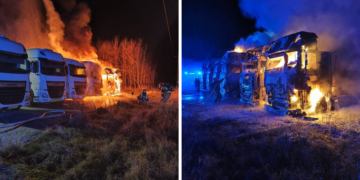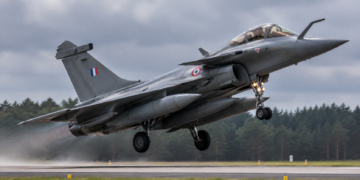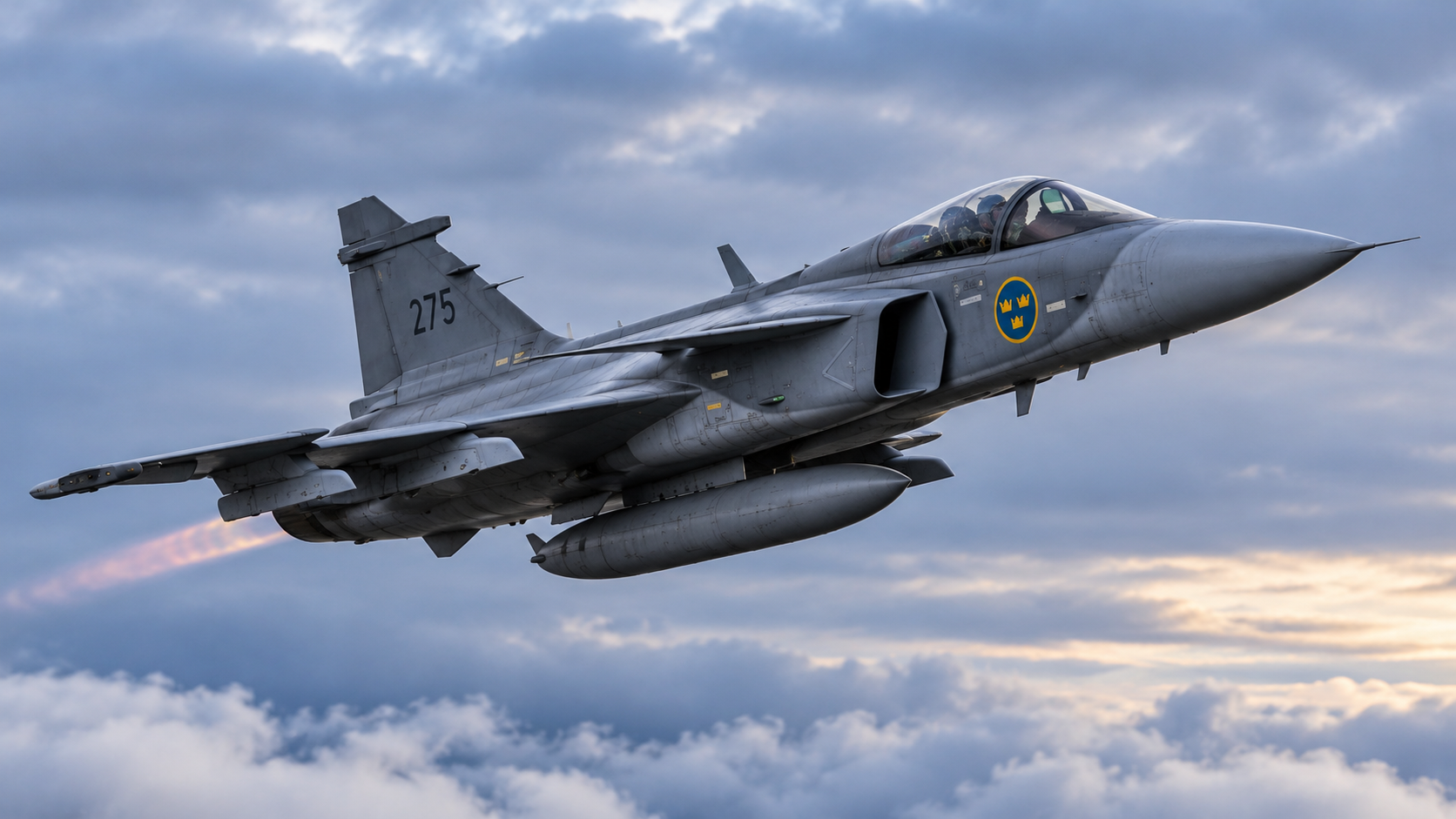
A Swedish fighter pilot operating under NATO command was authorised to shoot down a suspected Russian cruise missile over Poland during Friday’s airspace violations, but did not open fire because severe weather prevented him from positively identifying the target, a senior Polish military commander has revealed.
Lieutenant General Ireneusz Nowak, Poland’s operational commander of the armed forces, said the pilot of a Swedish JAS 39 Gripen had attempted to intercept an object believed to be a Russian Kh-101 cruise missile during the early hours of 20 November.
However, the pilot was unable to confirm the object’s identity either visually or through the aircraft’s onboard electro-optical systems.
- Find more news from Poland on our Homepage .
Speaking to the Polish newspaper Rzeczpospolita, Nowak attributed the decision not to fire to exceptionally difficult weather conditions in the interception area.
The disclosure provides new details about the allied military response to Russian aerial objects entering Polish territory during a large-scale attack on Ukraine.
NATO gave conditional authorisation to fire
The two Swedish Gripen fighters involved in the operation were under the control of NATO’s Combined Air Operations Centre (CAOC) in Uedem, Germany, which coordinates allied air operations across the region.
According to Nowak, the centre issued what is known as a condition-based order, authorising pilots to make their own decisions about engaging aerial targets once specified requirements had been met.
The Swedish pilot reported that the object he was tracking was probably a Russian Kh-101 cruise missile.
However, he could not establish the identification required to use his weapons.
The distinction is important: NATO had authorised an engagement under defined conditions, but those conditions were not satisfied.
The general’s account indicates that the pilot’s decision was governed by the requirements for identifying a target rather than an absence of permission to engage.
Polish Defence Minister Władysław Kosiniak-Kamysz also explained during a 20 November defence ministry briefing that decisions to use weapons depended on commanders and pilots assessing the circumstances, including potential risks to civilians.
Swedish and Polish fighter jets scrambled
The attempted interception formed part of a wider NATO air-defence response involving aircraft from several allied countries.
Two Polish F-16 fighters and two Swedish Gripens were deployed, supported by a Polish Saab 340 airborne early-warning aircraft and a Dutch MRTT aerial refuelling aircraft.
Polish ground-based air-defence systems were also activated.
In an official statement issued on 20 November, the Swedish Armed Forces confirmed that their pilots had tracked several objects in Polish airspace during an operation lasting several hours.
The mission involved refuelling aircraft in darkness and preparing Swedish fighters for further operations from a forward airbase in Poland.
Niclas Magnusson, deputy commander of the Swedish Air Force, confirmed that the pilots had operated in extremely difficult weather and visibility conditions.
The Swedish aircraft were participating in NATO’s collective air-defence operations. Although normally based in Sweden during this deployment, they can also operate from an airbase in Poland.
Poland-24 previously reported on the deployment of Swedish Gripens to protect Polish airspace, including their role in strengthening the protection of NATO’s eastern flank.

Three Russian objects entered Polish airspace
According to Nowak’s account, Polish military authorities monitored 11 aerial objects considered potential threats during the Russian attack on Ukraine.
Three crossed into Polish airspace.
The country’s National Security Bureau subsequently confirmed that debris from a Russian Kh-101 cruise missile had been identified in Nowy Lipowiec, in south-eastern Poland.
Two other objects fell near Rudnik nad Sanem and Mołodycz, with their precise identification subject to investigation.
The National Security Bureau’s initial findings described a second possible missile and a probable jet-powered drone.
Polish authorities said nobody had been injured during the incidents.
The incursions occurred during one of Russia’s major aerial attacks against Ukraine, while international military exercises involving European countries were taking place in south-eastern Poland.
Prime Minister Donald Tusk accused Russia of a deliberate provocation, although Moscow’s precise intentions have not been independently established.
NATO to discuss airspace violations
The incident has prompted renewed debate about how Poland and its allies should respond to Russian missiles and drones entering NATO airspace.
On Saturday, NATO Secretary General Mark Rutte reiterated the alliance’s commitment to defending Polish territory.
As Poland-24 reported, Rutte’s comments followed consultations in Warsaw amid calls for stronger defences on NATO’s eastern flank.
Polish Foreign Minister Radosław Sikorski has also raised the possibility of intercepting Russian missiles over western Ukraine before they reach Polish territory.
That proposal is separate from Friday’s attempted interception, which occurred during an operation to defend Polish airspace.
The North Atlantic Council, NATO’s principal political decision-making body, is expected to discuss the incursions at a meeting in Brussels on Monday, 23 November.
According to Polish Radio’s report citing Poland’s representation to NATO, Deputy Defence Minister Paweł Zalewski is due to represent Warsaw.
The latest disclosures underline a practical challenge for allied air defences: even when fighter aircraft are deployed and authorised to engage a potential threat, the decision to fire still depends on the conditions and information available to their pilots.