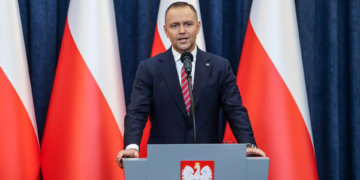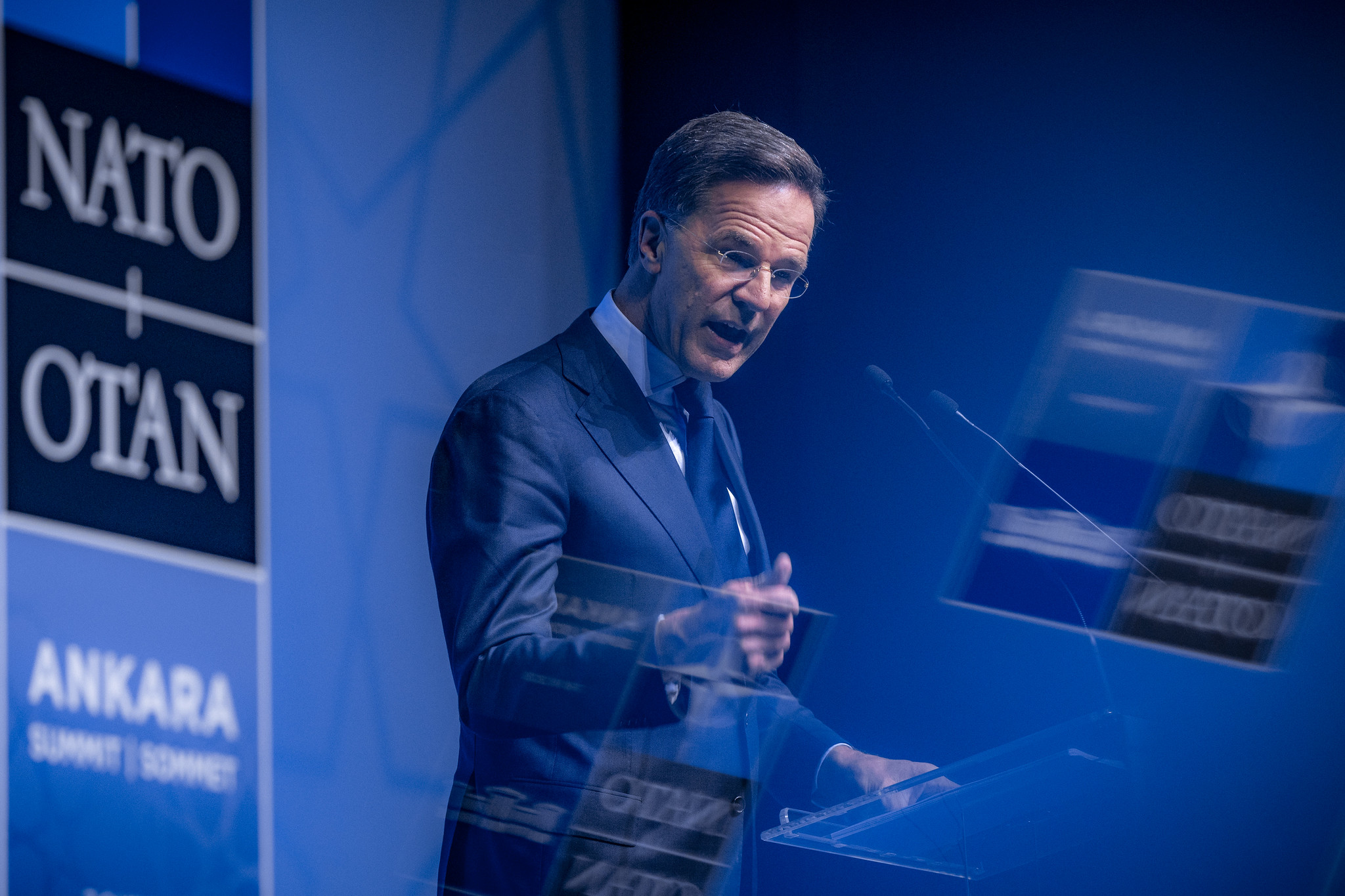
NATO Secretary General Mark Rutte has pledged that the alliance will defend every inch of Polish territory following the latest Russian missile and drone incursions into Poland’s airspace. Speaking during a visit to Warsaw on Saturday, 21 November, Rutte reaffirmed NATO’s commitment to Poland’s security as preparations continued for a North Atlantic Council meeting in Brussels.
The visit came one day after Polish authorities confirmed that three Russian objects had entered the country’s airspace during a major Russian aerial assault on Ukraine.
According to Reuters, citing the Polish Press Agency, Rutte declared:
- Find more news from Poland on our Homepage .
“I can guarantee that NATO will defend every inch of Polish territory.”
The NATO chief described the airspace violations as dangerous and said the response by Polish and allied forces had been appropriate.
His remarks represent a direct reaffirmation of NATO’s collective defence commitment at a time when Poland is pressing its allies to strengthen air and missile defences along the alliance’s eastern flank.
Rutte praises Poland and allied forces
Speaking to Polish public broadcaster TVP Info, Rutte said NATO members stood together following the incursions.
He pointed to the response by Polish F-16 fighter jets and allied aircraft as evidence of the alliance’s operational cooperation.
Rutte said the response had demonstrated that NATO could act effectively during a serious security incident.
The NATO chief also praised cooperation between Poland’s political leadership, noting that President Karol Nawrocki and Prime Minister Donald Tusk had maintained a united position on national defence despite domestic political differences.
According to reporting by Gazeta.pl on his TVP Info interview, Rutte said the cooperation between Poland’s centres of political power had impressed him.
He emphasised that disagreements over domestic politics need not prevent unity when national security was at stake.
Poland’s Presidential Chancellery separately confirmed that Nawrocki had spoken with Rutte on Friday, 20 November, and remained in contact with him about the incident.
The president’s chief of staff, Paweł Szefernaker, said no separate meeting between Nawrocki and Rutte was planned during Saturday’s visit at the time of his remarks.
NATO military commander could adjust defensive measures
Rutte also addressed whether the alliance might need to change its military posture following the latest violations.
He said NATO’s Supreme Allied Commander Europe, General Alexus Grynkewich, would assess potential weaknesses in deterrence and defence capabilities and make appropriate adjustments where necessary.
The remarks did not constitute an announcement that additional forces or air-defence systems had already been deployed to Poland.
Polish Defence Minister Władysław Kosiniak-Kamysz had previously called for additional allied resources to support NATO’s Eastern Sentry operation.
In an official Defence Ministry statement on Friday, Kosiniak-Kamysz said Poland intended to seek greater assistance from NATO in responding to threats along its eastern border.
Eastern Sentry is an alliance initiative aimed at strengthening surveillance, deterrence and defensive capabilities along NATO’s eastern flank.
Poland’s request for additional support is separate from any final decision by NATO to provide specific equipment or military units.

What happened over Poland on Friday?
The latest crisis began during the night of 19–20 November, when Russia carried out a large-scale aerial attack against Ukraine.
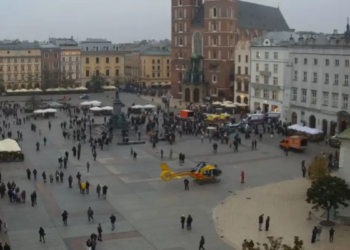
Three objects crossed into Polish airspace and came down in south-eastern Poland.
According to the Polish Presidential Chancellery’s official account, authorities identified a Russian Kh-101 cruise missile at Nowy Lipowiec in Lublin Voivodeship.
Preliminary findings indicated that another missile came down near Rudnik nad Sanem, while an object recovered near Mołodycz was believed to have been a jet-powered drone.
Investigations into the latter two objects were continuing.
Polish and allied aircraft were mobilised as the situation developed.
The Defence Ministry confirmed that Polish F-16s and Swedish Gripen fighter jets operated during the incident, supported by Dutch aerial refuelling capabilities.
Ground-based air-defence systems were also activated.
Polish authorities said no injuries or damage to critical infrastructure had been reported.
Prime Minister Tusk characterised the incursions as a possible deliberate Russian provocation, highlighting their timing alongside multinational military exercises taking place in Poland.
That assessment of Russian intent remains the Polish government’s position; the precise circumstances of the incursions are still being investigated.
NATO to discuss violations in Brussels on Monday
The next diplomatic step is scheduled for Monday, 23 November, when NATO’s North Atlantic Council is expected to discuss the Russian airspace violations.
According to Polish Radio’s Brussels correspondent, the meeting will take place at NATO headquarters and will be attended by Poland’s Deputy Defence Minister Paweł Zalewski.
The North Atlantic Council is the alliance’s principal political decision-making body, bringing together representatives of its member states.
It can consider security incidents, coordinate political responses and discuss changes to the alliance’s defensive posture.
The announced meeting does not, by itself, constitute an invocation of Article 5, NATO’s collective-defence provision.
Nor has a decision on additional military deployments been announced as part of the meeting.
Poland seeks stronger protection
The latest airspace violations have renewed Poland’s demands for stronger measures to protect NATO’s eastern frontier.
Polish officials have argued that repeated incursions by missiles and drones demonstrate the dangers created by Russia’s continuing attacks on Ukraine.
The government has also highlighted the challenge of intercepting fast-moving aerial threats close to populated areas and international borders.
Rutte’s statements provide political reassurance, but the practical response will depend on decisions taken by NATO’s military commanders and member governments.
For Warsaw, Monday’s meeting offers an opportunity to raise the incidents formally with allies and press for measures intended to reduce the risk of further incursions.
The immediate question is whether the alliance will move beyond reaffirming its existing commitments and agree on additional defensive capabilities for Poland.