Poland has backed tighter European Union restrictions on Russian citizens following allegations that Russian intelligence services organised a second assassination attempt against the same Ukrainian-American citizen, this time in Denmark. Polish authorities had previously thwarted a suspected plot to kill the man in Warsaw in August 2026.
In a statement published on Friday, 20 November, Poland’s Ministry of Foreign Affairs expressed outrage and concern over the Danish findings, describing the case as another example of alleged Russian operations intended to intimidate and destabilise European societies.
The ministry called for coordinated action by EU and NATO countries against Russian activities it said bore the characteristics of state terrorism.
- Find more news from Poland on our Homepage .
Warsaw also endorsed Denmark’s proposals to tighten restrictions on Russian citizens entering and travelling within the European Union.
Danish police uncover alleged assassination plot
The case concerns a suspected attempt to murder Ukrainian-American rapper Albert Vasiliev, better known by his stage name Kyivstoner, ahead of a scheduled concert near Copenhagen on 25 September 2026.
According to a statement released by Denmark’s Security and Intelligence Service (PET), intelligence officers believe the operation was planned and initiated by Russian intelligence services.
PET said individuals connected to Loyal to Familia, a banned Danish criminal organisation, were allegedly recruited to carry out the killing.
Three men were arrested in a vehicle close to the concert venue in Hellerup, north of Copenhagen. Police recovered firearms and knives from the vehicle. A fourth man was detained later that evening.
On 20 November, a Danish court found sufficient grounds to extend the pre-trial detention of two suspects to cover allegations of attempted murder and assisting a foreign intelligence service.
According to the official announcement by North Zealand Police, the intended attack was linked to a performance at Skovriderkroen in Charlottenlund.
The two men have denied wrongdoing. The criminal investigation remains ongoing, and the allegations have not resulted in convictions.
Same man was targeted in Warsaw in August
The Danish investigation has renewed attention on an earlier alleged Russian assassination operation uncovered in Poland.
On 13 August, Polish Prime Minister Donald Tusk announced that the country’s Internal Security Agency (ABW), working with police, had prevented the planned killing of a person holding both American and Ukrainian citizenship.
According to Tusk, a Russian citizen allegedly recruited by Russian intelligence had been arrested in Warsaw on 7 August.
The intended victim was someone considered undesirable by the Kremlin, the prime minister said.
The operation was conducted with assistance from American intelligence services, according to Tomasz Siemoniak, Poland’s minister responsible for coordinating the country’s intelligence agencies.
Polish broadcaster RMF FM subsequently identified the intended target as Albert Vasiliev, who also uses the name Slevin Dadyan.
The Polish Foreign Ministry’s latest statement explicitly connects the two incidents, identifying the intended victim in Denmark as the same person targeted in Warsaw.
The ministry said Polish security services had prevented the earlier attack and arrested its suspected perpetrator.
Denmark expels Russian diplomat
Denmark has announced diplomatic measures in response to its intelligence findings.
Foreign Minister Lars Løkke Rasmussen said the Russian ambassador had been summoned and informed that Russia’s defence attaché would be expelled from Denmark.
According to Reuters’ reporting on the Danish announcement, Danish officials also warned that the suspected operation illustrated the growing willingness of Russian intelligence agencies to use criminal networks to conduct attacks abroad.
The Russian embassy in Copenhagen rejected the accusations, saying Denmark had not provided evidence supporting its claims.
Danish Prime Minister Mette Frederiksen said her government would seek further European restrictions on Russian travel.
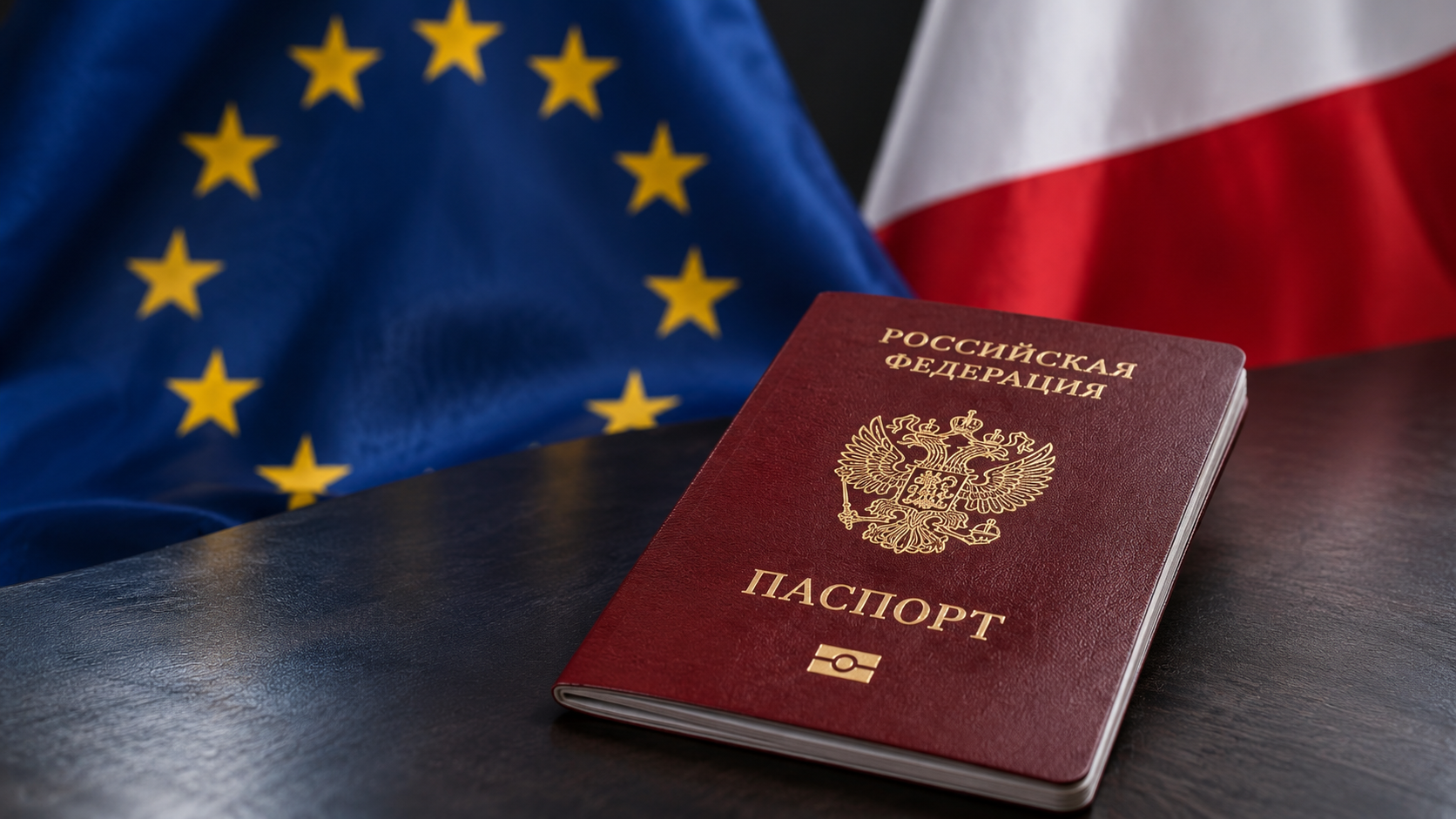
In an official statement issued by her office, Frederiksen called for an end to non-essential visas for Russian citizens and proposed limiting the validity of such visas to the issuing country.
The proposals would go further than existing EU-wide restrictions, but have not been adopted across the bloc.
Poland supports stronger restrictions on Russian travel
Poland has maintained restrictions on entry by Russian citizens since September 2022, although exemptions remain for certain categories of travellers.
The Polish Border Guard’s official guidance confirms that Russian citizens must meet specified conditions to enter Poland, including when arriving through other countries.
The European Union has separately suspended its visa facilitation agreement with Russia and introduced stricter visa requirements, but it has not imposed a universal ban on Russian citizens entering the Schengen area.
Poland’s Foreign Ministry said it supports Denmark’s proposed measures and believes EU and NATO countries should act together when responding to suspected Russian operations.
The Danish investigation will now seek to establish the precise roles of the suspects and their alleged connections to foreign intelligence services.
PET has stressed that the case does not indicate a general assassination threat against people living in Denmark, but considers it evidence of a heightened security threat from Russian intelligence operations.