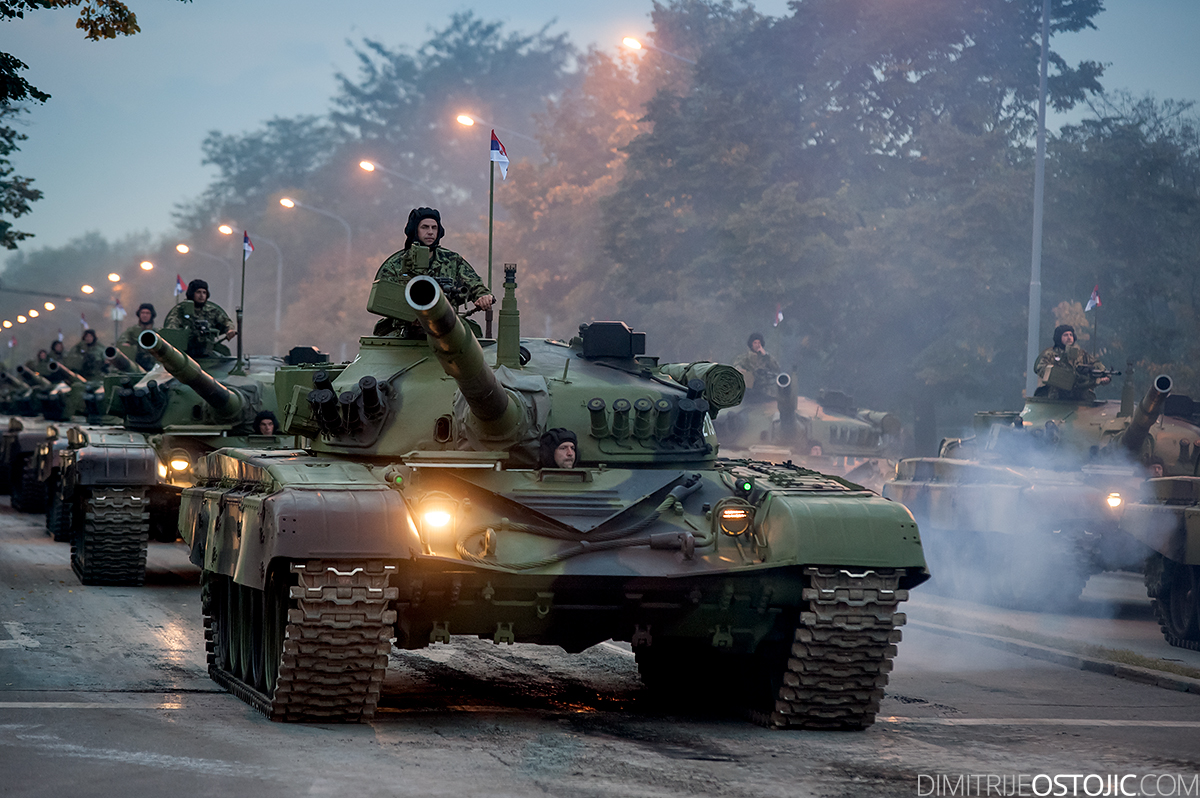
Belarus is holding military exercises close to its borders with Poland and Lithuania, including near the strategically sensitive Suwałki Gap, as NATO’s eastern members remain on heightened alert over military activity in the region.
The four-day command-and-staff exercise involves Belarus’s Western Operational Command and runs until 18 September.
Mechanised and tank battalions are taking part, with troops practising border protection, operations against sabotage and reconnaissance groups, and defence against drones and light aircraft, according to information released by the Belarusian defence ministry and reported by Euronews.
Some of the exercises are taking place at training grounds close to Poland and Lithuania.
The Gozha training ground lies close to the Lithuanian border, while the Brest and Ruzhany ranges are around 15 kilometres and 60 kilometres from Poland respectively.
Part of the activity is therefore taking place close to the Suwałki Gap, the roughly 100-kilometre stretch of Polish-Lithuanian frontier that provides the Baltic states with their only land connection to the rest of NATO territory.
The corridor also separates Belarus from Russia’s Kaliningrad exclave, giving it particular strategic significance for the alliance.
Belarus has described the drills as “purely defensive” and says there is no reason for neighbouring countries to be concerned.
Minsk also says the number of troops and amount of military equipment involved remain below thresholds set by the 2011 Vienna Document, an Organisation for Security and Co-operation in Europe mechanism requiring advance notification and other transparency measures for larger military exercises.
Belarus has not publicly provided a precise total for the number of personnel involved.
The current manoeuvres come during a period of heightened security concern across NATO’s eastern flank.
Earlier this week, an Italian fighter operating as part of NATO’s Baltic air-defence mission shot down a Russian-made Gerbera drone that entered Lithuanian airspace from Belarus.
Lithuanian President Gitanas Nausėda said on Wednesday that the drone was probably intended for a target in Ukraine and may have been diverted by Ukrainian electronic warfare, rather than deliberately sent toward Lithuania.
Lithuanian authorities are examining the drone’s electronics to establish its likely route and intended destination.
Separately, Polish forces recovered another Russian Gerbera-type drone near the Baltic coast this week.
Polish Defence Minister Władysław Kosiniak-Kamysz said an initial inspection indicated that the aircraft was of Russian military origin.
The discovery came after Russian drone strikes hit infrastructure in western Ukraine close to the Polish border, prompting Warsaw to increase protection around several border crossings.
These incidents are not known to be connected to the Belarusian military exercise.
Belarus and Russia deepen military cooperation
Belarus remains Russia’s closest military ally in the region and allowed Russian forces to use its territory and infrastructure during the initial phase of the full-scale invasion of Ukraine in February 2022.
Belarusian troops have not been deployed in direct combat in Ukraine.


Minsk and Moscow have nevertheless maintained extensive military cooperation, including joint exercises, shared air-defence arrangements and Russian deployments on Belarusian territory.
Ukraine’s Border Guard Service said earlier this week that Russian forces were also using relay stations in Belarus to support the control of drones attacking targets in western Ukraine.
Belarus has not publicly confirmed that claim.
The latest drills are separate from the large-scale Zapad exercises historically conducted by Belarus and Russia, but they continue a pattern of Belarusian military activity close to NATO territory.
President Alyaksandr Lukashenka visited the Obuz-Lesnovsky training ground near Baranavichy on 11 September, saying he wanted to assess the readiness of the country’s wider national-security system.
Belarus has repeatedly argued that its military preparations are defensive and intended to respond to what it describes as increased NATO activity near its borders.
Poland and Lithuania, meanwhile, have expanded military infrastructure and readiness along their frontiers with Belarus and Russia since Moscow’s invasion of Ukraine.
The current exercise is scheduled to conclude on Friday.