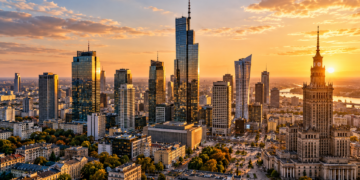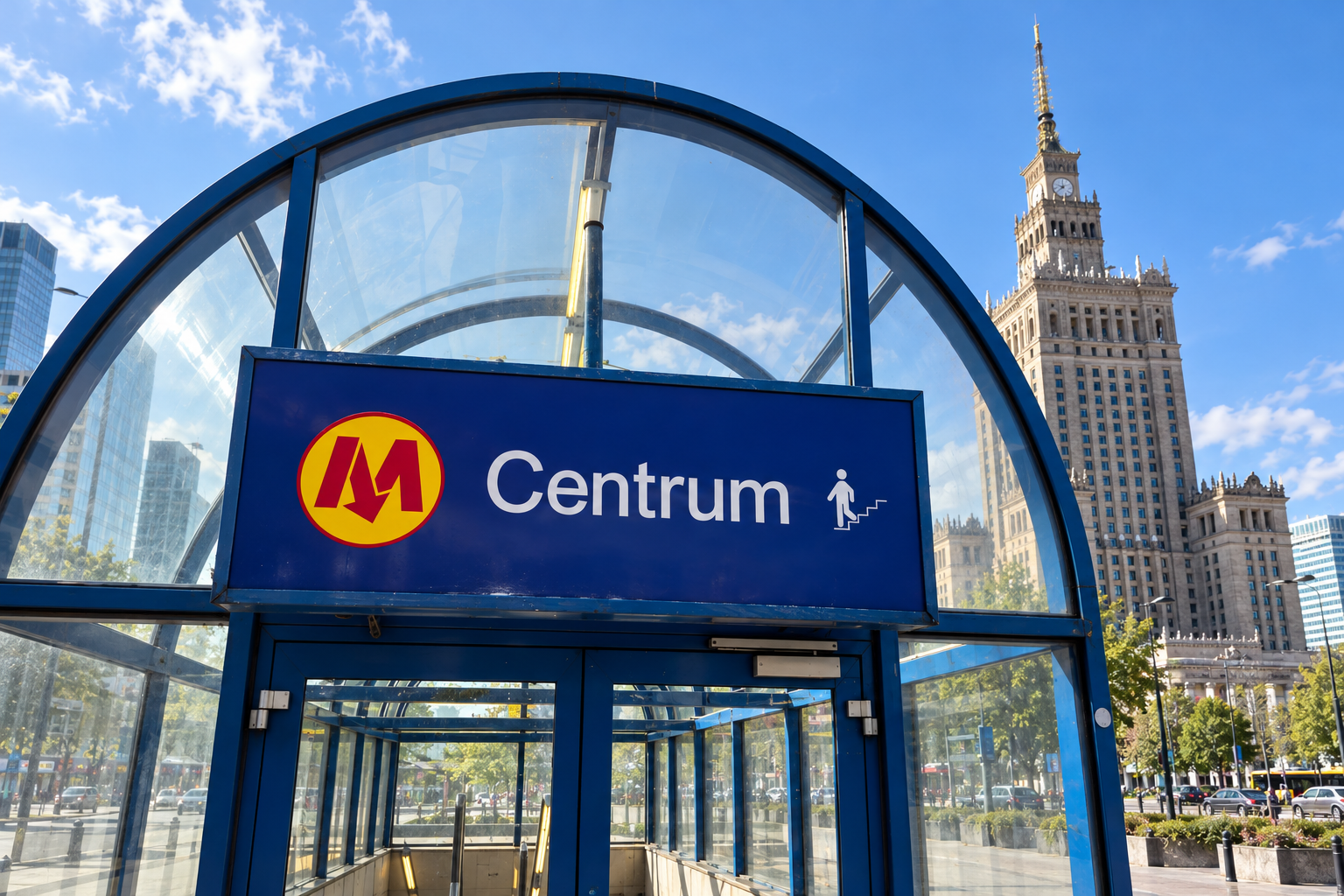
Warsaw has been named one of the world’s best cities for public transport, ranking 12th globally and sixth in Europe in a new international survey by British magazine Time Out. The Polish capital finished ahead of major European cities including Stockholm, Hamburg, Amsterdam and Oslo, with 81.9% of local respondents describing their public transport as good or amazing.
The ranking, published on 13 October 2026, forms part of Time Out’s annual global survey examining how residents experience life in their cities.
More than 24,000 people worldwide were asked to rate their local buses, trams and trains on a five-point scale, ranging from awful to amazing.
- Find more news from Poland on our Homepage .
According to Time Out’s original global ranking, Warsaw achieved a positive rating of 81.9%, placing it between Shanghai, which ranked 11th with 82.7%, and Osaka, which finished 13th with 81.6%.
Warsaw’s result places it among the most highly rated European transport systems, reflecting strong passenger approval of a network that combines buses, trams, two metro lines and suburban rail services.
Crucially, the ranking measures residents’ satisfaction with public transport, rather than independently assessing every system’s punctuality, cost or technical performance.
Warsaw among Europe’s top six cities for public transport
The Polish capital was one of ten European cities to appear in Time Out’s global top 20.
Edinburgh emerged as Europe’s highest-ranked city, taking fourth place worldwide with a 92.4% positive rating. Zurich followed in sixth place globally, ahead of Vienna, Tallinn and Helsinki.
Warsaw was next, securing sixth position among the European cities included in the ranking.
Europe’s 10 highest-rated cities
Percentage of local respondents rating public transport good or amazing, Time Out 2026.
| Europe rank | City | Positive rating |
|---|---|---|
| 1 | Edinburgh | 92.4% |
| 2 | Zurich | 90.7% |
| 3 | Vienna | 90.3% |
| 4 | Tallinn | 85.3% |
| 5 | Helsinki | 83.6% |
| 6 | Warsaw | 81.9% |
| 7 | Stockholm | 80.3% |
| 8 | Hamburg | 77.0% |
| 9 | Amsterdam | 76.9% |
| 10 | Oslo | 75.9% |
Source: Time Out’s European ranking published on 16 October 2026.
Warsaw’s position is particularly noteworthy because it outperformed several cities with long-established reputations for efficient urban mobility.
Stockholm finished 14th globally, Hamburg 17th, Amsterdam 18th and Oslo 20th.
Meanwhile, the highest global ratings went to Asian cities. Taipei topped the list with 95%, followed by Singapore at 93.5% and Hong Kong at 92.8%.
Seoul also made the top five, with 91.1% of respondents expressing satisfaction with their transport networks.
Warsaw’s metro and trams form the backbone of its network
Warsaw’s transport system combines two underground metro lines with an extensive network of tram routes, buses and suburban railways.
For international visitors, the metro provides rapid connections between major residential districts and the city centre. The tram network serves important streets and neighbourhoods, while buses provide coverage across the wider metropolitan area.
The city’s Szybka Kolej Miejska (SKM) suburban railway adds connections to more distant areas, including Warsaw Chopin Airport.
The different services operate under the Warsaw Public Transport system, known as Warszawski Transport Publiczny (WTP), with integrated ticketing arrangements covering additional regional railway journeys under specified conditions.
Warsaw has continued investing in its transport infrastructure, including new tram connections and the expansion of its second metro line.


Recent projects have included tram connections to Stegny and along Rakowiecka Street, alongside ongoing improvements to railway and tram infrastructure.
A January 2026 report from Warsaw City Hall also documents investments in passenger accessibility, including improved tactile guidance for visually impaired travellers at metro stations.
The city is working on a new ticketing system that would eventually expand payment options using bank cards, mobile phones and other devices.
According to the municipal timetable announced earlier this year, the first implementation stages are planned for 2027, with the full system expected to operate from 2029.
More than 932 million journeys in 2025
The scale of Warsaw’s public transport network helps explain its importance to everyday life in the capital.
According to the city’s official figures, passengers made 932.1 million journeys using Warsaw’s public transport services during 2025.
Buses remained the most widely used form of transport, accounting for approximately 420.8 million journeys.
Trams carried another 248.5 million passengers, while the metro recorded almost 193 million journeys.
The suburban SKM railway carried approximately 23.8 million passengers, representing a 32% increase compared with 2024.
The figures include transport services operating across Warsaw and parts of its surrounding metropolitan area.
Overall passenger journeys were slightly lower than the approximately 956 million recorded in 2024, despite the strong growth in suburban rail usage.
During weekday peak periods in 2025, Warsaw’s transport system deployed more than 1,400 buses, 451 tram formations, 62 metro trains and 31 SKM trains.
The city also reported growing use of integrated regional railway tickets, with an estimated 46 million journeys made under the common ZTM–KM–WKD ticket arrangement, approximately 10% more than the previous year.
A positive ranking, but not an independent performance audit
Although Warsaw’s placement is an encouraging result, the methodology behind the ranking is important.
Time Out asked residents how they felt about public transport in their own cities. The final ranking was determined by the proportion giving positive responses.
That means the results reflect passenger perceptions, rather than a technical comparison of transport systems using identical performance indicators.
The survey does not directly establish which cities have the fastest services, lowest fares, greatest network coverage or highest punctuality rates.
Another important limitation is that Time Out included only the highest-scoring city from each country in its global top 20.
Consequently, the absence of another city does not necessarily mean its public transport scored worse than Warsaw’s.
The magazine also did not provide detailed city-level sample sizes in its published ranking, limiting how precisely readers can assess the differences between closely placed cities.
Nevertheless, Warsaw’s result shows that a substantial majority of its surveyed residents viewed their public transport positively.
For Poland’s capital, the recognition comes as the city continues to expand its transport network and invest in alternatives to private-car travel.
Being ranked 12th globally and sixth among the European cities included puts Warsaw alongside established international transport centres — and ahead of several major Western European capitals in this particular measure of passenger satisfaction.