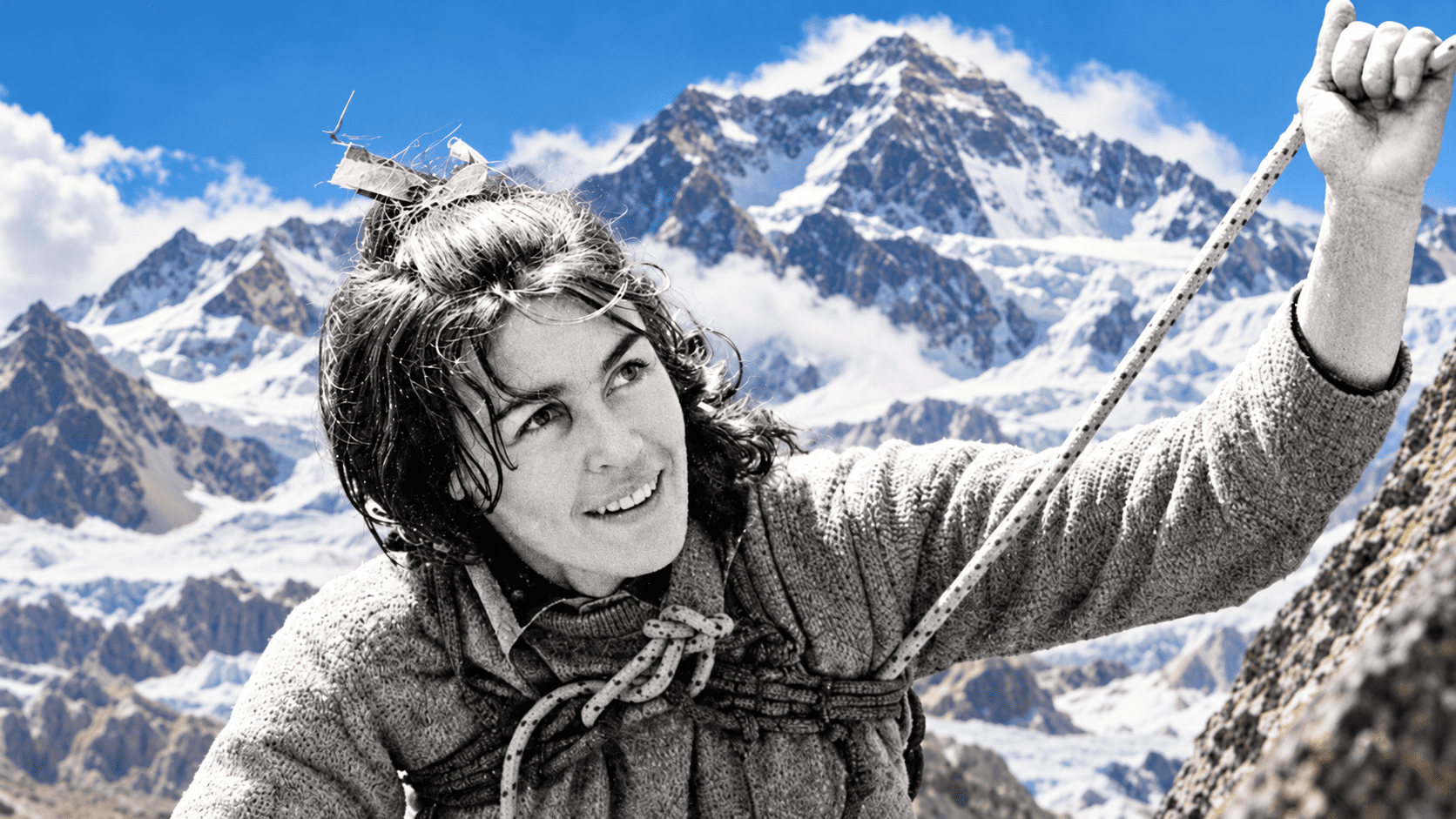
On 16 October 1978, two Poles reached extraordinary heights thousands of kilometres apart.
In the Himalayas, Wanda Rutkiewicz stood on the summit of Mount Everest, becoming the first person from Poland, the first European woman and only the third woman in history to reach the highest point on Earth.
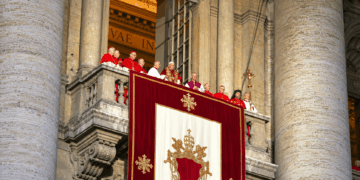
Later that same day in Rome, the College of Cardinals elected Kraków’s Karol Wojtyła as Pope John Paul II.
- Find more news from Poland on our Homepage .
The coincidence has become one of the most memorable dates in modern Polish history: while one Pole was standing at 8,849 metres above sea level, another was emerging onto the balcony of St Peter’s Basilica as the first Polish pope.
For Rutkiewicz, Everest was also the achievement that transformed an already formidable climber into an international mountaineering figure.
A Polish engineer on the world’s highest mountain
Rutkiewicz was 35 when she joined the 1978 Everest expedition.
She was not a professional athlete in the modern commercial sense. Trained as an electronics engineer, she had built her climbing career through the distinctive world of post-war Polish mountaineering, progressing from rocks and the Tatras to the Alps, Hindu Kush and Karakoram.
By the 1970s she was already an experienced expedition climber and an increasingly important advocate of women organising and leading their own high-altitude expeditions.
Everest, however, was on another scale.
The expedition approached through Nepal and used the established South Col–Southeast Ridge route. According to the Himalayan Database, Rutkiewicz served as a deputy leader within the expedition and climbed with supplementary oxygen.
On 16 October, the summit party left the South Col in the morning.
Records from the expedition place Rutkiewicz on the summit at about 1.45pm local time.
She had reached the roof of the world.
No Polish climber had done it before her.
The first European woman on Everest
Two women had previously reached Everest’s summit, both in 1975.
Rutkiewicz became the third.
But she was the first European woman to do so, a distinction confirmed by Poland’s Museum of Sport and Tourism and by contemporary mountaineering records.
For Polish climbing, the ascent was equally significant because Rutkiewicz was also the country’s first Everest summiteer, male or female.
It came during a remarkable period for Polish Himalayan mountaineering.
Climbers from communist Poland often operated with fewer financial resources than their Western counterparts, but during the 1970s and 1980s they developed an international reputation for ambitious expeditions, difficult routes and, eventually, extraordinary winter ascents.
Rutkiewicz became one of the most recognisable figures of that generation.
She also stood apart in another respect.
High-altitude mountaineering remained overwhelmingly male. Rutkiewicz did not simply take part in that world; she increasingly challenged its assumptions about what women could climb and who should lead expeditions.
Everest provided the clearest possible proof.
And in Rome, another Polish first
Rutkiewicz could hardly have chosen a more extraordinary date.
While news of her Everest success was beginning its journey down from the mountain, a conclave was taking place in the Vatican.
That evening, the cardinals elected Karol Wojtyła, Archbishop of Kraków, as pope.
He became John Paul II, the first Polish pontiff and the first non-Italian pope in more than four centuries.
The two events were completely unrelated.
Yet their coincidence became irresistible in Poland: on the same calendar day, a Polish woman had reached the highest mountain on Earth and a Polish cardinal had been elected to the highest office in the Catholic Church.
The connection later became personal.
During John Paul II’s first visit to Poland as pope in June 1979, Rutkiewicz met him in Kraków and presented him with a piece of rock from Everest.
The pope referred to the unusual coincidence, joking in effect that Providence had wanted both of them to rise so high on the same day.
Everest was not the end
For many climbers, reaching Everest would have been the defining conclusion of a career.
For Rutkiewicz, it became part of something larger.
She continued pursuing the world’s highest and most difficult mountains and became increasingly associated with the idea that women should undertake major expeditions on their own terms rather than simply seek places on male-led teams.
Eight years after Everest, she achieved another mountaineering first.
On 23 June 1986, Rutkiewicz reached the summit of K2, the 8,611-metre peak on the Pakistan-China frontier generally regarded as one of the world’s most formidable mountains.
She became the first woman in history to summit K2.
Her ambition eventually expanded into what she called her “Caravan of Dreams” — an attempt to climb all 14 of the world’s mountains higher than 8,000 metres.
She would reach eight of them.
A career that ended on Kangchenjunga
Rutkiewicz’s pursuit of the eight-thousanders ultimately ended on Kangchenjunga, the world’s third-highest mountain.
In May 1992, during a summit attempt, Mexican climber Carlos Carsolio encountered her high on the mountain as he descended.
She intended to continue upwards.
Rutkiewicz was never seen again.
Her body has never been found.
That ending has inevitably become part of her legend, but it can also obscure what made her career historically important.
She was not notable simply because she died in the mountains.
She was an engineer who became one of the leading high-altitude climbers of her generation, a pioneer of women’s Himalayan mountaineering, the first European woman on Everest and the first woman anywhere to stand on K2.
And one date remains particularly attached to her name.
16 October 1978 is remembered in Poland principally as the day Karol Wojtyła became Pope John Paul II.
But thousands of kilometres away, before the announcement in Rome, Wanda Rutkiewicz had already made that same day historic for Poland in a very different way.
She had stood on top of the world.