

Poland’s national symbols—its flag, coat of arms, and national anthem—are not merely emblems of statehood. They are profound representations of the country’s storied past, reflecting its struggles for independence, perseverance through adversity, and the enduring strength of its people. Central to these symbols are the colors white and red, which hold deep meaning and resonate with the heart of Polish identity. In this post, we’ll take a closer look at the history behind Poland’s national symbols, what these colors stand for, how they’ve evolved, and why they continue to be cherished today.
1. The Polish Flag: A Banner of National Unity and Freedom
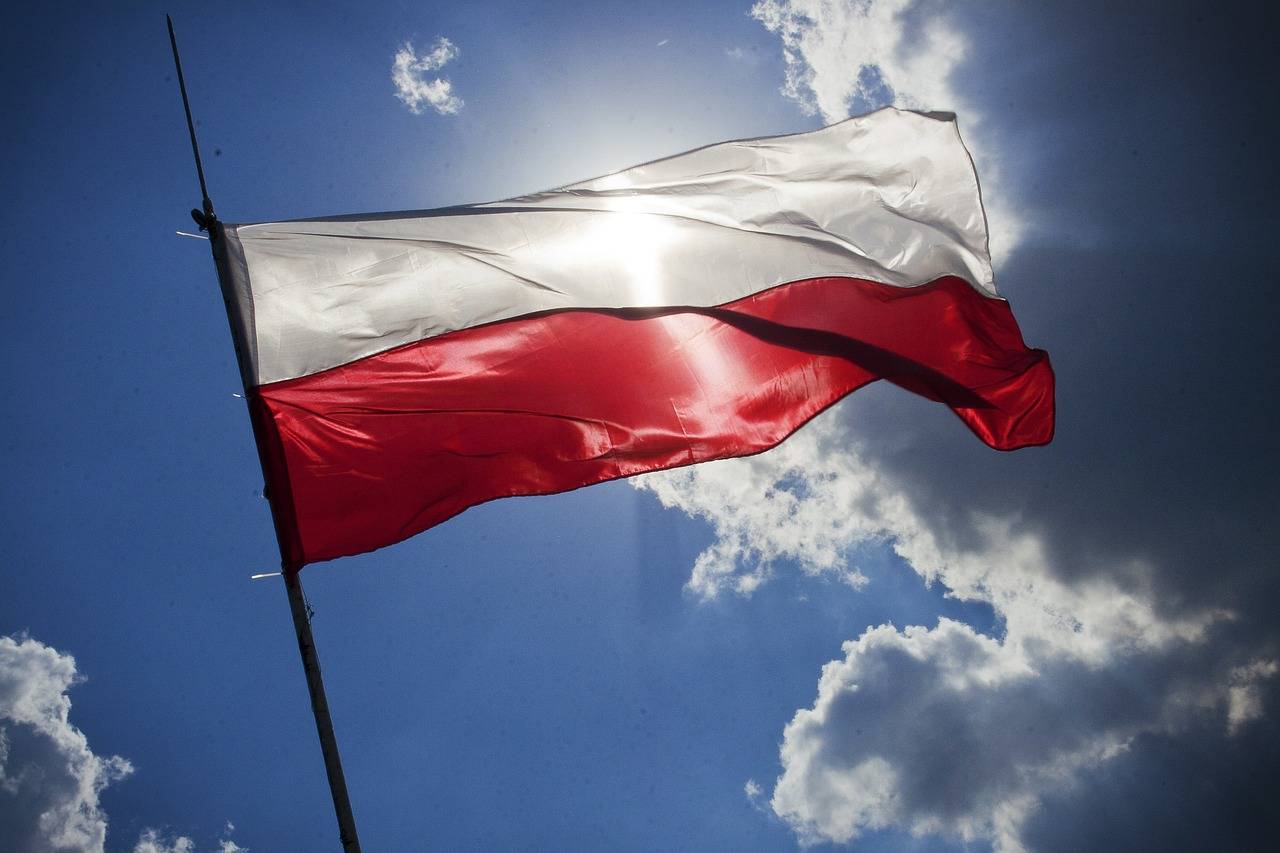
Poland’s flag, with its simple yet powerful design of two horizontal stripes—white on top and red on the bottom—has long stood as a symbol of the country’s resilience and unity. These two colors have profound meanings that date back centuries, rooted in Poland’s fight for freedom and sovereignty.
The choice of white and red stems from Poland’s historical coat of arms, which features a white eagle on a red background. White is said to represent peace, innocence, and moral purity, while red symbolizes the blood of those who sacrificed their lives in Poland’s struggles for independence. Together, these colors form a compelling narrative of courage, sacrifice, and integrity.
- Find more news from Poland on our Homepage .
First officially adopted as Poland’s national colors during the November Uprising of 1831 against the Russian Empire, the flag has since become a central symbol of national pride. After Poland regained its independence in 1918 following World War I, the flag as we know it today was officially adopted. It has since become a beacon of hope and unity, flown proudly at national events and in times of celebration and remembrance.
2. The White Eagle: A Historic Symbol of Polish Sovereignty
The White Eagle (Orzeł Biały) is the heart of Poland’s coat of arms and one of the most iconic images representing the Polish state. It has been linked with Poland’s heritage for centuries, tracing its origins to the medieval period, and has since become a symbol of Polish strength and endurance.
According to legend, Lech, the mythical founder of Poland, saw a majestic white eagle against the backdrop of a red sunset. This inspired him to establish his settlement where the eagle was sighted, making it the symbol of his people. The White Eagle has since symbolized Poland’s sovereignty, nobility, and pride.
The eagle was first used as a national emblem in the 13th century and became a defining symbol of the Piast dynasty, Poland’s founding royal house. Over time, the eagle has appeared in various forms, but its core symbolism of resilience and national identity has remained constant. During Poland’s turbulent history of partition and occupation, the White Eagle continued to symbolize resistance and hope. After the communist regime ended in 1989, the crown was restored to the eagle’s head, signifying Poland’s return to democracy and renewed national pride.
3. “Mazurek Dąbrowskiego”: Poland’s National Anthem
Poland’s national anthem, “Mazurek Dąbrowskiego” (Dąbrowski’s Mazurka), is an uplifting song that echoes the nation’s resilience during its darkest times. Written by Józef Wybicki in 1797, the anthem pays tribute to General Jan Henryk Dąbrowski, who led Polish Legions in Italy after Poland had been divided and occupied by foreign powers.
The anthem’s opening line, “Jeszcze Polska nie zginęła, kiedy my żyjemy” (Poland has not yet perished, as long as we live), reflects the unwavering determination of the Polish people to regain their independence. It became a powerful symbol of hope and national unity during a time when Poland had been partitioned and erased from the map.
The song’s lively mazurka rhythm, inspired by traditional Polish folk music, gives it a sense of vigor and optimism. Officially adopted as the national anthem in 1927, “Mazurek Dąbrowskiego” continues to resonate with Poles today as a reminder of their rich cultural heritage and the strength of their national identity. Even today, it inspires feelings of pride, unity, and the indomitable spirit that has carried Poland through centuries of struggle.
4. Poland’s Colors in Historical and Cultural Context
Poland’s red and white colors have been integral to its national consciousness for centuries, especially during times of foreign occupation. Throughout history, when Poland was divided and under the control of foreign empires, these colors were powerful symbols of unity and resistance. Poles wore red and white ribbons during uprisings and protests, even when it was dangerous to do so.
During World War II, the Polish flag was a symbol of defiance against the occupying forces. Members of the Armia Krajowa (Home Army), Poland’s main resistance force, proudly used the national flag and its colors to assert their fight for a free Poland. Even during the post-war communist regime, when the Soviet Union tried to suppress Polish nationalism, citizens would still covertly celebrate their national colors, keeping the spirit of resistance alive.
Today, the red and white colors stand as reminders of Poland’s fight for freedom and the sacrifices made throughout history. These colors, once symbols of rebellion, now represent the hard-won independence of a modern, unified Poland.
5. National Celebrations and Flag Day
Poland celebrates its National Flag Day on May 2nd each year, situated between International Workers’ Day (May 1st) and Constitution Day (May 3rd). This day was established in 2004 as an official observance dedicated to the Polish flag and the values it represents.
On Flag Day, the Polish people proudly display their national colors across the country. The flag is flown from homes, government buildings, and businesses, and people wear red and white to show their pride. The day is marked by official ceremonies, cultural events, and public gatherings, with many Poles reflecting on the nation’s history and the struggles that gave rise to its current sovereignty.
Following Flag Day is Constitution Day on May 3rd, which commemorates the adoption of the 1791 Constitution—Europe’s first modern constitution and the second in the world, after the United States. Together, these celebrations highlight Poland’s dedication to freedom, democracy, and the values represented by its national symbols.
6. The Importance of Poland’s Symbols in Modern Times
Poland’s national symbols continue to play a vital role in shaping the country’s identity today. For a nation that has survived partitions, occupations, and totalitarian regimes, these symbols serve as powerful reminders of the resilience, unity, and strength of the Polish people.
The white and red flag, the White Eagle, and “Mazurek Dąbrowskiego” are not merely historical relics; they are living symbols of Poland’s values, culture, and hard-earned freedom. Whether at national events, sporting competitions, or moments of political significance, these symbols continue to unite the people of Poland and foster a sense of pride in their shared heritage.
For Poles living abroad, these national symbols are also an essential connection to their homeland. The red and white flag is a unifying force for the global Polish diaspora, providing a common identity and a link to their roots, no matter where they are in the world.
Conclusion: Symbols of Strength, Unity, and Freedom
Poland’s national symbols—the flag, coat of arms, and anthem—are far more than simple representations of the state. They embody the heart of a nation that has endured incredible challenges and emerged stronger. The white and red colors, the crowned White Eagle, and the stirring anthem “Mazurek Dąbrowskiego” reflect centuries of struggle for independence, resilience against foreign domination, and the unbreakable unity of the Polish people. Today, they remain a testament to the courage and spirit of a nation that has always fought for its freedom, and they continue to inspire pride and hope for the future.