

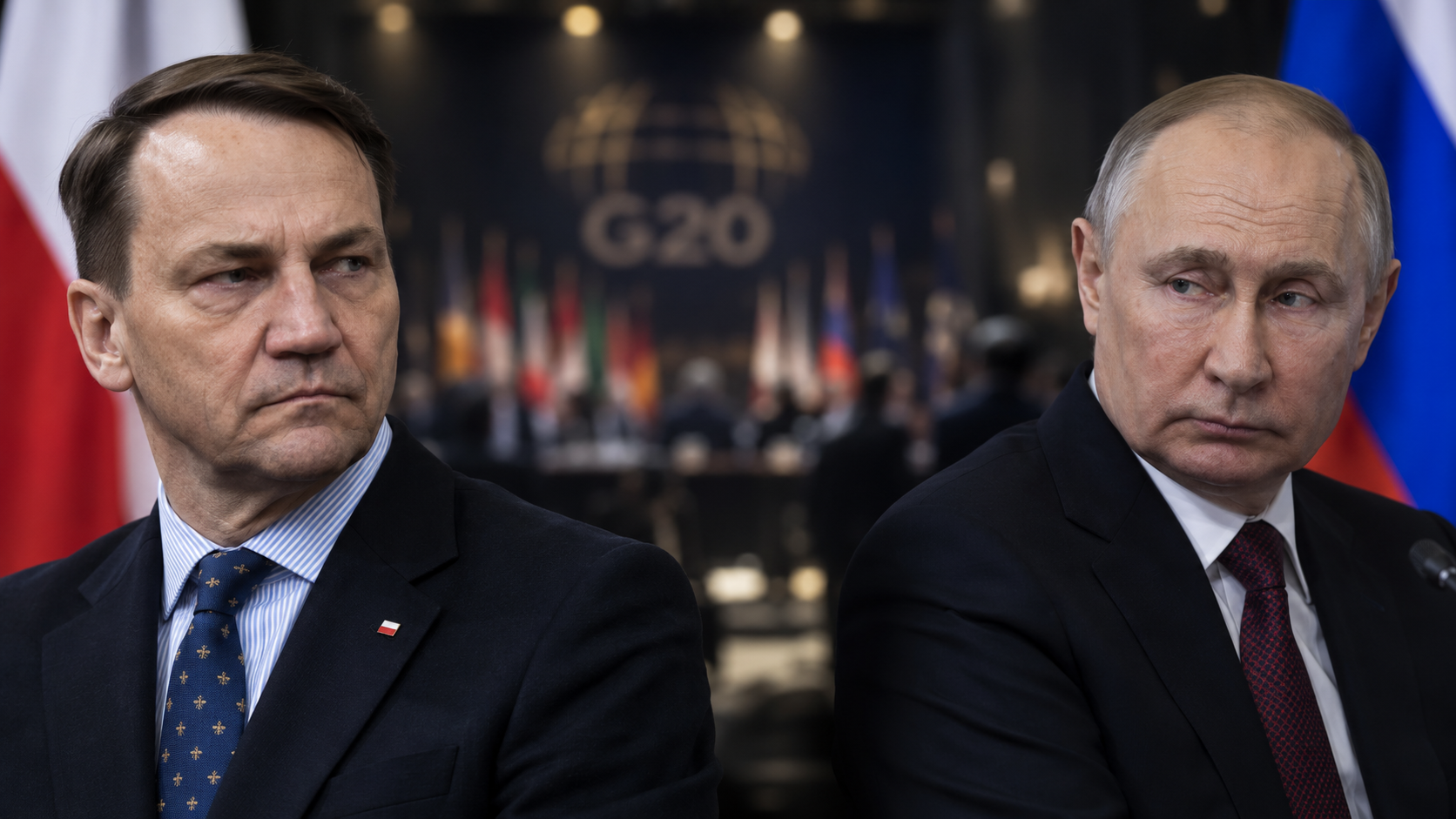
Poland should not boycott December’s G20 summit in Miami even if Vladimir Putin attends, Foreign Minister Radosław Sikorski has said, putting the government broadly in line with President Karol Nawrocki’s office while making clear that Warsaw remains opposed to the Russian leader’s invitation.
Sikorski was asked in an interview with Rzeczpospolita whether Poland should stay away from the summit after the United States invited Putin. He rejected that option, arguing that international diplomacy sometimes requires countries to participate in meetings alongside governments with which they have profound disagreements.
The foreign minister pointed to his own forthcoming participation in a G20 foreign ministers’ meeting in Atlanta on 30–31 October. According to PAP reporting of the interview, Sikorski said he intended to attend regardless of whether Russia’s foreign minister was also invited.
- Find more news from Poland on our Homepage .
He nevertheless described Washington’s decision to invite Putin to the leaders’ summit as a bad idea.
Sikorski said the Russian president should not be treated as a welcome guest while Russia continues its war against Ukraine. He also criticised what he characterised as US President Donald Trump’s business-oriented approach to the conflict, arguing that attempts to identify an outcome benefiting both sides had so far failed to produce results and were helping bring Putin out of international isolation.
The United States formally invited Putin to the 14–15 December G20 summit in Miami earlier this month. Secretary of State Marco Rubio said Washington saw the gathering as an opportunity for the Russian president to engage not only with Trump but with other world leaders.
The Kremlin has welcomed the invitation but has not yet confirmed that Putin will attend. Reuters reported that spokesman Dmitry Peskov said Moscow would consider the proposal through diplomatic channels.
Poland is not a permanent G20 member but has been invited to participate in the group’s work during the 2026 US presidency. President Nawrocki is expected to represent Poland at the Miami leaders’ summit.
Sikorski’s comments strengthen the emerging common position between the government and the presidential palace: Warsaw objects to Putin being invited but does not believe Poland should surrender its place at the table because of his possible presence.
Nawrocki’s international policy chief, Marcin Przydacz, had already said that the president intended to attend, arguing that Poland’s participation was in the national interest even though the presidential office opposed Putin’s invitation. Rzeczpospolita reported Przydacz as saying he did not envisage direct interaction between Nawrocki and the Russian president.
Sikorski went further when asked how he personally would behave around Putin.
He said he would not shake the Russian president’s hand, referring to the arrest warrant issued for Putin by the International Criminal Court in 2023 over alleged war crimes involving the unlawful deportation and transfer of Ukrainian children. Putin and the Russian government reject the allegations and do not recognise the ICC’s jurisdiction.
The question of ceremonial appearances could also become an issue if Putin accepts the invitation. Sikorski suggested Poland could discuss arrangements with the American hosts, including the possibility of avoiding a group photograph with the Russian leader.
The controversy comes as Warsaw is trying to deepen its role in the G20 rather than reduce it.
An April joint statement from Poland and the United States said Washington strongly supported Poland becoming a permanent member of the group. Poland has meanwhile been taking part in G20 meetings across the US presidency and has been lobbying future hosts to maintain its participation.
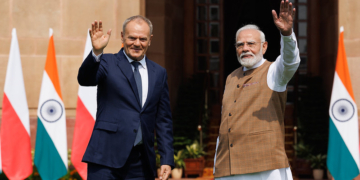
Prime Minister Donald Tusk has also criticised Putin’s invitation. Reuters reported that he said last week that bringing the Russian leader to the summit could be justified if it genuinely helped produce a just peace in Ukraine, but warned that Moscow could instead interpret the move as encouragement to continue its aggressive policies.
That leaves Warsaw balancing two objectives ahead of December: opposing any diplomatic rehabilitation of Putin while ensuring Poland does not lose a rare opportunity to participate at the highest level of the G20.
For Sikorski, those aims are not incompatible. Poland can object to Putin’s presence, avoid treating him as a normal diplomatic partner and still attend the summit.