For generations, the arrival of autumn in the Polish countryside meant one thing: wykopki.
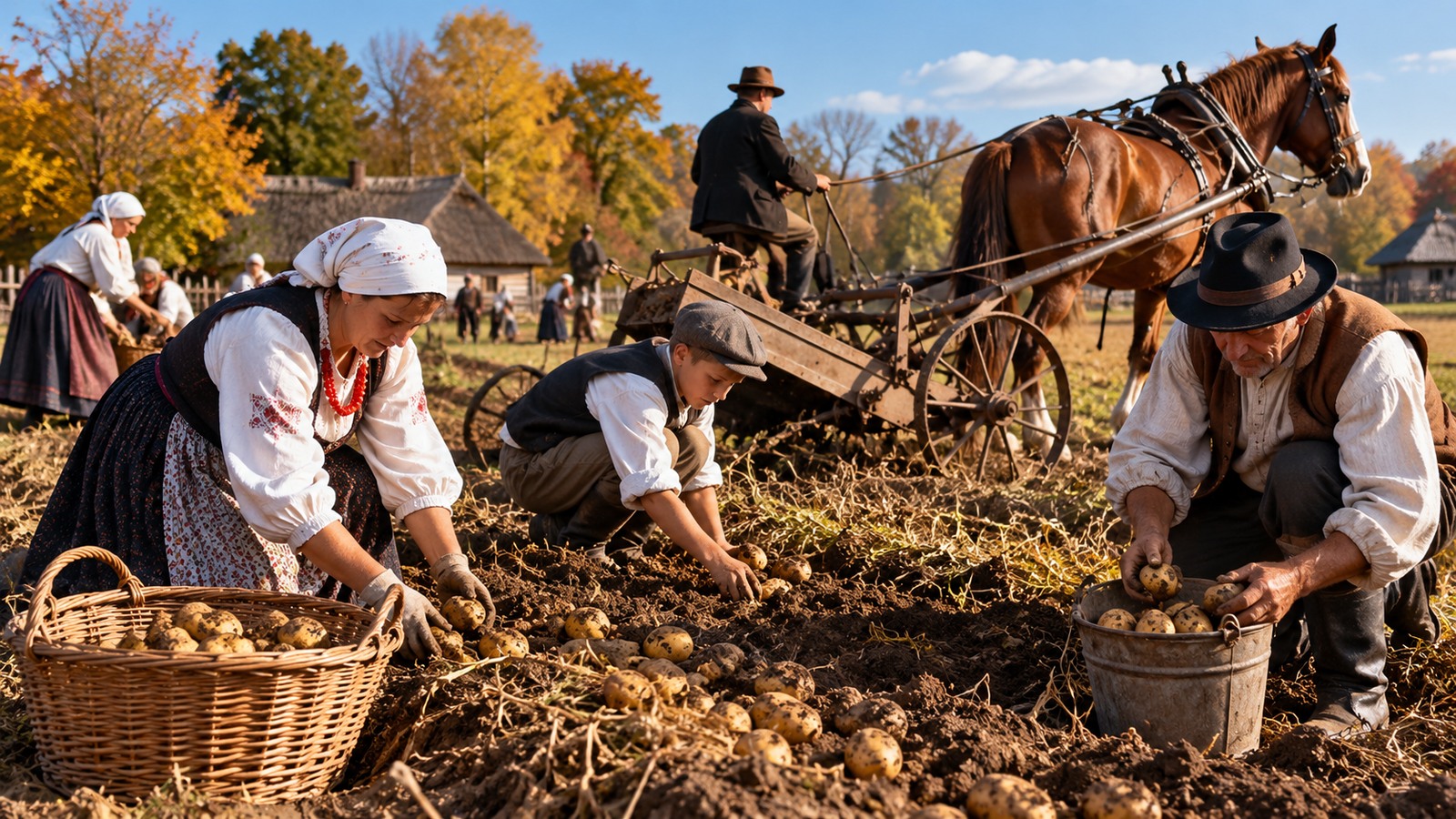
Families headed into the fields carrying baskets, buckets and hoes. Horses pulled agricultural equipment through the soil, while adults and children gathered freshly unearthed potatoes before the winter cold arrived.
And when the day’s work was finished, there was often a simple reward — potatoes roasted in the embers of a bonfire.
- Find more news from Poland on our Homepage .
Known as wykopki, the traditional autumn potato harvest was once one of the most important periods in the rural calendar.
It required hard physical labour, careful preparation and, in many communities, cooperation between relatives and neighbours.
Although modern machinery has transformed agricultural work, Poland’s open-air museums are helping preserve the memory of how these harvests once took place.
On 20 September 2026, the Museum of the Lublin Countryside recreated a traditional potato harvest, giving visitors an opportunity to experience a part of Polish rural life that shaped generations.
When harvesting potatoes was a family affair
Before mechanisation became widespread, digging potatoes could occupy an entire household for days.
Workers used hoes and other hand tools to loosen the earth, exposing the tubers beneath the soil.
Others followed with baskets or buckets, collecting the potatoes and carrying them towards waiting carts.
The work was repetitive and physically demanding, particularly during cold or wet autumn weather.
In smaller farming communities, harvesting could involve members of the extended family and neighbours helping one another complete the work before conditions deteriorated.
The potato had become a crucial food crop in Poland during the nineteenth century, providing a relatively affordable and filling ingredient for everyday meals.
Unlike today’s shoppers, who can purchase potatoes throughout the year, rural households needed to consider how much food they would have available during the months ahead.
The success of the autumn harvest could therefore influence a family’s winter food supplies.
The Museum of the Radom Countryside’s historical account explains that even after horse-drawn mechanical diggers appeared, much of the collecting still had to be done by hand.
Several or even a dozen workers might follow the equipment across the field, gathering the potatoes left on the soil.
This mixture of shared labour and practical necessity gave wykopki a distinctive social character.
But it was not simply an autumn celebration. For farming families, it was essential work that could leave everyone exhausted by the end of the day.
From hand tools to horse-drawn machines
Potato harvesting changed as agricultural technology developed.


Earlier methods relied heavily on manual digging with spades or hoes.
Later, horse-drawn potato diggers made it easier to lift the crop from the ground.
These machines loosened the soil and brought potatoes towards the surface, where workers could collect them.
In Poland, such equipment gradually became more widespread from the nineteenth century onwards, although adoption varied between regions and farms.
The Museum of the Lublin Countryside recreated this transition during its September demonstration.
Visitors first watched potatoes being dug using traditional hoes.
A horse-drawn potato digger then entered the field, illustrating how mechanical equipment could reduce some of the effort involved.
Museum educator Szymon Zawadzki explained that similar machines were manufactured in Lublin by the Wolski factory. Locally produced potato diggers became known as Jagiellonki.
The demonstration also showed what happened after the potatoes were collected.
The harvest was loaded onto a cart and transported to a cellar in one of the museum’s reconstructed farmsteads.
Visitors then watched the field being prepared for further agricultural use.
The museum’s report from 21 September documented each stage, from manual digging and horse-drawn equipment to transportation and storage.
How Polish families kept potatoes through winter
Harvesting potatoes was only part of the job.
The crop also had to be stored carefully if it was to remain useful throughout winter.
Cellars provided one solution, particularly where cool, dark storage spaces were available.
Another traditional method involved constructing earth-covered storage heaps known as kopce ziemniaczane, or potato clamps.
Potatoes were arranged in a prepared mound, covered with straw and then protected by a layer of earth.
The insulation helped shield the crop against frost.
According to the Lublin museum, such methods were particularly important when potatoes provided a substantial share of a household’s everyday food.
They were used for preparing familiar Polish dishes, from boiled potatoes and dumplings to potato pancakes and other regional specialities.
For many rural families, preserving the harvest was therefore just as important as gathering it.
The bonfire that became part of autumn memories
Despite the exhausting work, wykopki also developed lasting associations with communal meals and time spent together.
The Museum of the Radom Countryside documents how rural communities gathered around fires, sang songs and roasted potatoes during the harvest season.
Potatoes could be placed among the hot embers and left to cook until their skins became dark and their interiors softened.
For people who grew up in rural Poland, the smell of roasted potatoes remains a familiar autumn memory.
The 2026 Lublin demonstration recreated this aspect of the tradition too.
Visitors were invited to enjoy potatoes cooked over a bonfire near the historic Żyrzyn manor, while folk musicians helped evoke the atmosphere of earlier village gatherings.
Children also took part in traditional games and made prints using potatoes.
As Radio Lublin reported, the event combined practical demonstrations with activities designed to introduce younger visitors to historical rural life.
It was one of several such events organised in Poland this autumn. The Museum of the Mazovian Countryside in Sierpc and the Greater Poland Ethnographic Park in Dziekanowice also presented traditional agricultural techniques during September.
These demonstrations do not mean that historical harvesting practices remain unchanged across modern Poland.
Contemporary commercial agriculture relies heavily on tractors, specialised harvesting machines and modern storage systems.
But the museum reconstructions preserve something that machines alone cannot explain: the human experience of rural work.
For generations of Polish families, wykopki meant sore hands, baskets of potatoes, neighbours working together and the satisfaction of preparing for winter.
And sometimes, after the last basket had been filled, it meant sitting beside a bonfire and sharing a freshly roasted potato.