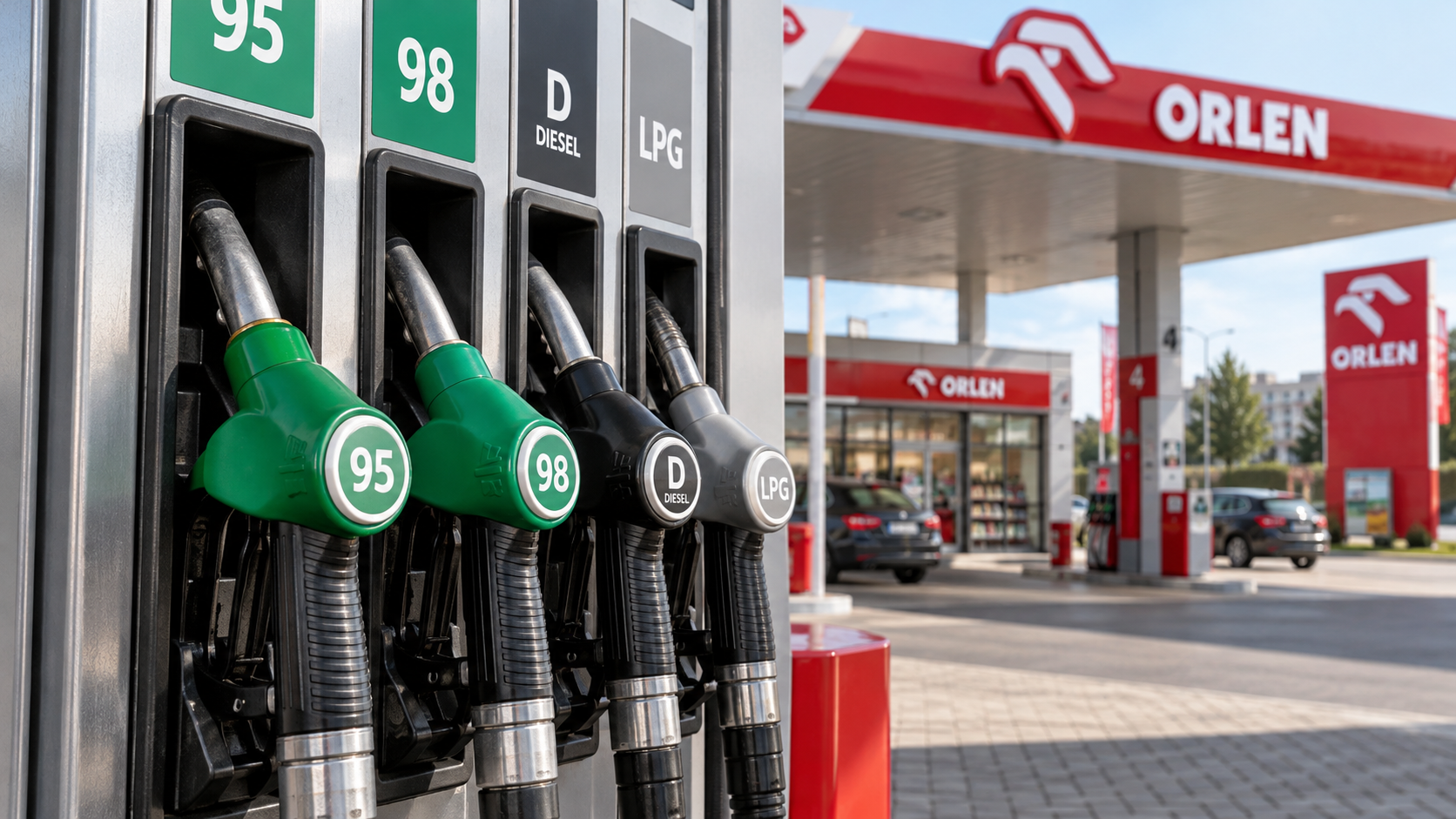
Polish prosecutors have asked the European Parliament to lift the immunity of Daniel Obajtek, the former head of state-controlled energy giant Orlen, and authorise his detention over allegations that fuel-pricing decisions made before Poland’s 2023 parliamentary election caused more than PLN 4.1 billion in losses. The request could expose one of Poland’s most prominent former state-company executives, now an opposition MEP, to criminal proceedings carrying a potential prison sentence of up to 25 years.
Justice Minister and Prosecutor General Waldemar Żurek submitted the application to European Parliament President Roberta Metsola on Thursday, 15 October, seeking permission to bring criminal charges against Obajtek, detain him, compel his appearance before investigators and pursue pre-trial detention.
According to the National Prosecutor’s Office announcement, investigators suspect that Obajtek directed subordinates to implement a fuel-pricing policy that departed from normal commercial considerations and breached the company’s management procedures.
- Find more news from Poland on our Homepage .
Prosecutors allege that the policy caused Orlen losses exceeding PLN 4.1 billion. The figure is an estimate advanced by investigators, not a loss established by a court.
Obajtek, who led Orlen from 2018 to 2024 and now represents the opposition Law and Justice (PiS) party in the European Parliament, has challenged the allegations and responded by drawing comparisons with Prime Minister Donald Tusk’s previous promises to reduce fuel prices.
The European Parliament has not yet approved the new request. Obajtek has not been detained under this application, and the allegations against him remain unproven.
Allegations centre on fuel prices before the 2023 election
The investigation focuses on Orlen’s pricing strategy in the weeks leading up to Poland’s parliamentary election on 15 October 2023.
Prosecutors allege that Obajtek instructed employees to maintain retail fuel prices at approximately PLN 5.99 per litre for at least the period from 1 to 15 October, despite market conditions that they believe did not justify those prices.
Investigators claim that the policy was pursued for reasons unrelated to the company’s economic interests and that the former chief executive personally directed staff responsible for its implementation.
The alleged wrongdoing concerns not simply the decision to sell fuel cheaply, but whether company executives breached their duties by deliberately setting prices contrary to commercial considerations and internal procedures.
According to prosecutors, Obajtek exceeded his managerial powers and failed to fulfil his corporate responsibilities by directing other employees to carry out decisions that resulted in substantial financial damage.
Investigators say the alleged offence falls under provisions of Poland’s Criminal Code concerning serious mismanagement of company assets and directing others to commit an offence.
The charges prosecutors want permission to bring would carry a possible prison sentence of between five and 25 years if a conviction were secured.
The calculation of the alleged PLN 4.1 billion loss has not been fully disclosed publicly. The figure should therefore be understood as the prosecution’s assessment, rather than an independently established accounting loss or a court determination.
Obajtek responds with attack on Tusk’s fuel-price promises
Obajtek reacted to the application on social media, challenging the suggestion that lower fuel prices should expose him to detention.
In a response reported by Onet, he said that if prosecutors wanted to detain him because Polish motorists had been able to buy fuel for less than PLN 6 per litre, Donald Tusk should also face detention.
He pointed to Tusk’s earlier political pledge to bring fuel prices down to PLN 5.19 per litre and remarks about state-owned companies serving the interests of citizens rather than focusing exclusively on profits.
Obajtek’s response framed the dispute around the affordability of fuel, a politically sensitive issue in Poland. The prosecution’s case, however, concerns alleged violations of corporate management duties and the financial consequences for Orlen, rather than whether lower prices benefited consumers.
The former executive has not been convicted of the alleged offence, and the claims against him have not been tested in a criminal trial.
Five other Orlen managers have already faced charges
The latest application follows a significant development earlier this month.
On 5 October, officers from Poland’s Internal Security Agency (ABW) detained five former and serving Orlen managers as part of the same fuel-pricing investigation.
The group included a former management-board member, an executive director, two office directors and a department manager involved in wholesale trading and fuel pricing.
In its 6 October investigation update, the National Prosecutor’s Office confirmed that all five had been charged with alleged mismanagement involving the same reported losses of more than PLN 4.1 billion.
All five denied committing the alleged offences during questioning.
Investigators disclosed that the inquiry, opened in January 2024, had involved interviews with more than 150 people, including employees of Orlen, pipeline operator PERN and Poland’s climate ministry.
Prosecutors have also examined extensive company documentation, electronic correspondence and expert assessments of fuel-market economics.
Those assessments reportedly examined the planning, implementation and monitoring of Orlen’s fuel-pricing policy.
The latest application seeks to extend the criminal investigation to Obajtek’s alleged role as the company’s senior executive at the time.
Why prosecutors want Obajtek detained
The application goes beyond a routine request to remove parliamentary immunity.
Żurek’s office is seeking the European Parliament’s authorisation for Obajtek to be detained and forcibly brought before investigators, as well as permission to pursue pre-trial custody.
Prosecutors argue that the seriousness of the suspected offence and the possible sentence create grounds for precautionary measures.
They also claim there is a genuine risk that Obajtek could unlawfully interfere with the investigation.
These are the prosecution’s arguments for detention, not findings by a court that Obajtek has attempted to obstruct proceedings.
Even if the European Parliament authorises the requested measures, pre-trial detention would not follow automatically. Polish judicial authorities would still need to consider the legal requirements for custody.
A significant part of the application’s supporting justification has been classified.
Prosecutors say it contains commercially sensitive information about Orlen’s operations and activities that the company asked investigators to protect, citing both its business interests and its strategic importance to Poland’s energy security.
The decision to restrict access means the complete evidential basis for the prosecution’s allegations is not available for independent public examination.
Fourth request to lift the former executive’s immunity
This is the fourth application submitted to the European Parliament concerning Obajtek, according to the National Prosecutor’s Office.
Earlier applications were filed in December 2024, July 2025 and May 2026, involving separate allegations.
The European Parliament previously voted to waive Obajtek’s immunity in October 2025 and again in April 2026 in connection with earlier proceedings.
Those decisions did not remove the need for a new application concerning the fuel-pricing allegations now under investigation.
The European Parliament’s established immunity procedure requires a request to be announced in plenary and referred to its Committee on Legal Affairs.
The committee can examine supporting documents, request further information and hear the MEP concerned before recommending whether immunity should be lifted.
The full Parliament then votes on the recommendation.
Waiving immunity does not establish criminal guilt, nor does it automatically remove an MEP from office.
At the time of this report, there was no independently confirmed timetable for consideration of the application submitted on 15 October.
A major investigation involving Poland’s energy sector
Orlen is one of Central Europe’s largest integrated energy companies, with operations spanning oil refining, fuel retail, gas, electricity and other energy activities.
According to the company’s shareholder information, the Polish state holds 49.9% of its shares, making it the largest shareholder and giving the government significant influence over the company.
Obajtek’s tenure at Orlen coincided with the expansion of the group through major acquisitions and the consolidation of significant parts of Poland’s energy industry.
His leadership also became closely associated with the Law and Justice government, which held power from 2015 until December 2023.
After leaving Orlen in 2024, Obajtek was elected to the European Parliament, where he sits with the European Conservatives and Reformists group.
Orlen itself has separately taken steps concerning the conduct of its former management.
In October 2025, the company’s shareholders adopted a resolution authorising the pursuit of compensation claims against Obajtek, including allegations concerning the company’s fuel-pricing policy during the second half of 2023.
That corporate decision does not establish the criminal allegations or determine the amount of any recoverable losses.
The latest prosecution request brings those disputed decisions back into focus, potentially placing a former chief executive of one of Poland’s most important companies under further criminal scrutiny.
The immediate next step lies with the European Parliament, which must decide whether to permit Polish authorities to proceed with the measures requested.
Until that decision is made, the latest application remains a request for authorisation, not an order for Obajtek’s detention.