

Two airports in eastern Poland temporarily suspended operations again on Friday morning as Polish military aviation responded to another Russian air attack on Ukraine, extending a pattern of repeated precautionary disruptions close to the NATO country’s eastern border.
The Polish Air Navigation Services Agency, PANSA, said operations at airports in Lublin and Rzeszów were temporarily halted to give military aviation freedom to operate.
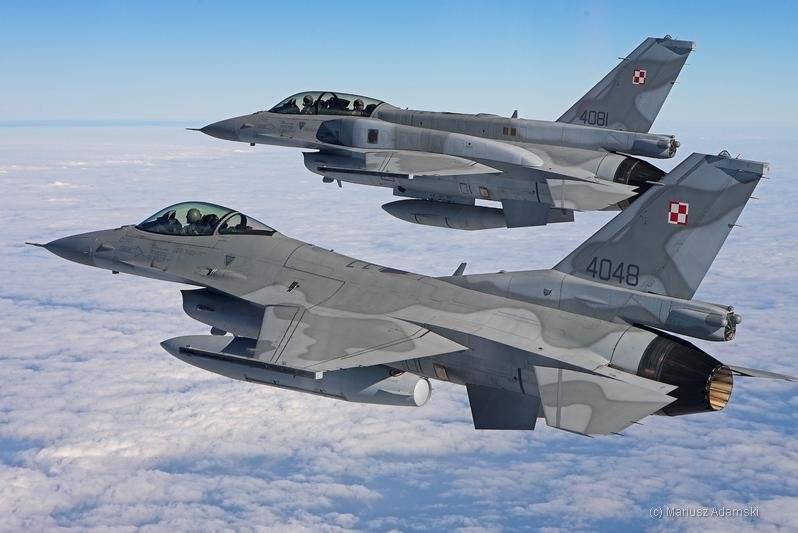
Poland’s Operational Command said military aircraft had been activated in Polish airspace while ground-based air-defence and radar reconnaissance systems were placed on alert. The measures were precautionary and intended to protect Polish airspace, particularly areas close to the conflict zone.
- Find more news from Poland on our Homepage .
By around 9am, the military said the threat from Russian strikes on regions bordering Poland had decreased. Aircraft began returning to their bases and air-defence and radar systems reverted to normal operations.
The Operational Command said no violation of Polish airspace had been recorded during Friday morning’s operation. PANSA subsequently confirmed that Lublin and Rzeszów airports had resumed flights.
The interruption was therefore caused by the need to clear airspace for military operations rather than by a direct attack on either airport.
Third consecutive day of restrictions
Friday’s disruption continued an unusual sequence in which Russian attacks on Ukraine have repeatedly affected civilian aviation inside Poland.
Lublin and Rzeszów also temporarily suspended operations on Wednesday and Thursday while military aircraft operated over eastern Poland.
On Thursday, the response followed Russian attacks in western Ukraine, including an incident close to the Dorohusk-Yahodyn border crossing. Polish Prime Minister Donald Tusk said a target believed to be a petrol station had been struck near the frontier, producing a powerful explosion.
Polish military officials said a Russian drone had fallen or been destroyed around four kilometres from the Polish border. No Polish airspace violation was recorded.
Residents in parts of the Lubelskie and Podkarpackie regions received air-threat warnings, while sirens sounded in some areas. The alerts were later cancelled after authorities said there was no threat on Polish territory.
Similar measures had been taken on Wednesday, when military aircraft were deployed and Lublin and Rzeszów airports briefly suspended flights during another Russian attack on western Ukraine.
The repeated closures mean the two airports have now been affected by Polish air-defence operations for three consecutive days.
Russia launches another large drone attack
Ukraine’s air force said Russia launched 93 drones and loitering munitions overnight into Friday, including Shahed and Gerbera-type aircraft as well as other unmanned weapons.
Forty-six of the Shahed-type drones were jet-powered, according to the Ukrainian military.
Ukraine said 72 aerial targets had been shot down or suppressed, while impacts were recorded at 13 locations. Some Russian drones remained in Ukrainian airspace when the morning assessment was published.
Russia has sharply increased its use of faster jet-powered drones in recent months, creating new challenges for Ukrainian air defences and increasing concern in Poland when such attacks approach the western Ukrainian regions bordering NATO territory.
Why Rzeszów matters
The disruption at Rzeszów-Jasionka has significance beyond ordinary passenger travel.
The area has served as one of the main international logistics hubs supporting Ukraine since Russia launched its full-scale invasion in 2022.
Poland and the United States established the POLLOGHUB logistics system around Rzeszów to coordinate the movement of international military assistance into Ukraine. Poland’s Defence Ministry has said more than 80% of military donations to Ukraine have at some stage crossed Polish territory through the wider logistics network.
You May Also Be Interested In


The airport and surrounding facilities have consequently become strategically important to Poland, Ukraine and NATO allies.
Polish defence officials have previously described Rzeszów-Jasionka as a key hub for the movement of humanitarian and military support, and allied air-defence systems have been deployed in the area to protect the logistics operation.
Lublin, farther north, is also close to Poland’s border with Ukraine and has played a major role in humanitarian and transport links since the start of the war.
Precaution rather than evidence of an attack on Poland
The repeated airport suspensions do not mean Russia has attacked the Polish airports or that Russian aircraft entered Polish airspace during Friday’s incident.
Polish authorities emphasise that activating military aircraft and temporarily restricting civilian aviation are established defensive procedures when Russian strikes occur close enough to Poland to create a potential risk.
PANSA’s explanation is straightforward: civilian flights are halted when necessary to give military aircraft unrestricted room to operate.
Friday’s events nevertheless show how the intensification of Russia’s air campaign against Ukraine is increasingly producing visible consequences inside neighbouring Poland.
Even when no Russian missile or drone crosses the frontier, attacks close to Poland can trigger fighter deployments, heightened radar and air-defence readiness, public warnings and temporary restrictions on civilian flights.
For passengers using Lublin and Rzeszów, those precautions are becoming an increasingly familiar consequence of the war taking place just across Poland’s eastern border.