


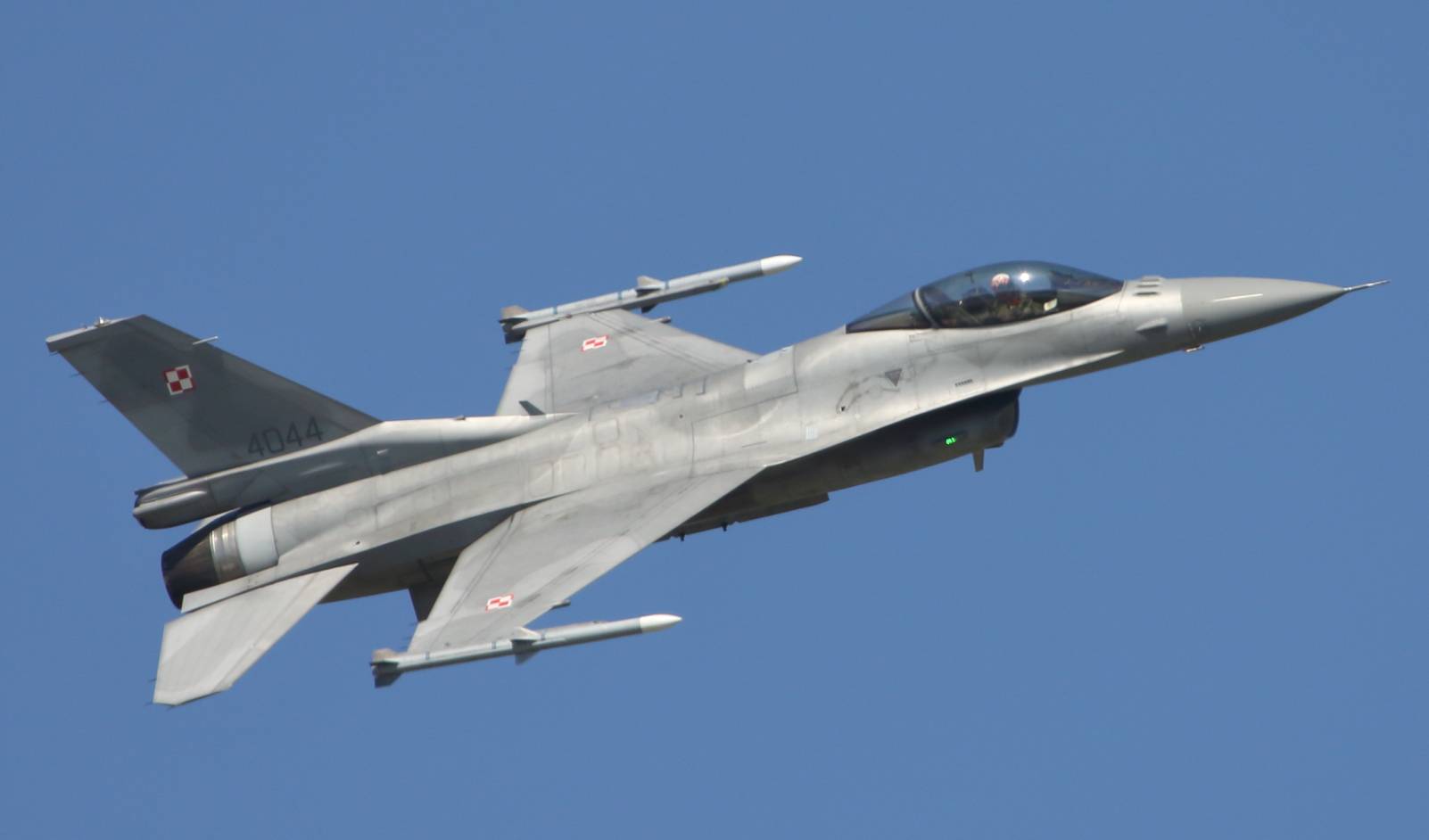
Poland scrambled military aircraft again on Saturday morning as Russia launched another large-scale attack on Ukraine, continuing a week in which strikes across the border have repeatedly triggered precautionary Polish air-defence operations.
The Operational Command of the Polish Armed Forces said military aviation began operating in Polish airspace in response specifically to Russian attacks using jet-powered unmanned aircraft.
Ground-based air-defence systems and radar reconnaissance were simultaneously brought to a state of readiness.
- Find more news from Poland on our Homepage .
The military described the measures as preventive and said they were intended to protect Polish airspace, “especially in areas adjacent to threatened regions”.
Several hours later, the Operational Command announced that the operation had ended.
“No violation of the airspace of the Republic of Poland was recorded.”
Military aircraft ended their heightened operations and ground-based air-defence and radar systems returned to their standard status, while the armed forces said they would continue monitoring events in Ukraine.
Russia launches 174 drones overnight
Saturday’s Polish response came during another substantial Russian aerial attack.
According to Ukraine’s Air Force, Russia launched 174 drones and other unmanned weapons overnight from 18 to 19 September, alongside two Zircon missiles.
Around half of the drones were described by Ukraine as jet-powered.
The attack included Shahed-type strike drones, Gerbera aircraft, Banderol/Dan-T loitering munitions and decoy drones launched from several locations in Russia and Russian-occupied Ukrainian territory.
Ukraine said the main directions of the attack were Odesa and Kyiv regions.
By 8am, Ukrainian forces said they had destroyed or suppressed three Banderol/Dan-T munitions and 138 other drones.
Impacts were recorded at 15 locations and debris from intercepted targets fell at another nine.
Ukraine said the two Zircon missiles did not reach their intended targets. More than ten Russian drones were still in Ukrainian airspace when the morning assessment was issued.
Another precautionary activation in Poland
Saturday’s response is significant less because of any individual incident inside Poland — none was reported — than because such operations are becoming increasingly frequent.
Poland also scrambled military aircraft on Friday as Russian strikes approached regions of Ukraine close to the Polish frontier.
During that operation, air-defence and radar systems were placed on alert and civilian flights at Rzeszów and Lublin airports were temporarily suspended to give military aviation greater freedom to operate.
No Polish airspace violation was recorded then either.
Similar measures were taken earlier in the week during another Russian attack involving jet-powered drones.


The Polish response therefore reflects an increasingly established procedure: when Russian missile or drone attacks approach western Ukraine, military aircraft can be activated while radar and ground-based defences move to higher readiness.
That does not in itself mean Polish territory has been attacked or that an incoming object has crossed the border.
Why jet-powered drones matter
The Operational Command specifically referred on Saturday to Russian attacks carried out with jet-powered unmanned aircraft.
That distinction matters because Russia has increasingly introduced faster jet-powered drones alongside the slower propeller-driven Shahed systems that became a defining feature of the earlier air campaign.
Newer Russian systems can fly considerably faster and are more difficult to detect and intercept using some of the methods developed against conventional Shaheds.
Their increasing use has become a concern not only for Ukraine but also for neighbouring NATO countries as Russian strike routes move closer to alliance borders.
Recent analysis has identified new Russian jet-powered systems such as the Geran-4 and Geran-5 as part of an evolving air campaign aimed at combining greater speed with lower costs than conventional cruise missiles.
Poland’s eastern airspace increasingly affected by the war
The repeated activations illustrate one of the most direct ways in which Russia’s war against Ukraine is affecting day-to-day military operations inside Poland.
Polish forces do not wait for a confirmed border crossing before responding.
Instead, aircraft and ground-based systems can be activated when the trajectory, scale or location of Russian attacks creates a potential risk to Polish territory.
This week has already seen Russian strikes near Poland’s border, repeated fighter scrambles and temporary disruption to civilian aviation.
Prime Minister Donald Tusk has also warned that Polish and allied intelligence assessments point to the possibility of Russia increasingly using drones and missiles to create deliberately ambiguous incidents around NATO territory. He presented that as a potential scenario rather than evidence that Saturday’s attack was directed at Poland.
No airspace violation on Saturday
The most important distinction in Saturday’s operation is that Polish authorities reported no Russian aircraft, missile or drone entering Polish airspace.
The military action was preventive.
The Operational Command said forces remain ready to respond immediately if the situation changes and continue to monitor Russian operations over Ukraine.
It has not publicly stated that allied aircraft participated in Saturday’s mission, so the operation should not at this stage be described as involving NATO fighters beyond Poland’s own confirmed military response.
For Poland, however, the frequency of these alerts is becoming part of the broader security picture on its eastern frontier: Russian attacks can now trigger Polish fighter operations and air-defence readiness even when the weapons themselves remain on the Ukrainian side of the border.