

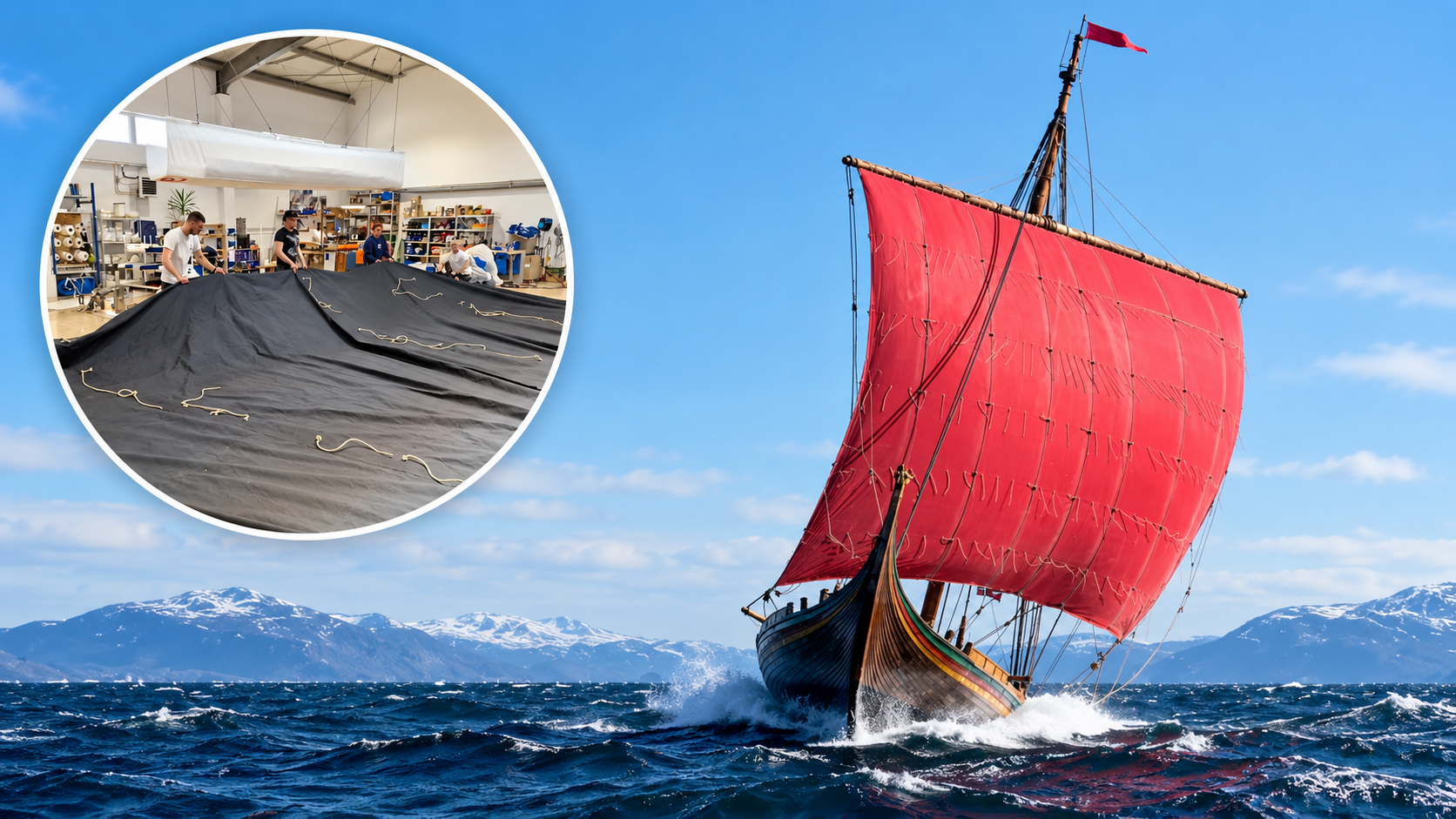
A Polish sailmaker has revealed that some of the most prominent maritime equipment seen in Christopher Nolan’s The Odyssey was made in Gdańsk. Sail Service produced 15 sails for the film’s fleets, including a huge sail weighing more than 300 kilograms for the working wooden ship used to carry Matt Damon’s Odysseus.
The company had previously been unable to publicise its involvement because of a confidentiality agreement. Details of the commission have now been disclosed by Sail Service and the City of Gdańsk, revealing the scale of the Polish contribution to Nolan’s maritime sequences.
Around 15 people at the company worked on the film project for just over two months. At the busiest point, Sail Service says approximately 70% of its production capacity was devoted to the order.
- Find more news from Poland on our Homepage .
The Gdańsk workshop ultimately produced 15 sails ranging from 12 to 250 square metres for two fleets represented in the film: those associated with Odysseus and Agamemnon.
Odysseus’s vessels were given red sails, while Agamemnon’s fleet used black ones. Some sails were manufactured in both colours so that the production could use the same vessels in different scenes.
The most demanding commission was for Draken Harald Hårfagre, a 35-metre ocean-going wooden ship built in Norway using traditional techniques. The vessel’s operators confirm on the Draken official website that the ship took part in filming The Odyssey in 2025.
Although Draken is inspired by Viking-era shipbuilding and Homer’s story is set many centuries earlier, the production used the full-scale working vessel for its physical presence, rigging and movement at sea rather than relying exclusively on a constructed film prop.
Sail Service already had a relationship with the Norwegian ship. The Gdańsk company had previously made a red sail for Draken before its 2016 transatlantic voyage, which helped bring the new film commission to Poland.
For The Odyssey, Draken required both red and black sails. The largest was approximately 250 square metres and, once completed with ropes, fittings and finishing elements, weighed more than 300 kilograms.
A sail of that size would normally take around eight weeks to produce, according to the company. The Gdańsk team completed it in less than five.
It then had to function as more than scenery. Draken sailed from Norway towards the Mediterranean under one of the Gdańsk-made sails before taking part in filming.
The company says some of the other sails were constructed primarily for visual use and did not need to withstand the same loads, allowing materials and construction methods to be adapted to the demands of individual scenes.
The project also drew on a much longer tradition of sailmaking in Gdańsk. Sail Service says its roots go back to a sailmaking department established at the Conrad yacht shipyard, while the company has operated under its present name since 1987.
Its sails are now used aboard large sailing ships, expedition yachts and racing vessels around the world.
For the workers involved in Nolan’s film, however, the assignment was unusual even by those standards.
Company representatives said they knew the sails would eventually be seen by millions of cinema-goers, adding a different kind of pressure to work normally judged primarily by sailors rather than film audiences.
The contribution is especially visible because Nolan opted to put a real ship and functioning sails in front of the camera. Draken’s own operators describe the vessel as a working ship rather than a decorative prop, emphasising the real oak hull, ropes, rigging and sail handling used during production.
That means one of the most physical elements of The Odyssey’s maritime world — the canvas carrying Odysseus across the screen — was produced not in a Hollywood workshop, but in a sail loft in Gdańsk.