

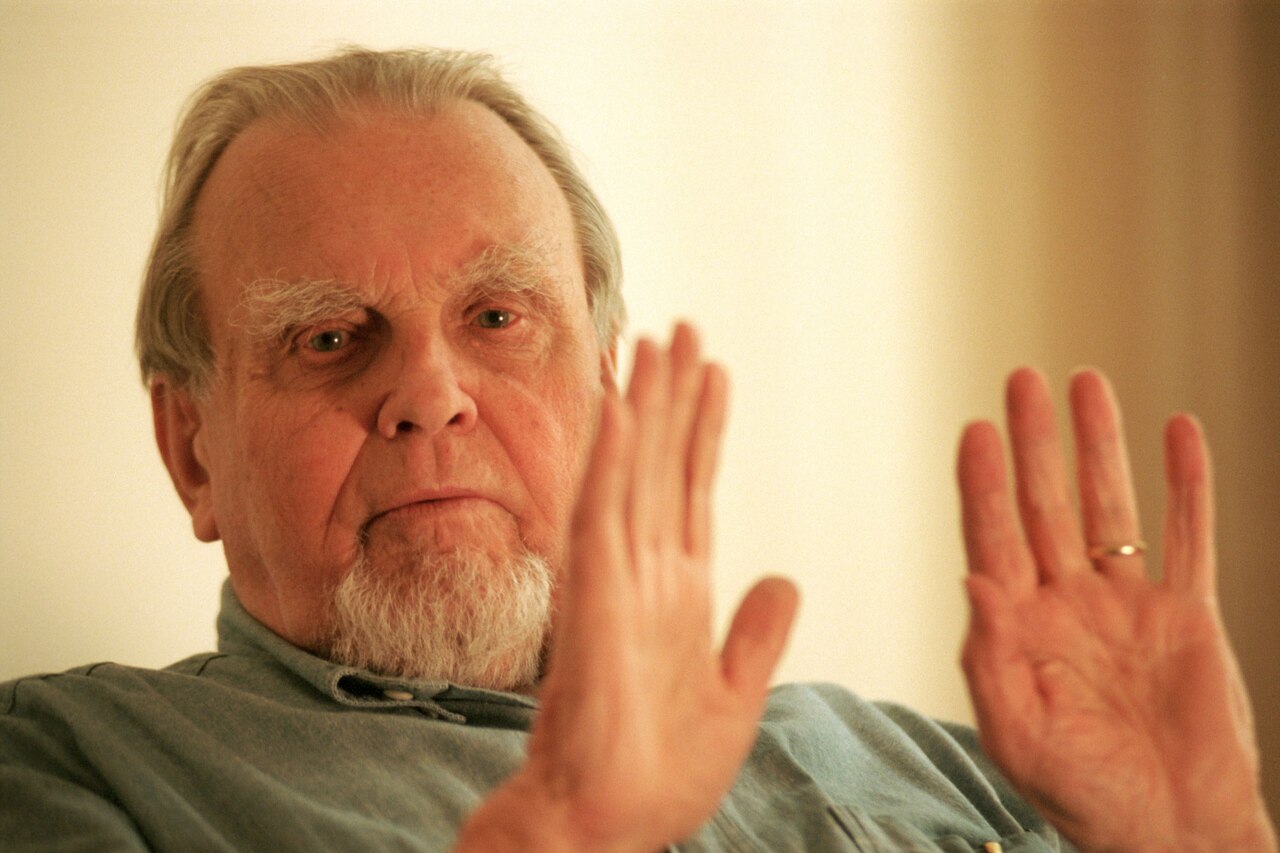
On 9 October 1980, cameras descended on the University of California, Berkeley, after news arrived that one of its professors had just received the world’s most famous literary honour.
Czesław Miłosz, then 69, had been named the winner of the Nobel Prize in Literature. For a Polish-language poet who had spent decades outside Poland while his books were censored by the communist authorities, the announcement carried a significance extending far beyond literature.
The Swedish Academy honoured Miłosz for writing that, in its official citation, expressed humanity’s vulnerable condition amid severe conflict with what it called “uncompromising clear-sightedness”.
- Find more news from Poland on our Homepage .
Forty-six years later, 9 October marks the anniversary of the day a writer largely unavailable through official publishing channels in his own country suddenly became impossible to ignore.
From Szetejnie to Berkeley
Miłosz had been born in 1911 in Szetejnie, now Šeteniai in present-day Lithuania, into a region whose shifting borders and overlapping Polish, Lithuanian and other identities would become an important part of his intellectual world.
He wrote principally in Polish and studied in Wilno, today Vilnius. His life then passed through some of the defining upheavals of 20th-century Central Europe.
Miłosz lived through the German occupation of Poland during the Second World War and worked for the post-war Polish diplomatic service. But in 1951, while stationed in France, he broke with the communist government and sought political asylum.
He remained abroad for the next three decades.
After eventually settling in the United States, Miłosz became associated with the University of California, Berkeley, where he taught Slavic languages and literature and continued writing poetry, essays and translations.
His distance from Poland was not simply geographical.
The communist authorities refused for years to publish the work of a writer who had defected. His books and poems instead reached readers through émigré publishing and underground circulation.
That created an unusual situation: one of the most important writers working in the Polish language was much easier to publish in the West than in the country whose language he used.
The Nobel changes everything
That balance shifted dramatically on 9 October 1980.
Berkeley’s own account of the day records Miłosz spending hours in front of cameras after the Nobel announcement. Despite the sudden international attention, the university later recalled that he still returned to his teaching responsibilities.
The prize also forced a reassessment inside Poland.
For years, underground editions of Miłosz’s poetry had circulated despite official restrictions. After the Nobel, his work could no longer be treated as though it barely existed. An authorised collection subsequently appeared in Poland and reached a mass readership.
The timing was extraordinary.
The Nobel came only weeks after the strikes of August 1980 and the emergence of Solidarity, at a moment when Poland was already commanding international attention.
That led some observers to wonder whether the Swedish Academy had made a political choice. The Nobel organisation has since noted, however, that Miłosz had been under consideration for several years and had been shortlisted in May 1980, months before the Gdańsk strikes.
His Nobel was a literary award — even if the circumstances surrounding it gave the announcement enormous political and cultural resonance.


A Polish-language writer with a complicated homeland
Miłosz does not fit neatly into a simple national biography.
He was born in territory that is now Lithuania, grew up amid the multilingual culture of the former Polish-Lithuanian lands, wrote overwhelmingly in Polish, lived for decades in France and the United States, and later returned to live in Poland.
That complexity was central rather than incidental to his writing.
Themes of lost homelands, memory, displacement, moral responsibility and the experience of totalitarianism run throughout his work. His essays, including The Captive Mind, became internationally influential alongside his poetry.
The Nobel gave all of that a much wider readership.
On 10 December 1980, two months after the announcement, Miłosz formally received the Nobel Prize in Stockholm. He had delivered his Nobel lecture two days earlier.
By then, the writer who had spent years beyond the reach of Poland’s official publishing system had become one of the most visible figures in Polish culture.
That is why the anniversary still carries such force.
The story is not simply that a Polish poet won the Nobel Prize 46 years ago. It is that a writer whose books could be suppressed at home could still reach readers through language, exile and underground publishing — until, on one October day in 1980, the world’s most famous literary prize placed his name at the centre of international attention.