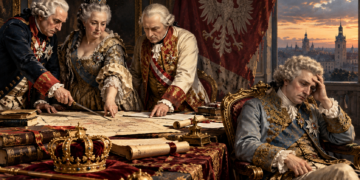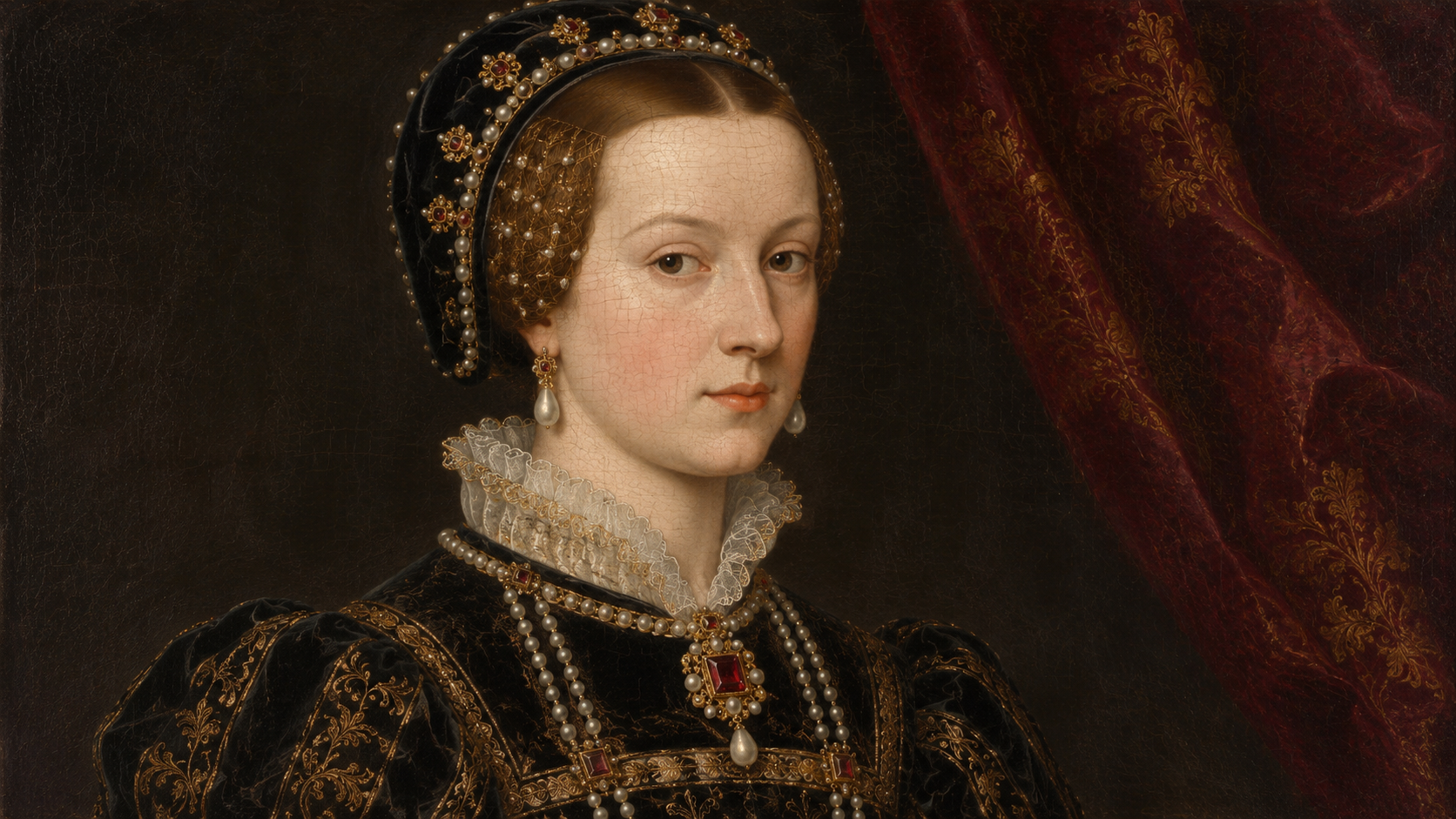
On 1 November 1526, a princess was born at the royal court in Kraków whose life would eventually connect two of northern Europe’s most influential dynasties.
Catherine Jagiellon, known in Poland as Katarzyna Jagiellonka, was the youngest daughter of King Sigismund I the Old and his Italian-born wife, Bona Sforza. She would become Queen of Sweden, spend years imprisoned alongside her husband and give birth to a son who would eventually wear both the Polish and Swedish crowns.
Her 500th birth anniversary, marked on 1 November 2026, recalls a remarkable life shaped by royal ambition, religious division and the political rivalries of Renaissance Europe.
- Find more news from Poland on our Homepage .
Catherine never ruled Sweden independently. As queen consort, however, she exercised influence through diplomacy, religion and cultural patronage, while her family connections helped reshape relations between Poland and Sweden for generations.
From Kraków to the Swedish royal family
Catherine grew up in the world of the Jagiellonian dynasty, which governed the Kingdom of Poland and the Grand Duchy of Lithuania during one of the most significant periods of their political and cultural development.
Her father, Sigismund I, ruled Poland from 1506 until 1548. Her mother, Bona Sforza, came from an influential Italian noble family and brought Renaissance tastes and political connections to the Polish court.
Catherine’s childhood was spent partly at Wawel Castle in Kraków, which had been transformed by Italian architects and artists. The experience exposed her to artistic and courtly traditions that she would later encounter and promote in Scandinavia.
Like many royal women of the period, Catherine was also regarded as a potential instrument of dynastic diplomacy.
Several marriage possibilities were considered during her adulthood, including proposed matches involving European rulers and even Ivan IV of Russia, better known as Ivan the Terrible.
Ultimately, her future lay across the Baltic Sea.
On 4 October 1562, at the age of 35, Catherine married John Vasa, Duke of Finland, in Vilnius, now the capital of Lithuania.
John was a younger brother of Sweden’s reigning monarch, Eric XIV. His marriage to a Polish princess offered an important political connection at a time when Sweden, Poland and neighbouring powers were competing for influence around the Baltic.
After the wedding, Catherine travelled to Finland, then part of the Swedish realm, accompanied by a substantial household of courtiers and servants.
The couple established themselves at Turku Castle, where Catherine presided over a court bringing together people from several European countries.
Four years of captivity
Catherine’s marriage soon became entangled in a dangerous struggle within the Swedish royal family.
King Eric XIV regarded John’s independent political dealings with Poland as a threat to his authority.
In 1563, royal forces besieged Turku Castle. John was forced to surrender, and the couple were subsequently taken into custody.
They were imprisoned at Gripsholm Castle, west of Stockholm, where they remained for approximately four years.
Historical accounts describe Catherine refusing an opportunity to separate from her husband and return to Poland. Instead, she remained with him through their imprisonment.
Their captivity also brought profound personal experiences.


Their daughter Isabella, born during this period, died in early childhood. On 20 June 1566, Catherine gave birth at Gripsholm to a son, Sigismund.
That child would eventually become one of the most consequential figures in Polish and Swedish dynastic history.
The family’s circumstances changed in 1567, when John and Catherine were released.
The following year, Eric XIV was overthrown amid conflict with his brothers and sections of the Swedish nobility. John took power as John III, making Catherine Sweden’s queen consort in 1568.
Their coronation followed in 1569 at Uppsala Cathedral.
A Catholic queen in a Protestant kingdom
Catherine’s arrival at the centre of Swedish royal life introduced a distinctive religious influence.
She remained a committed Roman Catholic in a kingdom where the Lutheran Reformation had already transformed the established Church.
Her marriage arrangements had included assurances that she could continue practising her religion.
As queen, Catherine maintained contact with Catholic circles in continental Europe and helped encourage her husband’s interest in religious reconciliation.
John III pursued changes to Swedish worship intended to bring some practices closer to older Catholic traditions. Catherine’s faith and connections formed part of the background to these efforts, although Sweden did not return to Roman Catholicism.
Her influence was not confined to religion.
The Swedish Royal Court credits Catherine’s European connections with contributing to developments in Swedish art and architecture during John III’s reign.
Her Polish and Italian Renaissance background provided another channel through which continental artistic influences reached Sweden.
In political affairs, Catherine also tried to maintain workable relations between Sweden and her homeland.
The Polish Biographical Dictionary records her efforts to ease disagreements involving Swedish and Polish representatives and to support diplomatic communication across the Baltic.
Her position nevertheless had limits. She did not exercise independent sovereign authority, and her ability to shape policy depended substantially on her husband and the political circumstances surrounding the throne.
The son who inherited two royal traditions
Catherine’s most lasting dynastic legacy emerged after her death.
She died on 16 September 1583, aged 56, and was buried in Uppsala Cathedral, where her tomb remains an important monument to the historical relationship between Poland and Sweden.
Four years later, her son Sigismund was elected King of Poland in 1587, becoming Sigismund III Vasa.
Poland’s monarchy was elective, rather than automatically inherited. Sigismund’s descent from the Jagiellonian family through his mother strengthened his claim and helped secure support for his candidacy.
He subsequently became Grand Duke of Lithuania as part of his rule over the Polish-Lithuanian Commonwealth, the joint state formally established in 1569.
In 1592, following the death of his father John III, Sigismund also inherited the Swedish throne.
For a brief period, the two kingdoms were united under one monarch, although they remained separate political states.
The arrangement proved unstable.
Sigismund’s Catholicism, his rule largely from Poland and opposition within Sweden created serious tensions. He was eventually removed from the Swedish throne in 1599.
The resulting dynastic disputes contributed to a much longer period of conflict between Poland-Lithuania and Sweden.
Catherine had died before these developments, but her marriage had established the family connection that made them possible.
Remembered in Poland and Sweden
Five centuries after her birth, Catherine Jagiellon’s story remains part of the shared historical heritage of Poland, Sweden and Finland.
Her tomb in Uppsala Cathedral preserves a visible link to her life, while the Polish School attached to the Polish Embassy in Stockholm bears her name.
In 2026, an exhibition in Uppsala also explored her life alongside that of Barbara Radziwiłł, another prominent woman connected to the Jagiellonian dynasty.
Catherine’s historical significance lies not in having governed a country by herself, but in the position she occupied between royal houses, competing religious traditions and the political ambitions of northern Europe.
Born a Polish princess in Renaissance Kraków, she became a Swedish queen whose descendants would shape the history of both kingdoms long after her death.