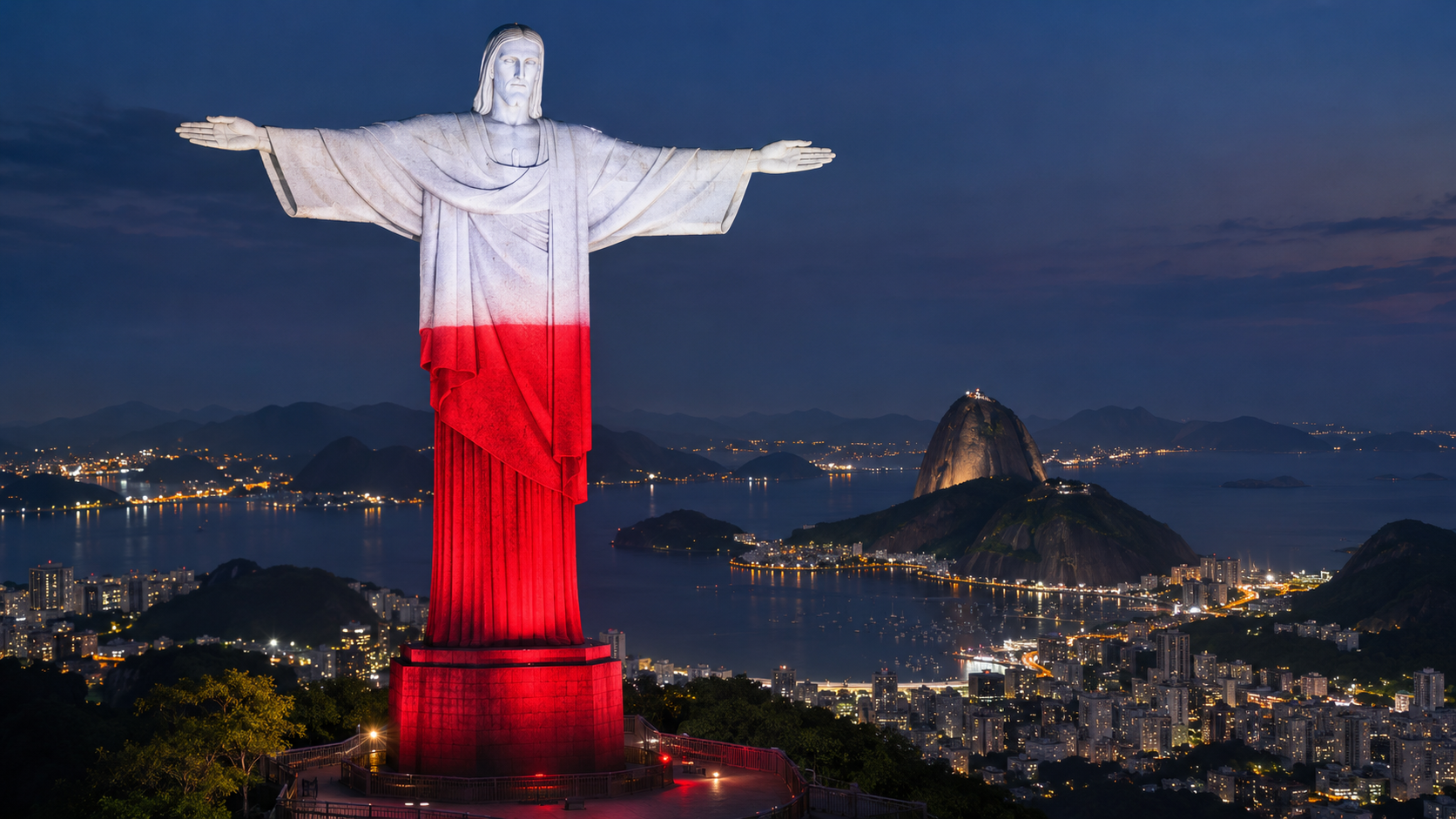
Brazil is moving towards establishing a national day celebrating its Polish heritage after lawmakers approved legislation recognising the contribution of Polish immigrants and their descendants to Brazilian society. The proposed annual observance would take place on 11 November, Poland’s Independence Day, although the measure still requires presidential approval before becoming law.
The legislation, known as Bill 2,335/2025, has completed its passage through Brazil’s Congress and was formally submitted to the presidency on 16 November.
According to the Brazilian Senate’s official legislative records, the proposal was approved by the Senate’s Education and Culture Committee on 3 November, receiving 15 votes in favour and none against.
- Find more news from Poland on our Homepage .
The committee’s decision was final unless senators requested a vote in the full chamber. No such request was submitted before the deadline expired on 10 November, allowing the legislation to proceed to the president.
Brazilian authorities have until 7 December to complete the presidential approval or veto process. As of 26 November, the proposal remains awaiting a decision.
Why 11 November?
The proposed National Day of the Cultural Heritage of Poles in Brazil would coincide with the anniversary of Poland regaining its independence in 1918, following more than a century of partition by neighbouring powers.
The date was chosen to recognise both Poland’s national history and the contribution of successive generations of Polish immigrants to Brazilian society.
The legislation was introduced in May 2025 by Brazilian congressman General Girão. It subsequently received support from Senator Flávio Arns, who acted as its rapporteur in the Senate.
Under the proposal, public authorities would promote awareness of the commemorative day and organise activities celebrating Polish cultural traditions and their contribution to Brazil.
The measure concerns national cultural recognition rather than the creation of an additional public holiday.
Millions of Brazilians have Polish ancestry
Polish immigration has played an important role in shaping communities across Brazil, particularly in the country’s southern regions.
The state of Paraná, and especially its capital Curitiba, is closely associated with Brazil’s Polish-descended population.
Polish immigrants began arriving in significant numbers during the 19th century, establishing communities that maintained elements of their language, religion, cuisine and cultural traditions while becoming part of Brazilian society.
According to estimates cited in the Brazilian Senate’s account of the legislation, between 1.5 million and 2.5 million Brazilians have Polish ancestry.
These figures are estimates rather than a precise census count, but they illustrate the considerable historical presence of the Polish diaspora in South America’s largest country.
Senator Arns highlighted the influence of Polish communities on Brazilian literature, theatre, visual arts, music, religious practices and traditional food.
He argued that the proposal would recognise cultural traditions preserved across generations and now forming part of Brazil’s broader national identity.
Awaiting the president’s decision
If the legislation receives presidential approval, 11 November will become an officially recognised annual occasion for celebrating Polish cultural heritage throughout Brazil.
The initiative would provide national recognition for the historical and cultural contributions of Polish-Brazilian communities.
For now, however, the proposed commemorative day has not yet entered into law, with the final decision resting with Brazil’s presidency.