A small sponge stamp, a little cobalt-blue paint and a steady hand. These are some of the simple tools behind one of Poland’s most recognisable traditional crafts.
In the south-western town of Bolesławiec, artisans continue decorating ceramic bowls, mugs and plates with the distinctive patterns that have made the region’s pottery familiar to collectors around the world.
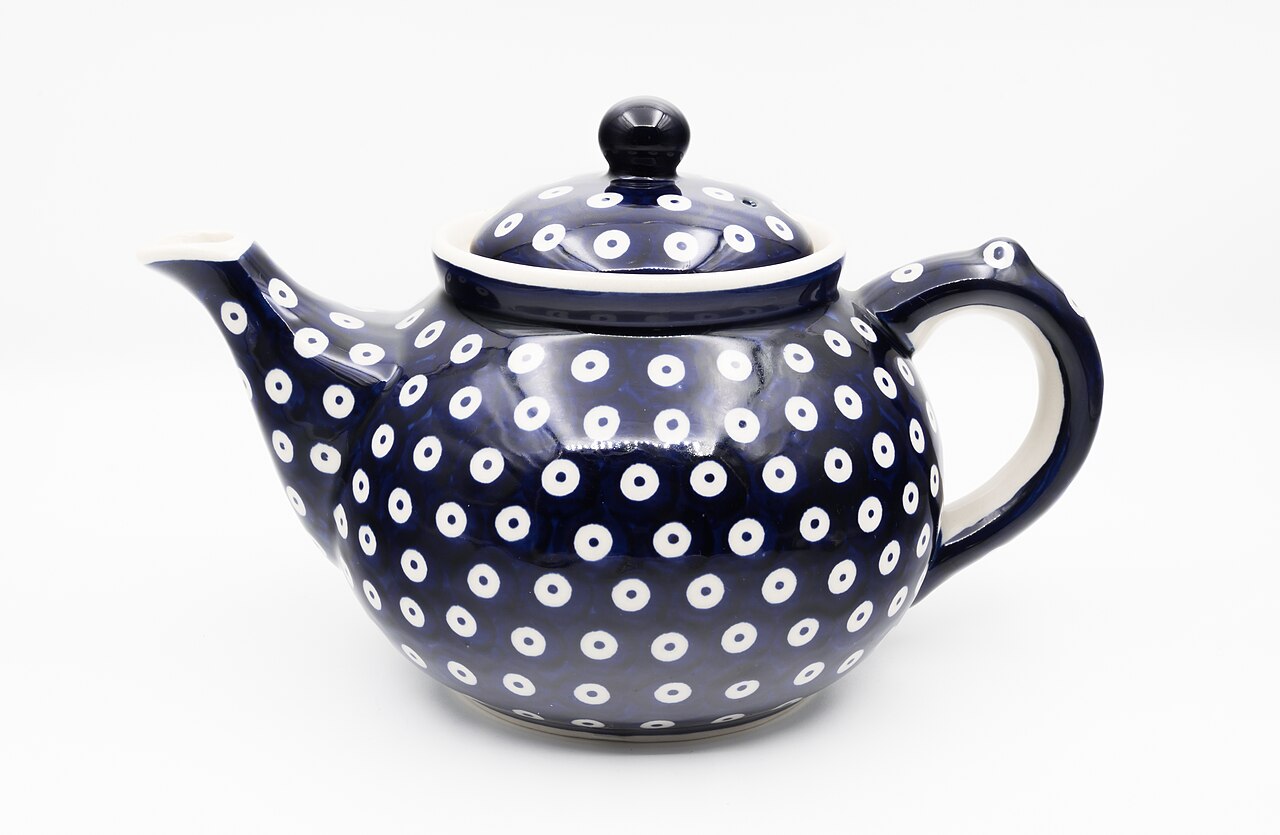
The repeating circles, dots, flowers and so-called peacock-eye motifs may look as though they were applied mechanically. In many workshops, however, they are still created individually by hand.
- Find more news from Poland on our Homepage .
The town’s pottery-making history stretches back more than six centuries, while its famous cobalt-blue decoration emerged during the nineteenth century.
In August 2026, one of its best-known manufacturers, Zakłady Ceramiczne BOLESŁAWIEC, celebrated 80 years since its post-war establishment in 1946.
The anniversary highlighted a craft that has survived changing borders, wars, industrialisation and generations of evolving artistic tastes.
The centuries-old history behind Bolesławiec pottery
Bolesławiec lies in Lower Silesia, a region of south-western Poland with substantial natural clay deposits.
The surrounding landscape, particularly the river basins of the Bóbr and Kwisa, provided materials suitable for producing durable stoneware.
According to the Ceramics Museum in Bolesławiec, the earliest known documentary reference to a potter from the town dates to 1380.
By the fifteenth century, several pottery workshops were operating there.
Their products looked quite different from the blue-and-white ceramics associated with Bolesławiec today.
Early potters made practical objects, including jugs, pots and storage vessels, frequently covered with a characteristic brown glaze.
Some vessels featured elaborate relief decoration, including religious, heraldic and plant motifs.
By the eighteenth century, local craftsmen had established a reputation for their stoneware.
One extraordinary example was a giant pot made in 1753 by master potter Johann Gottlieb Joppe. More than two metres tall and with a capacity of roughly 2,000 litres, it became a symbol of the town’s ceramic tradition.
The original vessel was destroyed after the Second World War, but a reconstruction can be seen in the Ceramics Museum.
How the famous blue patterns were born
The appearance of Bolesławiec pottery changed significantly during the nineteenth century.
Around 1882, local workshops began developing a decorative technique that would eventually become the town’s most recognisable artistic signature.
Instead of relying primarily on brown glazing or relief decoration, craftspeople began applying repeating patterns using stamps made from sponge.
The designs included small circles, dots, rosettes and motifs resembling the eyes on a peacock’s tail.


Cobalt blue became particularly popular, often appearing against the pale background of the ceramic surface.
The technique required more than simply pressing a stamp onto a vessel.
Decorators had to position each impression carefully, maintain consistent spacing and adapt the pattern to curved surfaces.
A single plate or bowl might require dozens of precisely placed impressions.
The result combined repetition with the subtle variations that come from individual craftsmanship.
The establishment of a vocational ceramics school in Bolesławiec in 1897 helped modernise the local industry.
Designers and manufacturers experimented with new forms, colours and glazing techniques, while adapting traditional motifs to changing tastes.
By the early twentieth century, pottery from the town, then known by its German name Bunzlau, had developed a distinctive artistic identity.
How the pottery is decorated today
Traditional decoration remains central to contemporary Bolesławiec ceramics.
At Zakłady Ceramiczne BOLESŁAWIEC, the production process begins with shaping the clay into the required form.
After drying and an initial firing, the ceramic pieces are ready for decoration.
Craftspeople apply coloured designs using small stamps fashioned from sponge or rubber.
According to the manufacturer’s description of its production methods, traditional patterns include circles, dots, fish scales, peacock eyes, triangles and clover leaves.
Cobalt remains a signature colour, but green, brown and other shades are also used.
Some pieces are additionally decorated with hand-painted floral designs and more contemporary motifs.
The vessels are then glazed and fired again to produce their finished surface.
Although manufacturers use modern equipment and production techniques, the hand-decoration stage remains an important part of the identity of many traditional Bolesławiec products.
Not every item is made in precisely the same way, and different workshops have developed their own artistic styles.
What connects them is the region’s long relationship with ceramics and the continued importance of skilled decorators.
Rebuilding the tradition after the Second World War
The modern history of Bolesławiec pottery cannot be separated from the upheaval of the Second World War.
Before 1945, the town was part of Germany. Following the war and the redrawing of Europe’s borders, Bolesławiec became part of Poland.
The region underwent profound population changes, while many local factories and workshops had been damaged.
Re-establishing ceramic production required rebuilding an industry whose earlier craftsmen and businesses had largely disappeared.
One of the important figures in this process was ceramic artist Tadeusz Szafran, who helped restart production in 1946.
That post-war revival eventually developed into the manufacturer now known as Zakłady Ceramiczne BOLESŁAWIEC.
Another important enterprise, the Ceramika Artystyczna cooperative, began operating in 1950.
Polish artists and designers gradually developed new interpretations of the region’s established traditions.
Among them was Bronisław Wolanin, whose work helped shape the modern appearance of Bolesławiec ceramics.
The familiar stamping technique enjoyed renewed popularity during the 1970s, becoming increasingly important to the products exported abroad.
The result was both a continuation and a reinvention of the local craft.
Earlier Silesian ceramic techniques survived, while post-war Polish designers and craftspeople developed the styles now widely associated with Polish pottery.
An international reputation built by Polish craftspeople
Today, Bolesławiec ceramics are sold internationally, particularly in markets where the distinctive blue-and-white designs have become closely associated with Polish craftsmanship.
The pottery has also appeared at major international promotional events.
During Expo 2025 in Osaka, Japan, Bolesławiec ceramics were presented as part of Poland’s cultural and design offering.
The Polish Pavilion’s programme included workshops introducing visitors to the traditional stamping technique.
The presence of Bolesławiec pottery at the world exhibition illustrated how a regional craft could also serve as an example of contemporary Polish design.
The tradition has not remained frozen in the past.
Manufacturers continue introducing new shapes, decorations and colour combinations while maintaining recognisable elements of the older craft.
Eighty years of post-war craftsmanship
The importance of the people behind the pottery was highlighted again in August 2026.
Zakłady Ceramiczne BOLESŁAWIEC marked the 80th anniversary of its establishment in 1946 during celebrations associated with the annual Bolesławiec Ceramics Festival.
According to the Polish Ministry of State Assets, the anniversary brought together former and current employees, designers, specialists and representatives of the local ceramic industry.
Among those honoured was designer Janina Bany-Kozłowska, who received the Gold Medal for Merit to Culture — Gloria Artis.
The celebrations recognised eight decades of the company’s contribution to a craft with much older roots.
The town’s pottery tradition belongs to no single manufacturer. It has been shaped by generations of craftsmen, designers and workshops, both before and after the Second World War.
Yet its most recognisable feature remains remarkably simple.
A decorator presses a small stamp against the pale surface of a ceramic vessel, leaving a carefully placed cobalt-blue pattern.
Repeated across hundreds of individual impressions, that technique has helped turn Bolesławiec pottery into one of Poland’s most distinctive contributions to everyday design.