Few hairstyles have remained fashionable for as long as the bob.
From the rebellious young women of the 1920s to Hollywood stars and modern fashion icons, its clean lines and countless variations have survived more than a century of changing tastes.
But one of the people who helped turn short women’s hair into an international fashion statement came from an unlikely place: a small town in central Poland.
- Find more news from Poland on our Homepage .
His name was Antoni Cierplikowski.
Born in Sieradz in 1884, he became internationally famous as Antoine de Paris, building a hairdressing empire, styling some of the world’s most celebrated women and helping transform hairstyling into an art form.
His clients included actresses, singers, aristocrats and royalty. His influence reached from Paris to London, New York and Hollywood.
And although the bob was not the invention of a single person, Cierplikowski was among the pioneering stylists who helped make it fashionable.
From a Polish shoemaker’s family to Paris
Antoni Cierplikowski was born on 24 December 1884 in Sieradz, then part of the Russian-controlled territory of partitioned Poland.
His father was a shoemaker, while his mother worked as a seamstress.
The young Antoni showed an early interest in appearance, fashion and working with his hands.
He began learning hairdressing in Łódź, where relatives operated a salon.
At the beginning of the twentieth century, Paris was already the international centre of luxury fashion.
For an ambitious young man from provincial Poland, it offered opportunities that would have been difficult to imagine at home.
In 1901, at the age of 16, Cierplikowski travelled to the French capital.
His early years were far from glamorous.
According to the POLONIKA institute’s biography, he arrived with little more than his talent and ambition.
He initially worked in a salon specialising in wigs, learning the demanding techniques needed to create elaborate hairstyles for wealthy clients.
His skill eventually brought him into contact with Parisian high society.
He also worked in fashionable French seaside resorts, where wealthy European and American visitors demanded increasingly sophisticated styling.
It was the beginning of a remarkable international career.


The haircut that challenged convention
In the early twentieth century, long hair remained a powerful symbol of conventional femininity.
Women generally wore it pinned up in elaborate arrangements, often requiring considerable time and assistance.
Cutting it dramatically shorter could still provoke criticism or controversy.
Cierplikowski helped challenge those expectations.
The turning point traditionally associated with his career came around 1909, when French stage actress Ève Lavallière sought a hairstyle that would make her appear younger for a theatrical role.
Cierplikowski gave her a strikingly short cut inspired by the appearance of a young girl or Joan of Arc.
The style departed sharply from the elaborate long hairstyles fashionable among women of her social standing.
The success of the look helped establish his reputation as a daring innovator.
Poland’s National Institute of Polish Cultural Heritage Abroad identifies the cut as a landmark in the emergence of the à la garçonne hairstyle, meaning a boyish or cropped style associated with the changing image of women.
The haircut became part of a wider movement towards simpler, shorter and more practical fashions.
By the 1920s, cropped hairstyles were closely associated with the modern woman.
However, the bob’s history is more complicated than the story of one inventor.
Other actresses and fashion pioneers had worn short hair before the 1920s.
The American dancer Irene Castle became especially influential in popularising a version known as the Castle bob around 1914–1915.
As the Metropolitan Museum of Art explains, these styles emerged through several overlapping influences, including changing social attitudes, wartime practicalities and celebrity fashion.
Cierplikowski was therefore an important pioneer in the development and popularisation of short women’s hairstyles, rather than the undisputed inventor of every version of the bob.
The Polish man behind Antoine de Paris
In 1912, Cierplikowski opened a salon at 5 Rue Cambon in Paris.
The address became associated with fashionable, modern hairstyling.
Nearby, Coco Chanel was developing her own influence on women’s clothing.
Both were part of a broader transformation in which fashion became less restrictive and increasingly connected with the independence and public visibility of women.
Cierplikowski’s salon offered something beyond an ordinary haircut.
He treated hair as a form of artistic design, experimenting with dramatic shapes, colour and presentation.
His approach also reflected a new understanding of salon culture, with greater attention to hair washing, hygiene and specialised beauty products.
He developed his own cosmetics and beauty business, eventually establishing an international brand.
His wife, Marie-Berthe Astier, played an essential role in managing its commercial and financial affairs.
As his reputation grew, the name Antoine de Paris became a mark of prestige.
By the interwar period, the business had expanded internationally, with salons operating in several European countries and beyond.
Cierplikowski had transformed himself from a young Polish apprentice into one of the most recognisable names in luxury hairstyling.
From Josephine Baker to Hollywood
One of the most remarkable aspects of Cierplikowski’s career was the range of people he styled.
His clientele and artistic collaborators included some of the twentieth century’s best-known performers.
Among them was Josephine Baker, the American-born entertainer who became one of the great stars of Paris during the 1920s.
Cierplikowski helped develop her distinctive sleek hairstyle, which became closely associated with her public image.
He also worked with or styled international figures including Pola Negri, Marlene Dietrich and other celebrated actresses.
His career reached beyond European salons into the film industry.
During the 1930s, he worked with Hollywood studios, contributing hairstyles and artistic designs for productions involving major stars.
He also maintained important connections with the visual arts.
The Polish sculptor Xawery Dunikowski was a close friend, while artist and designer Sara Lipska collaborated with him on salon interiors and other creative projects.
His sculptural wigs and theatrical hairstyles reflected this artistic environment.
As a result, Cierplikowski was increasingly regarded not simply as a hairdresser but as an artist working with hair as his medium.
The Europeana cultural heritage platform describes his career as a combination of artistic experimentation, international celebrity culture and commercial innovation.
The hairstyle that became a symbol of freedom
The bob’s importance extended far beyond appearance.
In the years after the First World War, shorter hairstyles became associated with changing expectations for women’s lives.
Young women were increasingly entering workplaces, participating in public life and challenging older conventions governing dress and behaviour.
The bob offered a highly visible expression of that transformation.
Its popularity grew alongside the rise of the flapper, the modern young woman associated with the Jazz Age.
The style also generated resistance.
Some hairdressers initially refused to cut women’s hair so short, while critics treated the trend as a rejection of traditional femininity.
The Smithsonian’s history of the bob documents how the haircut provoked controversy before eventually becoming widely accepted.
By the middle of the 1920s, countless variations had appeared.
The blunt bob was joined by the shingle cut, finger waves, the closely cropped Eton style and other interpretations.
Cierplikowski’s work belonged to this larger transformation.
His contribution was to help make adventurous short hairstyles desirable among fashionable, influential clients — women whose appearances could then inspire a much wider audience.
The hairstyle would change repeatedly in subsequent decades, but the bob never disappeared.
A career between Poland, Paris and America
By the height of his career, Cierplikowski had become a genuinely international figure.
He operated a network of salons and beauty businesses, travelled extensively and maintained relationships with leading figures in fashion and entertainment.
He also worked in the United States, including during the Second World War.
His work extended to royal occasions in Britain, with historical accounts recording his involvement in hairdressing preparations for the coronations of George VI and Elizabeth II.
His lifestyle became almost as famous as his professional achievements.
Stories circulated about his extravagant homes, artistic possessions, unusual furniture and fondness for theatrical self-presentation.
But behind the eccentric image was a successful businessman who recognised the growing commercial importance of personal appearance.
He helped establish the idea that a hairstylist could become an internationally recognised creative figure whose name carried commercial value.
As the industry developed, the kind of celebrity hairdressing he represented became an established part of fashion culture.
The return to Sieradz
Despite spending much of his life abroad, Cierplikowski maintained connections with Poland.
He supported Polish artists, collected works of art and contributed to cultural projects.
He also developed a particularly close relationship with sculptor Xawery Dunikowski, whose work he helped preserve and promote.
In 1971, Cierplikowski returned to his hometown of Sieradz.
He died there on 5 July 1976, aged 91.
His final years contrasted sharply with the extraordinary wealth and international reputation associated with his Parisian career.
Yet his name continued to be remembered in his hometown.
Since 2009, Sieradz has celebrated his legacy through the Open Hair Festival, dedicated to hairstyling, fashion and creativity.
A monument to him also stands in the town’s main square.
For Sieradz, the festival is a reminder that one of the most influential figures in modern hairstyling began life in its streets.
A Polish legacy in everyday fashion
Today, the bob exists in countless forms.
It can be sleek or tousled, blunt or layered, sharply geometric or softly curved.
Its popularity has lasted through generations of actresses, musicians, designers and ordinary people.
The style’s history belongs to many women and many creative pioneers.
Antoni Cierplikowski was one of its most important early champions.
His success also demonstrates how a talented individual from a small Polish town could influence an international industry at a time when Paris defined much of the world’s fashion.
He built an international business, worked with celebrated artists and helped establish hairstyling as an important creative profession.
More than fifty years after his death, the impact of his work can still be recognised in salons around the world.
The next time someone asks for a bob haircut, they are participating in a fashion story that includes an extraordinary Polish figure who helped change how the world thought about women’s hair.
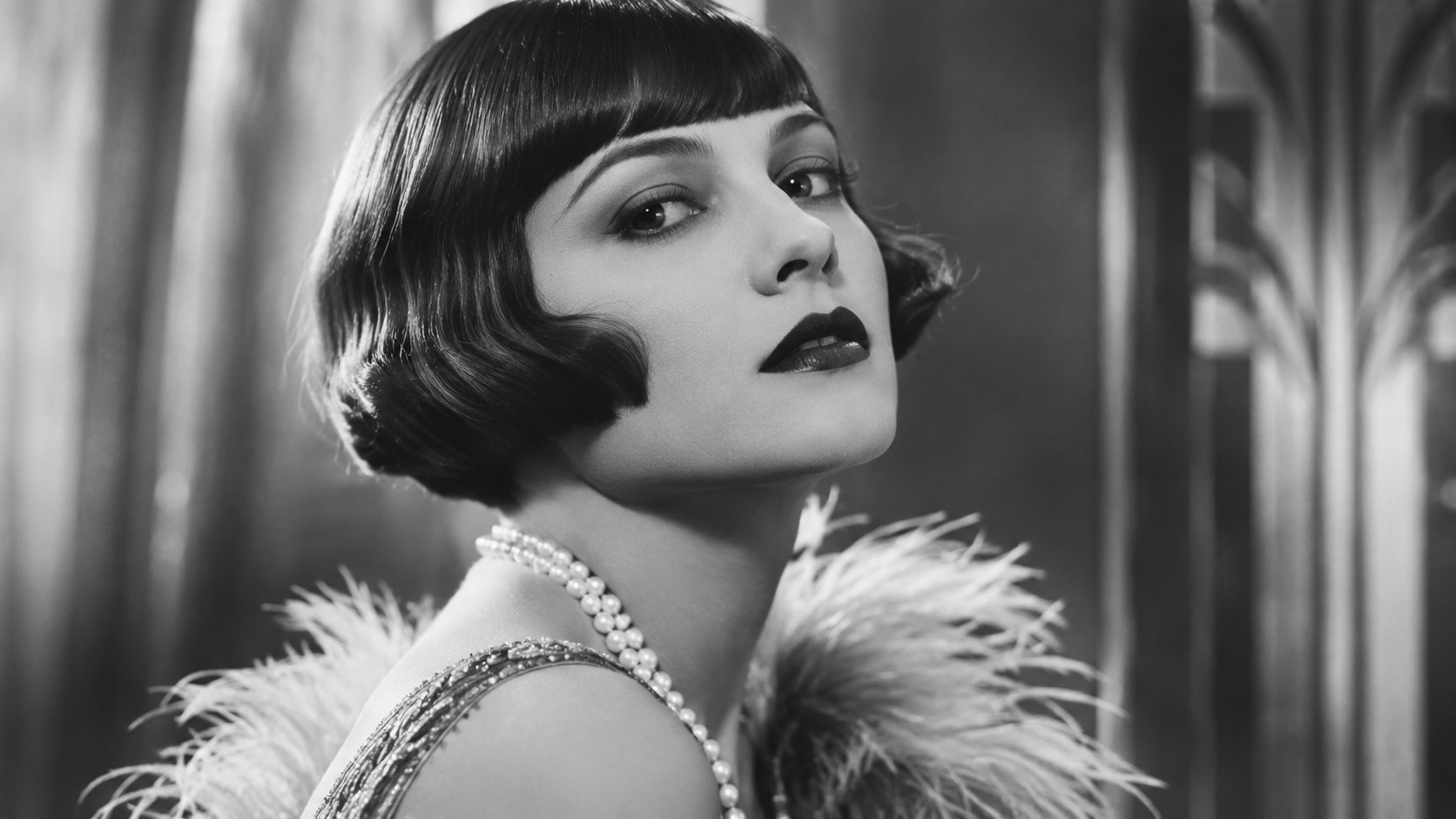
Featured image: AI-generated period-inspired editorial illustration of a fictional woman wearing a 1920s-style bob haircut. Not an archival photograph, a historical client of Antoni Cierplikowski, or a depiction of a documented event.