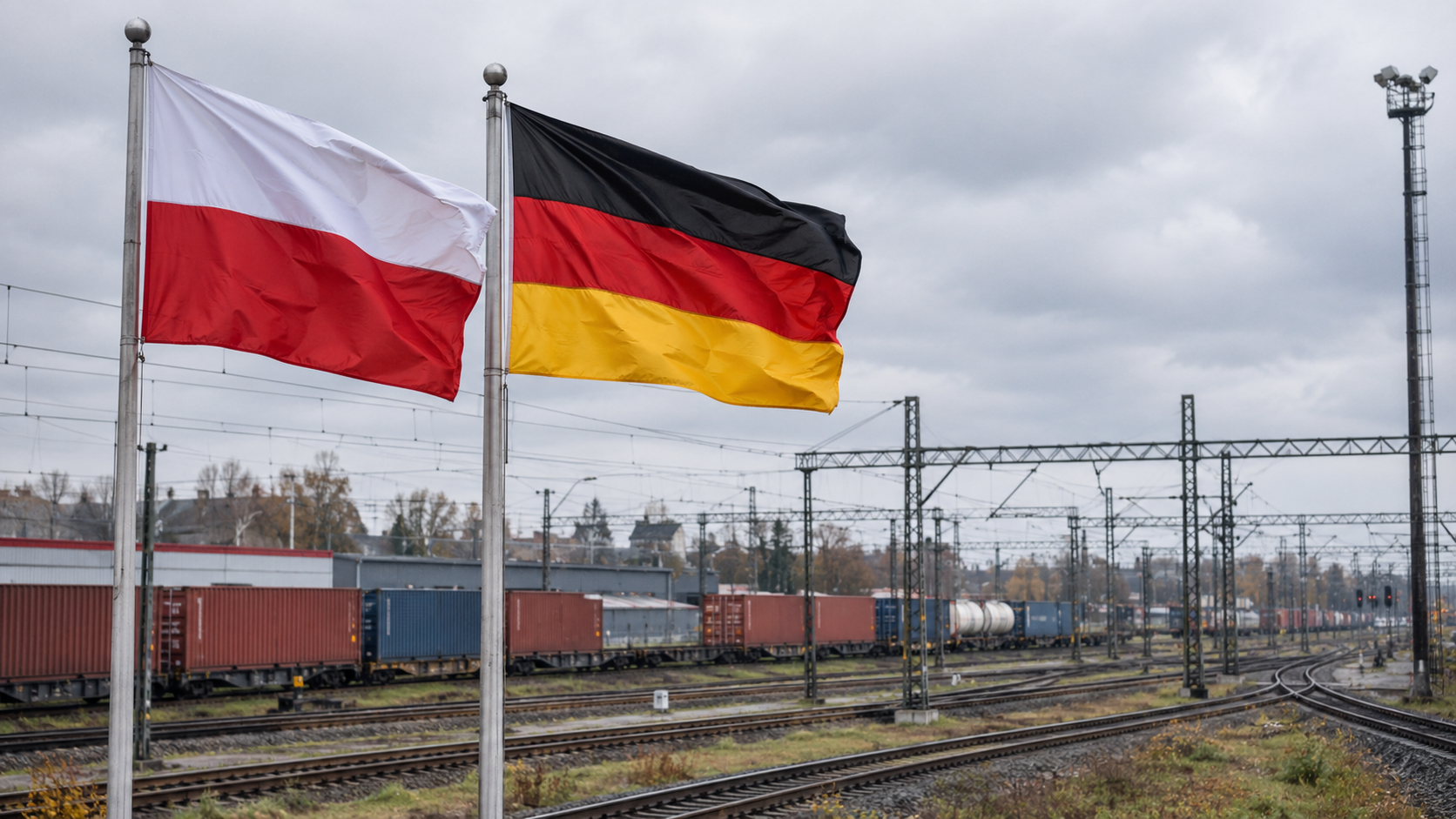
Poland and Germany are expected to remain the two European countries most frequently targeted by Russian sabotage operations, according to a major new security report that warns of increasingly sophisticated attacks and the growing risk of mass casualties.
The International Institute for Strategic Studies (IISS) found that Russian sabotage incidents across Europe increased by 16% during the 12 months ending in September 2026, while the use of arson and explosives roughly doubled.
In Poland alone, researchers recorded 29 incidents linked to Russian operations between October 2025 and September 2026, with arrests resulting from 16 of those cases.
- Find more news from Poland on our Homepage .
The findings were published on 26 November in a report titled Russia’s Unconventional War on Europe: Sabotage, Deterrence and Future Scenarios.
Why Poland and Germany face the greatest threat
According to the IISS, Poland and Germany have been the European countries most frequently targeted by sabotage since Russia launched its full-scale invasion of Ukraine in February 2022.
Researchers assess that both countries will probably remain priority targets because of their central role in transporting military equipment, humanitarian supplies and other assistance to Ukraine.
Poland’s geographical position makes it an important transit country for Western support reaching Kyiv. Its railways, roads and logistics facilities therefore represent potential targets for operations intended to disrupt the Ukrainian war effort.
Germany’s defence industry and transportation networks also play a significant role in supplying Ukraine.
The report describes how Russian-linked activity has occurred in waves, with operations concentrated on particular countries and infrastructure sectors.
During autumn 2025, Poland accounted for 36% of 61 recorded incidents across Europe, with transport and logistics networks receiving particular attention.
In the latest identified surge, between August and September 2026, Poland accounted for 24% of 25 incidents, compared with 20% in Germany and another 20% across the Baltic states.
The IISS database covers a wider range of suspected Russian external operations, including reconnaissance and other hostile activities. Its figure of 29 incidents in Poland should therefore not be interpreted as 29 completed sabotage attacks.
Polish railway attack illustrates the danger
One of the most serious examples highlighted by the researchers occurred in November 2025, when an explosive device damaged a railway line near the village of Mika, southeast of Warsaw.
The route connects the Polish capital with the Ukrainian border and is used to transport assistance to Ukraine.
Prime Minister Donald Tusk subsequently said the explosion had probably been intended to destroy a train.
Polish investigators identified two suspects whom Tusk described as Ukrainian citizens working with Russian intelligence.
The incident prompted additional security measures, including the deployment of Polish troops to protect railway infrastructure. Poland-24 has previously reported on the country’s year-long Operation TOR railway-security programme.
Foreign Minister Radosław Sikorski also announced the closure of Russia’s remaining consulate in Gdańsk.
The IISS argues that such incidents demonstrate both the vulnerability of critical infrastructure and the challenges facing European security services.
Russian sabotage operations becoming more sophisticated
The report identifies a significant change in the methods used by individuals recruited to carry out operations on behalf of Russian intelligence services.


Although many activities continue to involve relatively inexperienced recruits, researchers found evidence of a growing number of more capable operatives.
Some have reportedly used improvised explosive devices equipped with timers or remote detonators.
Across Europe, incidents involving arson increased from seven to 14 over the latest reporting period, while incidents involving improvised explosive devices rose from four to 11.
Between October 2025 and September 2026, the principal sectors targeted were:
- Military and defence industry: 28%
- Transport infrastructure: 22%
- Energy infrastructure: 7%
Together, these sectors accounted for 57% of the incidents recorded during that period.
Researchers believe the concentration on these targets reflects attempts to interfere with Europe’s ability to support Ukraine.
Warning of possible mass casualties
Perhaps the most serious conclusion concerns the potential consequences of increasingly dangerous sabotage techniques.
The IISS warns that a future operation could cause large numbers of casualties, either through deliberate action or an unintended escalation.
Such an incident could trigger demands for retaliation and expose disagreements between European governments over how strongly they should respond.
The assessment is a warning about a possible future scenario, not a prediction that a mass-casualty attack is imminent in Poland or elsewhere in Europe.
Researchers argue that European governments have become more effective at identifying plots, arresting suspects and disrupting individual operations.
However, these successes do not necessarily prevent Russian intelligence services from recruiting replacements or organising further attacks.
The report suggests that a more coordinated European strategy is needed to raise the costs of conducting such operations.
Has Russia’s sabotage campaign achieved its objectives?
Despite the increase in sabotage activity, the IISS concludes that Russia has so far failed to achieve its broader strategic objective of weakening European support for Ukraine.
Western military assistance continues, while European countries have increased defence spending and strengthened the protection of critical infrastructure.
Nevertheless, the researchers caution that Russia retains the ability to conduct further disruptive operations.
For Poland, the findings underline the continuing security challenges associated with its position on NATO’s eastern flank and its role as a major logistical gateway to Ukraine.
The report’s central warning is that preventing individual attacks, while essential, may not be sufficient to deter the intelligence networks responsible for organising them.