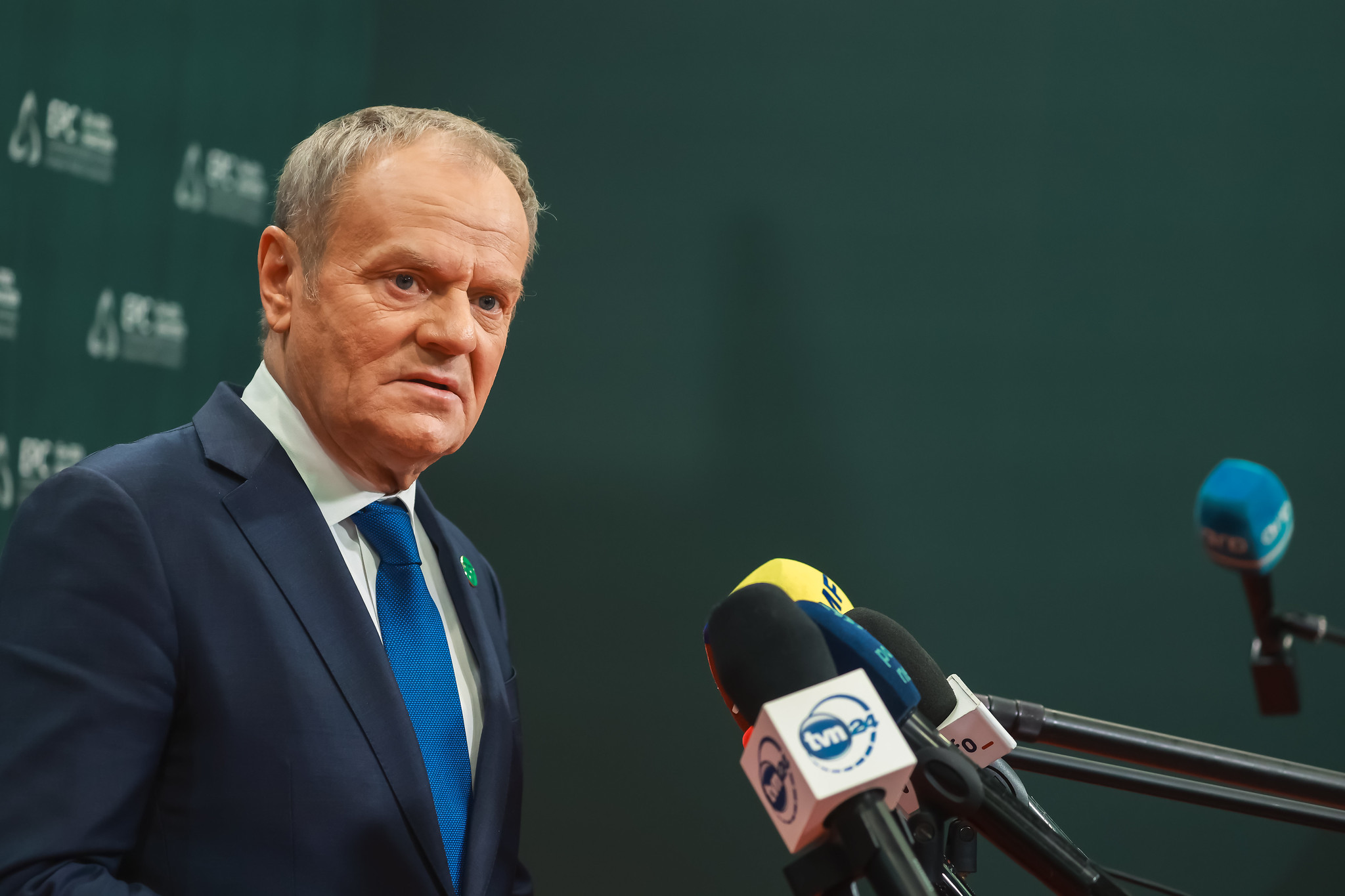
Polish Prime Minister Donald Tusk has reaffirmed that Poland will not deploy troops to Ukraine as European leaders meeting in Berlin on Thursday, 19 November, backed plans for security guarantees intended to protect the country after a future ceasefire with Russia.
Tusk joined representatives of nearly 40 countries and international organisations at the German Chancellery for a summit of the Coalition of the Willing, hosted by Chancellor Friedrich Merz alongside France and the United Kingdom.
The discussions focused on efforts to end Russia’s war against Ukraine, continued military assistance and the security arrangements that could follow a peace agreement.
- Find more news from Poland on our Homepage .
Poland’s position remains that it will contribute through logistical support, diplomatic negotiations and other assistance rather than deploying Polish ground forces on Ukrainian territory.
Speaking before leaving Warsaw, Tusk stressed that some coalition members were prepared to contribute troops to a future international security mission, but Poland would not participate in that way.
According to a statement issued by the Polish Prime Minister’s Chancellery, the government intends to continue supporting Ukraine’s security while protecting Poland’s own defence requirements.
The decision not to deploy troops is not a new policy. Warsaw has maintained the position throughout earlier discussions on potential European security guarantees for Ukraine.
Berlin summit outlines possible security guarantees
The meeting concluded with a joint statement published by the German government on behalf of the leaders of Germany, France, the United Kingdom and Ukraine.
The statement reaffirmed support for establishing robust, legally binding security guarantees for Ukraine once a ceasefire enters into force.
The proposed arrangements could include a European-led multinational force, supported by the United States, to help provide security reassurance on land, at sea and in the air.
Other possible measures include a US-led mechanism to monitor and verify a ceasefire, continued military assistance and commitments by participating countries to respond to future Russian attacks.
However, the statement does not establish that every coalition member will contribute troops or that a final deployment agreement has been reached.
Any military contributions would depend on decisions by willing countries and applicable national procedures.
For Poland, that distinction is significant. Its participation in the coalition does not imply agreement to send Polish personnel into Ukraine.
Poland will continue logistical and diplomatic support
Poland has played a central role in supplying Ukraine since Russia launched its full-scale invasion in February 2022.
Its geographical position makes the country an important route for the movement of equipment and assistance from Western allies into Ukraine.
Poland also hosts allied forces and military training activities supporting European security.
The Coalition of the Willing is currently conducting multinational military exercises, with much of the activity taking place on Polish territory.
The exercises, known as Koalicja 26.2, run from 9 to 22 November and are intended to test the readiness of multinational forces that could support Ukraine following a future peace settlement.
Poland is acting as a host nation and logistical coordinator for the exercises, according to the Polish Ministry of National Defence’s preparations for the training programme.

Hosting the exercises is distinct from committing Polish troops to a mission in Ukraine.
The Berlin declaration explicitly welcomed the exercises as a demonstration of the proposed multinational force’s preparation and readiness.
Poland among five European countries involved in peace negotiations
Poland’s involvement in the Berlin meeting also reflects its recently confirmed position in Europe’s negotiating arrangements.
At the European Political Community summit in Dublin on 13 November, European leaders agreed that representatives of five countries — Poland, Germany, France, Italy and the United Kingdom — would participate in the European negotiating team for Ukraine.
The format, known as the E5, also involves representatives of EU institutions, with NATO participating in coordination.
The arrangement is designed to ensure that European governments are represented in discussions concerning the outcome of the war and the continent’s future security.
As Poland-24 previously reported, the agreement marked an important diplomatic development for Warsaw, which has repeatedly warned against peace arrangements negotiated without the participation of countries directly affected by Russia’s actions.
The German government’s official explanation of the Berlin summit confirmed that the European negotiating team would continue working in coordination with EU member states.
The E5 arrangement was established before the Berlin meeting and should not be confused with a new military commitment.
Leaders reaffirm military support and call for winter ceasefire
The Berlin statement also addressed the continuing military and financial requirements of Ukraine.
Participating leaders reaffirmed a NATO commitment to provide €70 billion in military equipment, assistance and training during 2026, with at least an equivalent level of support planned for 2027.
The statement also referred to €90 billion in assistance under the European Union’s Ukraine Support Loan, intended to help meet Ukraine’s military and financial requirements through 2027.
Air defence remains a particular priority as Ukraine faces continued Russian attacks on energy infrastructure and other civilian facilities.
The leaders pledged additional efforts to strengthen Ukraine’s ability to intercept missiles and protect essential infrastructure.
They also called on Russia to agree to an energy ceasefire lasting through the winter, alongside arrangements protecting Black Sea shipping and food exports.
These commitments largely reaffirm existing support frameworks rather than representing an entirely new financing agreement negotiated in Berlin.
Tusk doubts Russia will negotiate seriously before spring
Following the meeting, Tusk expressed scepticism about the prospects of an imminent breakthrough in negotiations with Moscow.
Speaking to reporters on his return from Berlin, the Polish prime minister said he did not expect Russia to engage seriously in peace negotiations before the winter ended.
His assessment was reported by TVP World following the summit.
Tusk also revealed that US President Donald Trump had spoken with the European leaders by telephone following his meeting with Russian President Vladimir Putin and Chinese President Xi Jinping in Shenzhen.
According to Tusk, Trump had sounded optimistic about the prospects for talks, but European leaders received his assessment cautiously, particularly regarding Moscow’s intentions.
The Berlin summit therefore ended without an announced peace agreement or an immediate ceasefire.
Instead, the participants reaffirmed their support for Ukraine, set out principles for future security guarantees and underlined the importance of European participation in negotiations.
For Poland, the outcome reinforces a distinction that Tusk has consistently maintained: Warsaw intends to remain involved in supporting Ukraine and shaping Europe’s security arrangements, but without committing Polish ground troops to a future deployment on Ukrainian territory.