

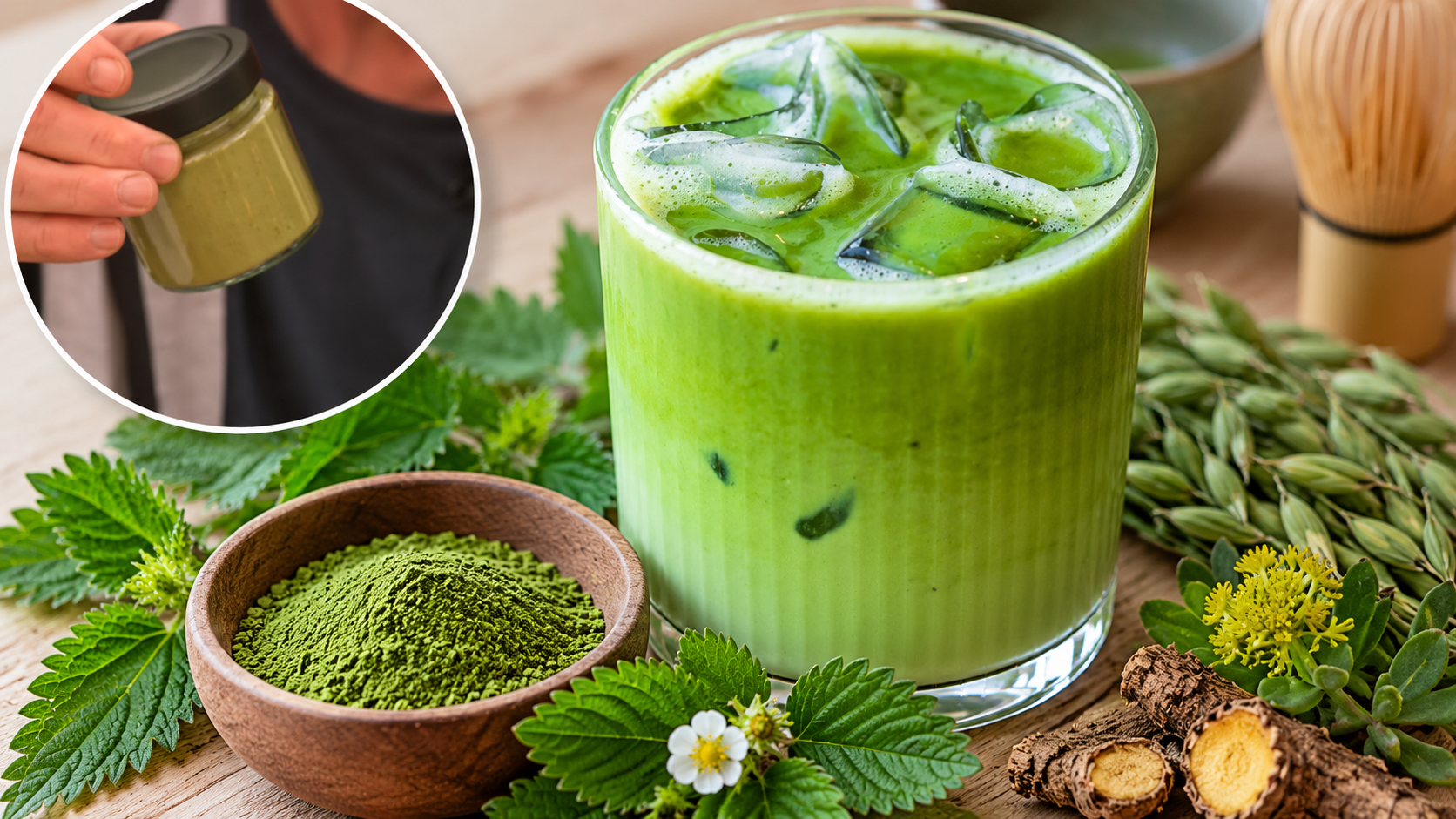
A Polish farm on the edge of the Białowieża Forest has launched a homegrown, caffeine-free alternative to matcha made entirely from plants cultivated in Podlasie. Named “Herbatcha”, the green powder combines nettle leaves, wild strawberry leaves, green oat and rhodiola root and is intended to be whisked into water or milk in much the same way as the increasingly popular Japanese drink.
The product comes from the Kornino farm near Hajnówka in north-eastern Poland. Its producer describes it as a “herbal interpretation of matcha” rather than matcha itself, and the product is now commercially available through Kornino’s own shop.
Unlike genuine matcha, Herbatcha contains no tea leaves. Authentic matcha is produced from specially cultivated leaves of Camellia sinensis, the same plant used to make other true teas, and naturally contains caffeine.
- Find more news from Poland on our Homepage .
Herbatcha instead uses four ingredients grown locally at Kornino: nettle leaf, wild strawberry leaf, green oat and rhodiola root. They are dried and finely ground into a green powder intended to create a similar preparation ritual and appearance.
The name is a play on herbata, the Polish word for tea. Kornino also describes the drink as “Podlasie matcha”, linking an international food trend with ingredients grown in one of Poland’s most rural regions.
“We made our local matcha because there is a fashion for it today,” Mirosław Romaniuk, who developed the product, told TVP Białystok.
One ingredient gives the Polish blend a particularly different profile from Japanese matcha: rhodiola, also known as roseroot or Arctic root.
The European Medicines Agency recognises preparations made from Rhodiola rosea as traditional herbal medicines for the temporary relief of symptoms associated with stress, including fatigue and weakness. However, that classification is based on longstanding traditional use rather than strong clinical evidence of effectiveness. The EMA’s own assessment says available clinical studies have methodological problems and do not provide sufficient evidence to establish clinical efficacy.
That distinction matters because Herbatcha is being marketed as a food and drink product rather than as a medicine, and the presence of rhodiola should not be interpreted as evidence that the drink itself has proven medical effects.
Kornino’s experiment also arrives during an unusual moment for the international matcha market.
Demand for Japanese powdered green tea has risen sharply, particularly overseas. Japan’s Ministry of Agriculture, Forestry and Fisheries says the value of Japanese green-tea exports — a category that includes powdered tea such as matcha — reached ¥72.1 billion in 2025, almost double the previous year.
Reuters reported earlier this year that Japan’s overall agricultural, forestry and fishery exports reached another record in 2025, with green tea among the products benefiting from strong overseas demand. Japan is trying to expand production of high-demand products including matcha as part of its longer-term export strategy.
Matcha production cannot be increased instantly. The tea plants require years to mature, while the leaves used for high-quality matcha undergo specialised shade-growing and processing. Strong global demand has therefore encouraged producers elsewhere to experiment with products that reproduce aspects of matcha’s colour, powdered form or preparation ritual without claiming to be Japanese matcha.
Kornino’s version is firmly rooted in Podlasie rather than Japan. The family farm says its ingredients come directly from its own cultivation and presents the drink as an extension of its existing range of herbs, dried plants and freeze-dried fruit.
The result is less a Polish replacement for matcha in the literal sense than a local response to the same consumer trend: a bright-green powdered drink prepared with a whisk, but made without tea or caffeine and using plants associated with the Polish countryside.