

On 19 September 1940, as German occupation forces swept through Warsaw arresting more than 2,000 men, Witold Pilecki had an opportunity to hide.
He chose not to.
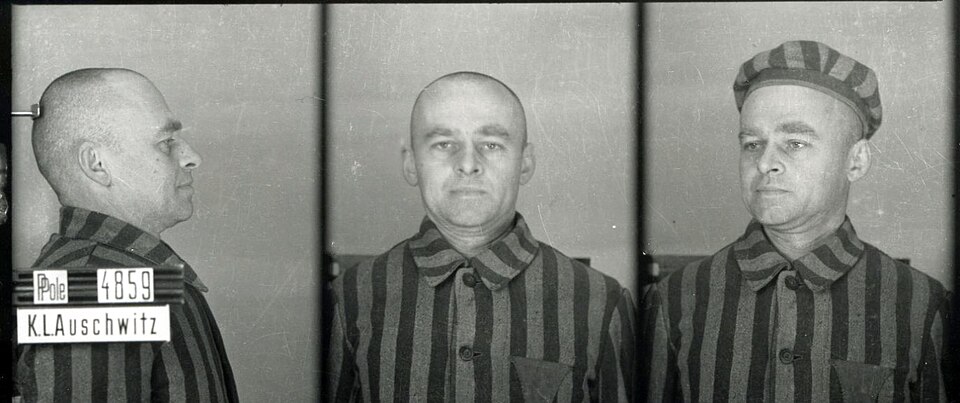
Operating under the false identity Tomasz Serafiński, the Polish underground officer deliberately allowed himself to be detained in the Żoliborz district. His objective was extraordinary: to be deported to the newly established German concentration camp at Auschwitz, make contact with imprisoned resistance members, organise a clandestine network and discover what was happening behind its fences.
- Find more news from Poland on our Homepage .
Pilecki did not actually arrive at Auschwitz on 19 September. After being held in Warsaw, he was transported there in the second Warsaw transport, reaching the camp on 22 September 1940. He was registered as Tomasz Serafiński and given prisoner number 4859.
Eighty-six years later, that distinction matters because the story of Pilecki’s mission is remarkable enough without compressing or embellishing it.
What Pilecki knew in September 1940
The Auschwitz that Pilecki was attempting to penetrate in September 1940 was not yet the vast extermination complex that would later become synonymous with the Holocaust.
The Germans had established the camp only months earlier, in occupied Polish territory near Oświęcim. The first major transport arrived on 14 June 1940 and consisted of 728 Polish political prisoners. In 1940, almost all of the roughly 8,000 people registered at Auschwitz were Poles.
News reaching Warsaw was nevertheless already deeply alarming.
Members of Pilecki’s Secret Polish Army, or Tajna Armia Polska (TAP), had been deported there. Telegrams notifying families of prisoner deaths were arriving in the capital, while information was emerging about brutal conditions and killings inside the camp.
TAP commander Major Jan Włodarkiewicz wanted someone inside Auschwitz who could establish contact with prisoners, create an underground organisation and send reliable information back to the resistance.
Pilecki agreed to undertake the mission.
This is an important point in understanding his decision. He did not enter Auschwitz in September 1940 already knowing that it would become the principal Nazi centre for the mass murder of Europe’s Jews.
That transformation came later.
Mass deportations of Jews to Auschwitz began in 1942, when the camp complex became a major component of Nazi Germany’s programme of extermination. The Auschwitz-Birkenau Memorial notes that until early 1942 relatively small numbers of Jews had been deported there and that Poles remained the majority of registered prisoners until mid-1942.
What Pilecki knowingly entered in 1940 was already a place of German terror, imprisonment, forced labour and death — but its function and scale would change dramatically during his imprisonment.
Building resistance inside the camp
Once inside, Pilecki began establishing what became known as the Union of Military Organisation, or ZOW.
Its members gathered information about conditions and German crimes, maintained clandestine contact with the underground outside the camp, helped prisoners where possible and prepared for the possibility of an uprising. The network also sought food, clothing and medicines and helped organise escapes.
Information collected by the Auschwitz resistance eventually reached the leadership of the Polish underground and, through the Polish government-in-exile, the Allies.
The Auschwitz-Birkenau Memorial records that information from the Polish resistance about what was happening at the camp was reaching the Polish government-in-exile from the autumn of 1940.
Pilecki therefore found himself reporting on a camp that was continually changing.
During the nearly three years he spent there, Auschwitz expanded from a relatively new concentration camp holding primarily Polish prisoners into a sprawling complex that also became the largest Nazi centre for the extermination of European Jews.
His mission evolved with it.
Escape after almost three years
By 1943, Pilecki believed his position was becoming increasingly dangerous and hoped that reaching the outside world personally might help bring action.
On the night of 26–27 April 1943, he escaped with fellow Polish prisoners Jan Redzej and Edward Ciesielski.
He later produced detailed accounts of Auschwitz and continued serving in the Polish resistance. He fought in the Warsaw Uprising in 1944 and, after the war, returned to communist-controlled Poland on an intelligence mission.
He was arrested by the communist security services, subjected to a political trial and executed in Warsaw’s Mokotów Prison on 25 May 1948.
For decades, his story remained suppressed in communist Poland before being restored to wider public memory.
But the decision at the centre of that story can be dated with unusual precision.
On 19 September 1940, during a German round-up in occupied Warsaw, Witold Pilecki could have concealed himself.
Instead, he allowed the Germans to take him.
Three days later, prisoner number 4859 entered Auschwitz carrying a false name — and a mission to discover what was happening inside.