

Poland, with its deep-rooted Catholic traditions, celebrates Boże Ciało (Corpus Christi) with unmatched devotion and splendor. This feast, which honors the belief in the presence of Jesus Christ in the Eucharist, is marked by intricate processions, community gatherings, and vibrant displays of faith. In this blog post, we’ll explore the history of Boże Ciało, its significance in Polish culture, and the detailed customs and rituals, especially the processions that make this celebration so unique.
The Historical Background of Boże Ciało
Origins of Corpus Christi
The feast of Corpus Christi, known in Polish as Boże Ciało, was instituted in the 13th century. It originated in Belgium after the visions of Saint Juliana of Liège, who longed for a special feast to honor the Eucharist. Her visions eventually led to the establishment of Corpus Christi as a feast day in the Catholic Church by Pope Urban IV in 1264.
Introduction to Poland
Boże Ciało was introduced to Poland in the 14th century and quickly became one of the most important religious holidays. Its celebration has evolved over centuries, deeply embedding itself into Polish religious and cultural life. Today, Boże Ciało is a public holiday in Poland, observed with widespread participation and heartfelt devotion.
- Find more news from Poland on our Homepage .
The Significance of Boże Ciało in Polish Culture
Faith and Community
Boże Ciało is more than a religious observance; it is a day when faith and community spirit converge. It reflects the deep Catholic faith of the Polish people and their commitment to the traditions of the Church. The day serves as a reminder of the importance of the Eucharist in daily life and is a time for the community to come together in a public expression of their beliefs.
Cultural Heritage
The celebrations of Boże Ciało are a vibrant part of Poland’s cultural heritage. The elaborate processions, traditional hymns, and beautifully decorated altars all contribute to the cultural richness of the event. Each region in Poland has its own unique way of celebrating, adding to the diversity and richness of this tradition.
The Boże Ciało Processions
The processions of Boże Ciało are the highlight of the celebrations. These processions are a public demonstration of faith, involving the entire community. Let’s explore the components and significance of these processions in detail.
Preparation for the Procession
Weeks in Advance: Preparation for Boże Ciało begins weeks before the actual feast day. Parishes and communities come together to plan the route, decorate the streets, and set up altars. The processions typically pass through streets adorned with flowers, greenery, and religious symbols.
Community Involvement: The preparations involve the entire community, from children to the elderly. Children often create flower carpets along the procession route, while others prepare banners and religious icons. This collective effort fosters a sense of unity and shared purpose.
The Day of Boże Ciało
Morning Mass: The celebration begins with a solemn Mass in the morning. Churches are filled with worshippers who come to celebrate the Eucharist. This Mass is a significant part of the day’s events, emphasizing the importance of the Eucharist in the Catholic faith.
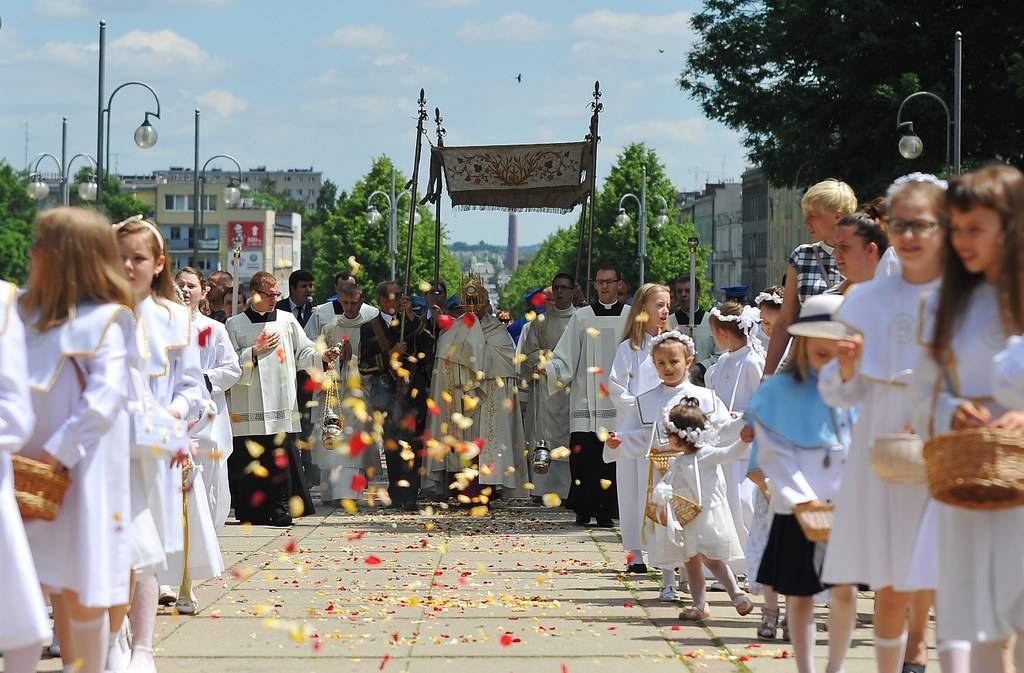
Beginning of the Procession: After Mass, the procession begins. The priest, holding the monstrance (a vessel containing the consecrated host), leads the procession under a canopy. This canopy, often elaborately decorated, symbolizes the reverence and sanctity of the Eucharist.
The Procession Route
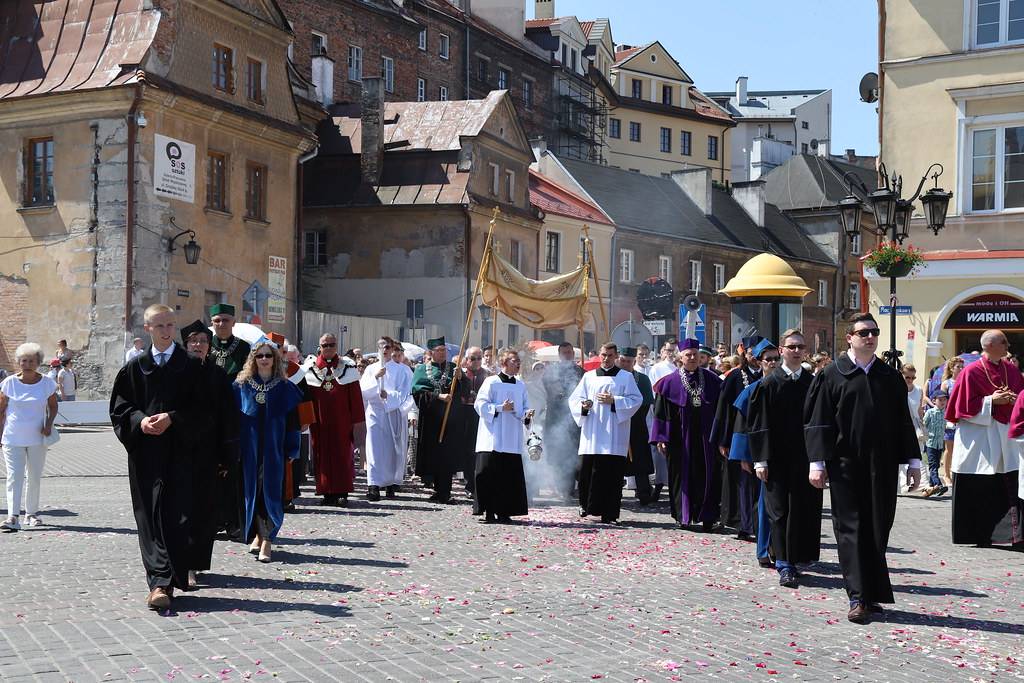
Four Altars: A distinctive feature of the Boże Ciało procession is the presence of four altars along the route. These altars are beautifully decorated with flowers, religious icons, and banners. Each altar represents a different aspect of the Catholic faith and serves as a stop for prayer and reflection.
Stopping at Each Altar: The procession stops at each of the four altars. At each stop, the priest reads passages from the Gospels, offers prayers, and blesses the congregation with the Eucharist. This practice emphasizes the importance of the Word of God and the presence of Christ in the Eucharist.
Hymns and Prayers: Throughout the procession, hymns and prayers fill the air. Traditional hymns, some of which date back centuries, are sung by the congregation. These hymns add a profound sense of spirituality and continuity to the event.
Participants in the Procession
Priests and Clergy: The priests and clergy play a central role in the procession, leading the congregation and carrying the Eucharist. Their presence signifies the guiding role of the Church in the lives of the faithful.
Children: Children are an integral part of the Boże Ciało processions. Dressed in white, they scatter flower petals along the route, symbolizing purity and innocence. This involvement of children not only adds a visual charm to the procession but also passes on the tradition to the younger generation.
Community Members: The entire community participates in the procession, walking together, singing, and praying. This collective participation is a testament to the communal nature of Polish society and its deep-rooted Catholic faith.
Regional Variations and Unique Practices
Poland’s diverse regions bring unique customs and variations to the Boże Ciało celebrations. Let’s look at some regional differences and unique practices that add to the richness of this tradition.
Spycimierz
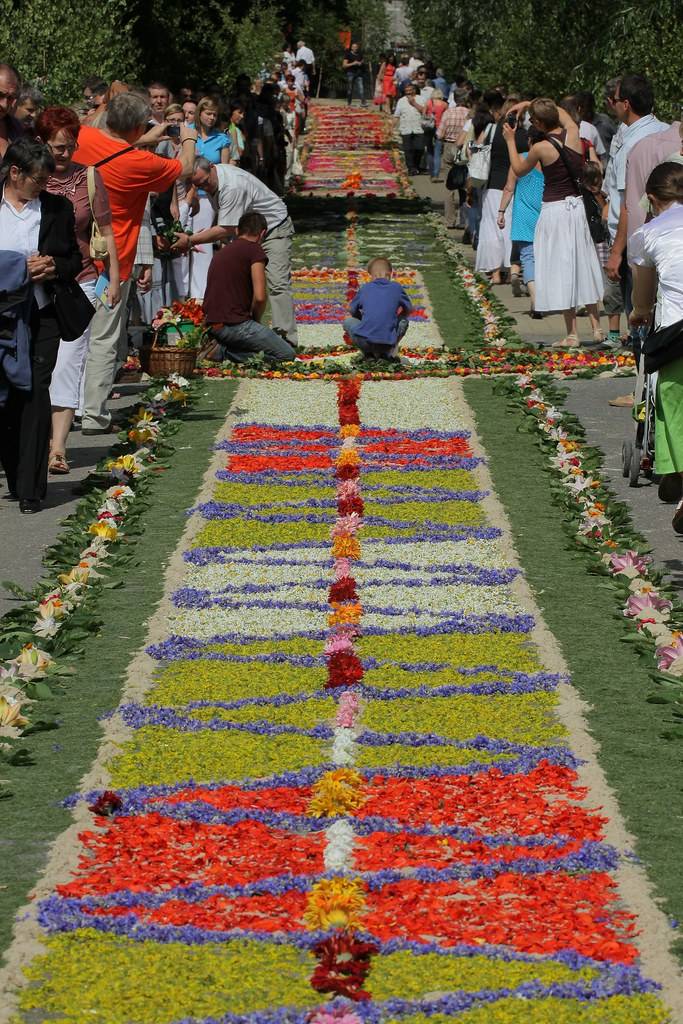
In Spycimierz in central Poland (Gmina Uniejów), parishioners arrange a carpet of live flowers about one kilometer long. A solemn procession passes over it at 5 pm. Long carpets of flowers are also laid in four parishes in the Opole Voivodship in southern Poland. Flower carpets tradition for Corpus Christi processions was inscribed on the UNESCO Representative List of the Intangible Cultural Heritage of Humanity in 2021.
Podhale Region
In the mountainous Podhale region, the Boże Ciało processions are marked by highlander traditions. Participants dress in traditional highlander clothing, and the processions feature regional music played on traditional instruments like the bagpipes. This blend of religious and cultural traditions creates a unique and colorful celebration.

Kraków
Kraków, one of Poland’s oldest cities, hosts some of the most grand and elaborate Boże Ciało processions. The historic streets and squares of Kraków provide a stunning backdrop for the processions. In Kraków, the procession often includes historical reenactments and involvement from various cultural groups, adding to the grandeur of the event.
Silesia
In the Silesian region, Boże Ciało processions often feature traditional Silesian costumes and folk dances. The processions here are known for their vibrant and festive atmosphere, reflecting the region’s unique cultural heritage.
The Spiritual Significance of Boże Ciało
Boże Ciało is not just a cultural event; it is a deeply spiritual experience for the Polish people. The feast emphasizes the presence of Christ in the Eucharist and serves as a reminder of the core beliefs of the Catholic faith. The processions, with their prayers, hymns, and reflections, offer a moment of spiritual renewal and a public expression of faith.
Frequently Asked Questions (FAQs)
Q: What is the significance of the four altars in the Boże Ciało procession? A: The four altars in the Boże Ciało procession represent different aspects of the Catholic faith. Each altar is a stop for prayer and reflection, where the priest reads passages from the Gospels and blesses the congregation with the Eucharist.
Q: How do communities prepare for Boże Ciało? A: Communities begin preparations weeks in advance. They plan the procession route, decorate the streets and altars, and create banners and religious icons. The preparation involves the entire community, fostering a sense of unity and shared purpose.
Q: Are there any regional variations in the Boże Ciało celebrations? A: Yes, there are regional variations in the Boże Ciało celebrations. For example, in the Podhale region, the processions feature highlander traditions, while in Kraków, the processions are grand and elaborate, often including historical reenactments.
Q: Can non-Catholics participate in the Boże Ciało processions? A: While Boże Ciało is a Catholic feast, non-Catholics are welcome to participate in the processions. The event is a public celebration of faith and community, and all are invited to join in the prayers and hymns.
Q: What is the importance of children in the Boże Ciało processions? A: Children play a significant role in the Boże Ciało processions. Dressed in white, they scatter flower petals along the route, symbolizing purity and innocence. Their involvement adds visual charm to the procession and helps pass on the tradition to the younger generation.
Wrapping Up
Boże Ciało is a deeply significant and cherished tradition in Poland, embodying the country’s rich Catholic heritage and communal spirit. The elaborate processions, with their beautiful altars, traditional hymns, and community involvement, create a profound and moving celebration of faith. Whether you are in Poland or exploring its traditions from afar, understanding and appreciating Boże Ciało offers a glimpse into the heart of Polish culture and spirituality.
As the procession winds through the streets, echoing with prayers and hymns, it brings together the past and the present, the sacred and the communal, in a powerful testament to the enduring faith and unity of the Polish people.