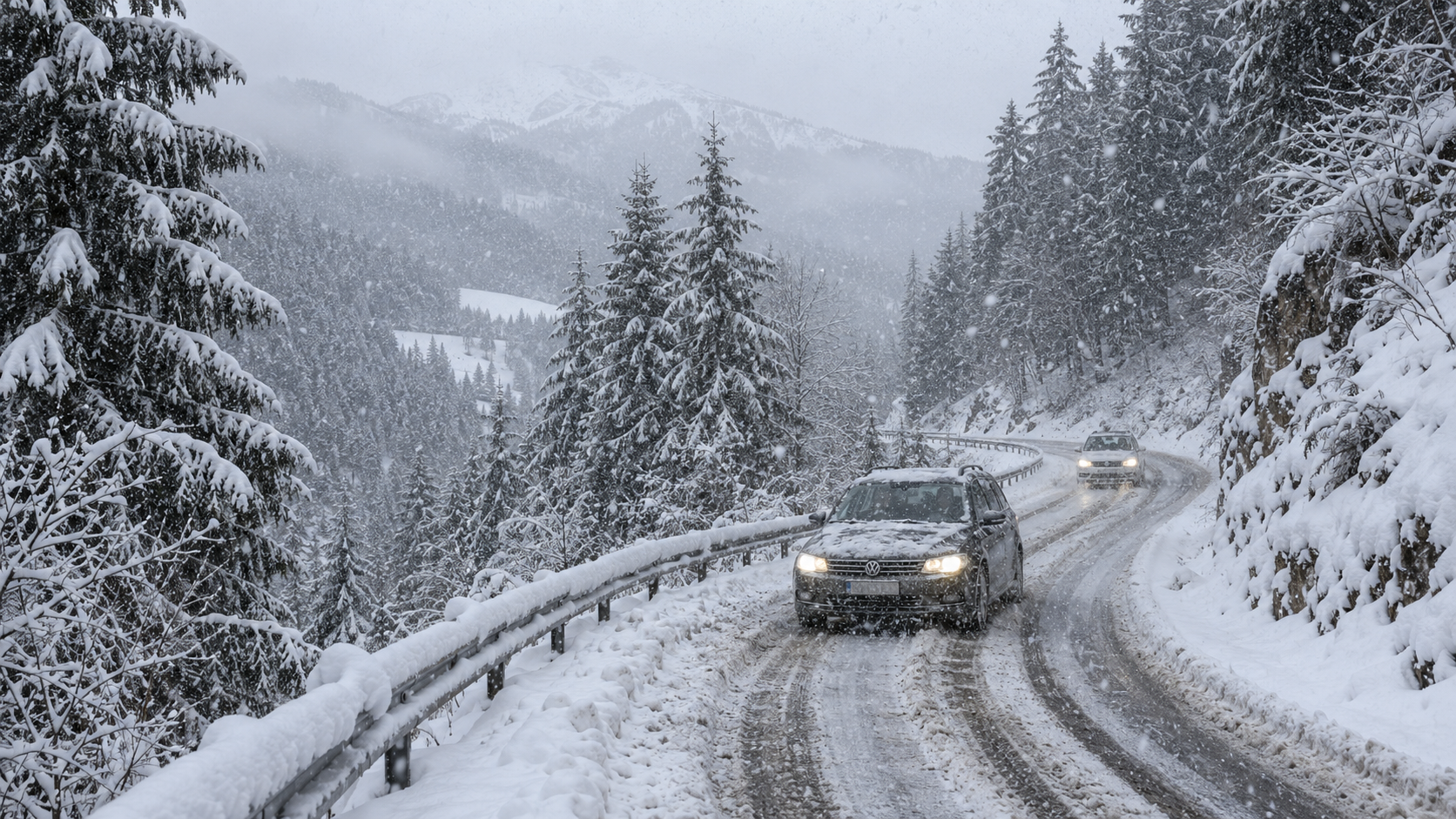
Poland is preparing for heavy snowfall across its southern regions, with up to 20 centimetres of fresh snow forecast in some areas between Thursday, 26 November, and Friday. The Institute of Meteorology and Water Management (IMGW) has issued first-level weather warnings covering parts of five provinces, including major urban centres, as forecasters warn of difficult travel conditions and a further drop in temperatures.
The warnings cover areas of Lower Silesia, Opole, Silesia, Lesser Poland and Podkarpackie, stretching across southern Poland from the Czech border towards Ukraine.
According to official IMGW warnings published by the Silesian regional authorities, snowfall is expected to increase snow cover by between 10 and 15 cm in affected areas, with local accumulations reaching 20 cm.
- Find more news from Poland on our Homepage .
Forecasters have assessed the probability of the predicted snowfall at 80%.
The alerts are classified as first-level warnings, the lowest of Poland’s three weather-warning categories. They indicate potentially hazardous conditions requiring additional caution.
Kraków and Katowice among cities facing heavy snowfall
The warnings affect both mountainous areas and densely populated parts of southern Poland.
In Kraków, the capital of Lesser Poland, an IMGW warning published by the city authorities is in force from 6pm on Thursday until 6pm on Friday.
Meteorologists expect snowfall to increase snow cover by 10–15 cm in places, with up to 20 cm possible locally.
Similar warnings apply to Katowice and numerous surrounding municipalities in Silesia.
The affected areas include Gliwice, Bytom, Chorzów, Tychy, Sosnowiec and several other cities in the Upper Silesian metropolitan area.
Parts of the Beskid Mountains and southern Silesia are also covered by alerts beginning at 3pm on Thursday and continuing until Friday afternoon.
In southeastern Poland, the Podkarpackie provincial authorities have confirmed warnings for districts including Sanok, Krosno, Lesko and areas of the Bieszczady Mountains.
Additional warnings for Wrocław and Opole
The warning area was expanded on Thursday to include more districts in southwestern Poland.
Additional IMGW alerts issued at 10.18am cover Wrocław, Opole and neighbouring districts in Lower Silesia and Opole province.
These warnings are valid from 8pm on Thursday until midday on Friday, with 10–15 cm of additional snow forecast.
Other affected areas include Jelenia Góra, Wałbrzych and districts near the Karkonosze Mountains, where warnings began earlier in the afternoon.
The precise timing and expected snowfall vary between districts.
Motorists in affected areas could face reduced visibility, slippery roads and disruption as snow accumulates.
However, the forecasts do not mean that every location within the warning zones will receive 20 cm of snow. That figure represents the locally predicted maximum.
Temperatures could plunge to −12°C over the weekend
The snowfall comes during a period of increasingly wintry weather across Poland.


In its forecast for 23–29 November, IMGW said cold Arctic air had contributed to falling temperatures and widespread wintry conditions.
The agency expects further snowfall in southern Poland on Friday, accompanied by occasional gusty winds in mountainous areas.
These conditions could produce drifting and blowing snow, creating additional difficulties for drivers.
Saturday is expected to bring brighter conditions across much of the country, although temperatures will remain low.
By Sunday morning, temperatures in Podhale, the mountainous region of southern Poland that includes Zakopane, could fall to approximately −12°C.
Daytime temperatures on Sunday are forecast to remain as low as −7°C in the same region.
The increasingly severe conditions mark another stage in Poland’s transition towards winter, with snowfall now expected beyond the country’s highest mountain ranges.
Residents and travellers are advised to monitor the latest IMGW weather warnings because alert boundaries, snowfall estimates and validity periods may change as the weather system develops.