An international panel of 22 experts has ruled out an explosion as the cause of the 2010 Smolensk air disaster that killed Polish President Lech Kaczyński and 95 others, concluding that a sequence of failures during the aircraft’s final approach led to the tragedy.
Poland’s National Prosecutor’s Office presented the findings on Friday, 27 November 2026. The experts identified an unstable descent, an incorrect assessment of the aircraft’s altitude, a decision to continue below the minimum safe height and an attempt to abandon the landing that came too late.
The findings also point to mistakes by Russian air traffic controllers and shortcomings in the Polish military aviation unit responsible for the presidential flight. The conclusions are part of an ongoing criminal investigation, not a final court ruling.
- Find more news from Poland on our Homepage .
What happened during the final approach?
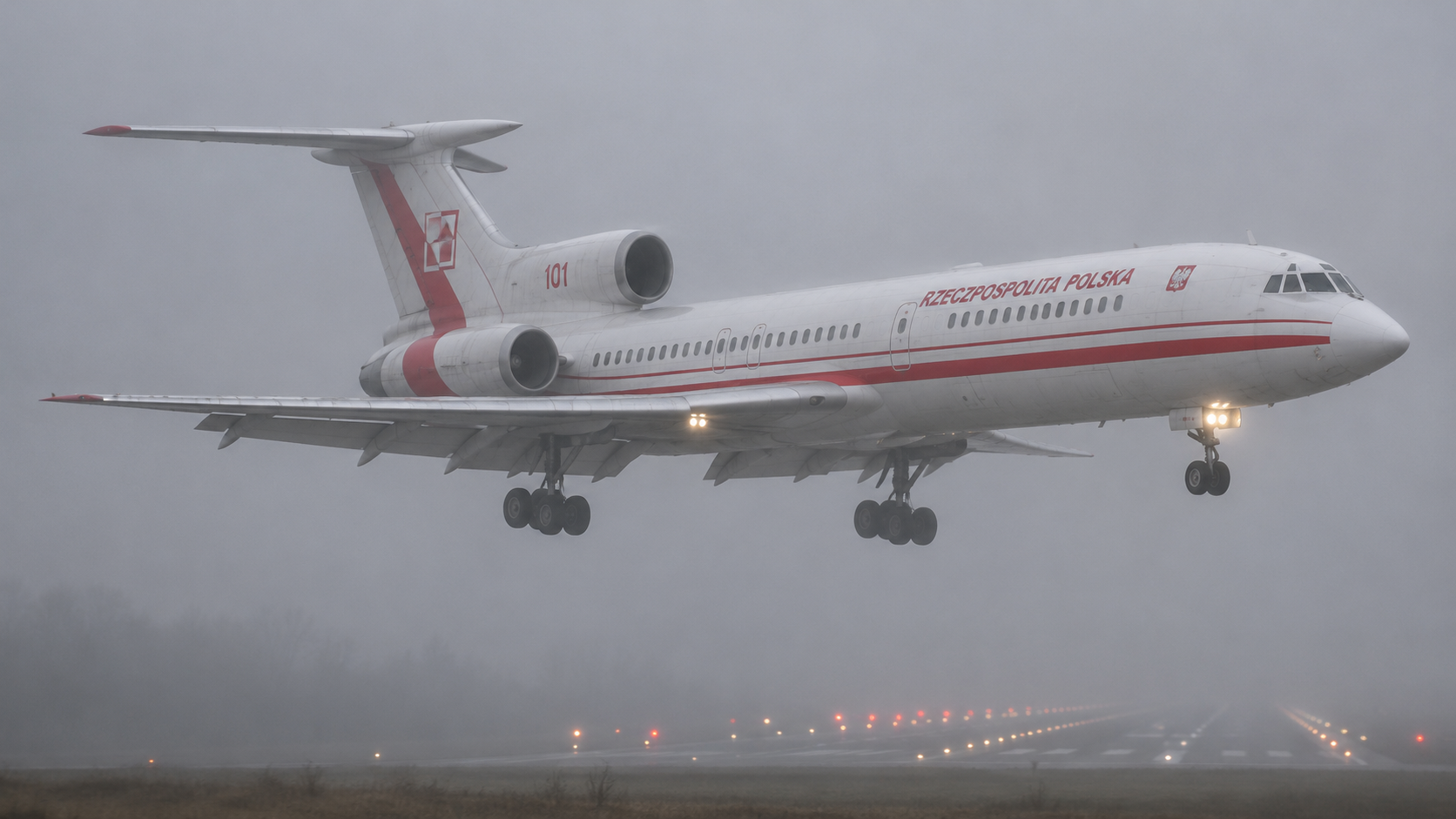
The Polish Air Force Tupolev Tu-154M was carrying a delegation from Warsaw to Smolensk, Russia, on 10 April 2010. The passengers were travelling to commemorate the victims of the 1940 Katyń massacre, in which Soviet security forces murdered thousands of Polish officers and other members of the country’s elite.
Dense fog severely restricted visibility at Smolensk North Airport, a former military airfield without a precision landing guidance system. According to the prosecutors’ detailed account of the expert opinion, the pilots descended too quickly and continued below the permitted minimum altitude despite being unable to see the runway.
The investigators concluded that the crew incorrectly assessed the aircraft’s true height. A change to the commander’s barometric altimeter meant that it displayed a value approximately 150 metres above the aircraft’s actual altitude, while the navigator relied on readings that measured distance from the uneven terrain beneath the plane.
Warning systems repeatedly alerted the crew to the risk of hitting the ground. The captain decided to abort the approach around 15 seconds before impact, but the manoeuvre began too late to prevent the aircraft’s left wing from striking a birch tree. The plane rolled, struck further obstacles and hit the ground short of the runway.
All 96 people aboard died, including President Lech Kaczyński and his wife, Maria Kaczyńska. The experts classified the accident as a controlled flight into terrain: an otherwise functioning aircraft inadvertently colliding with the ground or an obstacle while still under the crew’s control.
Russian controllers and Polish military shortcomings
The panel did not attribute the disaster solely to the pilots. It identified serious problems with Russian air traffic control, including repeated assurances that the aircraft was on the correct course and descent path when it was actually flying to the left of the intended approach and descending unstably.
Those messages may have reinforced the crew’s mistaken belief that the landing was proceeding correctly, the experts said. The prosecutors also cited organisational and technical deficiencies at the Russian airfield.
On the Polish side, the report identified systemic problems in the 36th Special Aviation Transport Regiment, which was responsible for transporting senior state officials. These included staffing and training weaknesses, insufficient experience among crew members and poor preparation for deteriorating weather conditions.
The experts also raised concerns about conversations unrelated to flying during critical stages of the flight. However, they found no evidence confirming that President Kaczyński was present in the cockpit before the crash.
Why the experts rejected the explosion theory
The possibility of an onboard explosion has been at the centre of a long-running political dispute in Poland. Figures in the opposition Law and Justice (PiS) party, including former defence minister Antoni Macierewicz, have argued that the disaster was caused deliberately rather than by an accident.
The international panel examined aircraft recordings, the documented distribution of wreckage, structural damage and forensic evidence. Simulations of the left wing’s failure found that its damage was consistent with hitting a tree, rather than an explosion. The specialists also reported no characteristic blast sounds in the cockpit recording or injuries establishing an explosion.
Some laboratory results required particular care. British and Italian laboratories detected trace amounts of substances associated with explosives in certain samples, although other laboratories recorded negative results. The Italian specialists described the amounts as exceptionally low compared with those normally found after a blast.
Assessing the laboratory findings together with the physical evidence, the panel concluded that the traces did not establish that an explosion had occurred. Possible contamination unrelated to the crash was among the explanations considered.
The experts worked from recordings, photographs, documents, physical analyses and other material supplied to them. They did not personally inspect the crash site or have direct access to the aircraft’s wreckage, which remains in Russia.
Findings remain politically contested
The report challenges the attack theory advanced by Macierewicz and other PiS politicians. Macierewicz criticised the presentation of the experts’ conclusions, alleging that prosecutors had omitted material that did not support their interpretation. PiS MP Małgorzata Wassermann also questioned the reliability of findings reached without an on-site inspection.
Prime Minister Donald Tusk, meanwhile, said the assessment supported earlier official investigations and accused political opponents of exploiting the tragedy. As reported by Notes from Poland, he argued that accusations surrounding the crash had damaged political life.
The expert team was originally appointed in March 2019, when PiS was in government. It submitted its principal opinion in August 2024 and provided a supplementary assessment in May 2026 after prosecutors sought clarification on 66 questions.

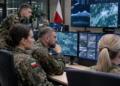
Poland’s National Prosecutor’s Office emphasised that the expert opinions constitute evidence for prosecutors to evaluate alongside the rest of the case file. The findings do not themselves conclude the criminal investigation or determine the legal responsibility of any individual.