

The Winged Hussars of Poland, an elite cavalry unit that flourished from the 16th to the 18th centuries, are not just a fascinating historical phenomenon but a symbol of military excellence and national pride. Renowned for their distinctive and imposing winged armor, the Hussars were not only a crucial component of the Polish-Lithuanian Commonwealth’s military but were also instrumental in shaping the geopolitics of Europe during their time. Their legacy endures in the collective memory of Poland and beyond, celebrated for their martial prowess, distinctive appearance, and numerous battlefield victories that have cemented their place in military lore.
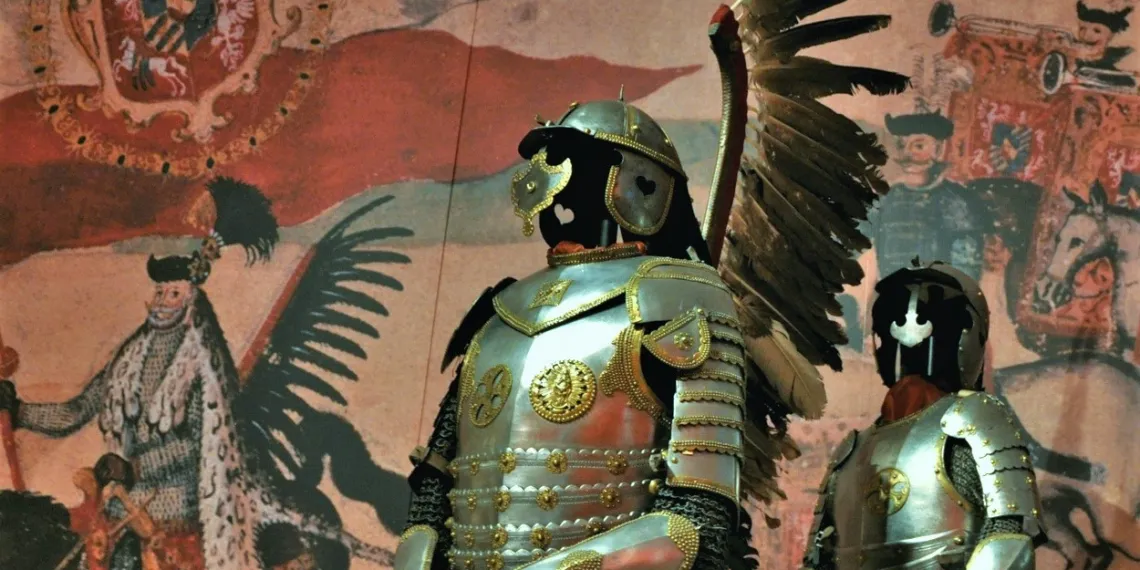
The Winged Hussars (Huzaria) were first formed in the early 16th century, but they reached their zenith of fame and effectiveness under the reign of King Stephen Bathory in the late 1500s. Initially recruited from the Serbian Hussars who served in the Hungarian army, the concept was adapted and modified by the Polish, who enhanced their armor and tactics. The iconic “wings,” a pair of wooden frames attached to the back of the armor, were adorned with feathers and created a thunderous noise during a charge, intended to spook enemy horses and infantry.
Distinct in their elaborate armor and carrying an array of weapons including lances, sabers, pistols, and battle-axes, the Hussars were not just equipped for shock tactics but were also capable of engaging in prolonged combat. Their armor, while lighter than that of Western knights, allowed for greater mobility without sacrificing protection, making them both formidable and agile on the battlefield.
- Find more news from Poland on our Homepage .
Tactical Superiority and Notable Battles:
The tactical use of the Winged Hussars was revolutionary. Their most famous maneuver, the charge, was a highly disciplined yet ferociously executed attack that combined speed with sheer psychological impact. The sight and sound of a charging brigade of Winged Hussars, with their wings rustling like a chorus of avenging angels, often broke the enemy’s spirit before contact was even made.
One of the most significant battles in which the Winged Hussars played a pivotal role was the Battle of Vienna in 1683. The city, besieged by the Ottoman Empire, was on the verge of collapse when the Polish cavalry, led by King John III Sobieski, charged the Turkish lines. The impact of the Hussars was decisive, turning the tide of the battle and saving Vienna, an act that had profound repercussions across Europe and marked the beginning of the decline of the Ottoman Empire in the region.
Another notable engagement was the Battle of Kircholm in 1605, where a force of around 4,000 Polish-Lithuanian soldiers, including 2,600 Hussars, defeated a Swedish army three times larger. This battle is often cited as one of the most significant triumphs of cavalry tactics and showcases the Hussars’ skill and bravery.
Cultural Impact and Legacy:
Beyond the battlefield, the Winged Hussars influenced the cultural and social landscape of Poland and beyond. They were celebrated in paintings, literature, and songs, becoming symbols of bravery, nobility, and the martial prowess of the Polish-Lithuanian Commonwealth. Their image as elite warriors contributed to the romantic perception of the Commonwealth as a bastion of chivalry and military honor in Europe.
Today, the legacy of the Winged Hussars is evident in their portrayal in media and popular culture, where they are often depicted as the epitome of cavalry warfare. Museums across Poland, such as the Polish Army Museum in Warsaw, display their armor and weaponry, preserving their memory and continuing to inspire awe with their flamboyant yet functional battle attire.
The Polish Winged Hussars, with their unique combination of tactical efficiency, striking appearance, and courageous spirit, remain one of the most celebrated cavalry units in the annals of military history. Their contributions to numerous pivotal battles underscore their role not only as protectors of the Polish-Lithuanian Commonwealth but also as key players in the power dynamics of 17th-century Europe. The enduring fascination with the Hussars reflects their larger-than-life presence on the battlefield and their symbolic importance to Polish national pride. As we look back on their remarkable feats, the Winged Hussars continue to be remembered not just for their military successes but for their indomitable spirit and the lasting legacy they left on European warfare.
FAQs About the Polish Winged Hussars:
- What were the main weapons of the Winged Hussars? The Hussars were typically armed with a lance, saber, pistols, and sometimes a carbine or battle-axe, making them versatile for both charging and close combat.
- Why did the Winged Hussars have wings? The wings were likely intended to intimidate enemies and protect against lasso attacks, although their exact practical purpose is still debated among historians.
- Are there any modern representations of the Winged Hussars? The Winged Hussars are featured in various forms of modern media, including films, books, and songs, notably in works that emphasize Polish history and heritage.