

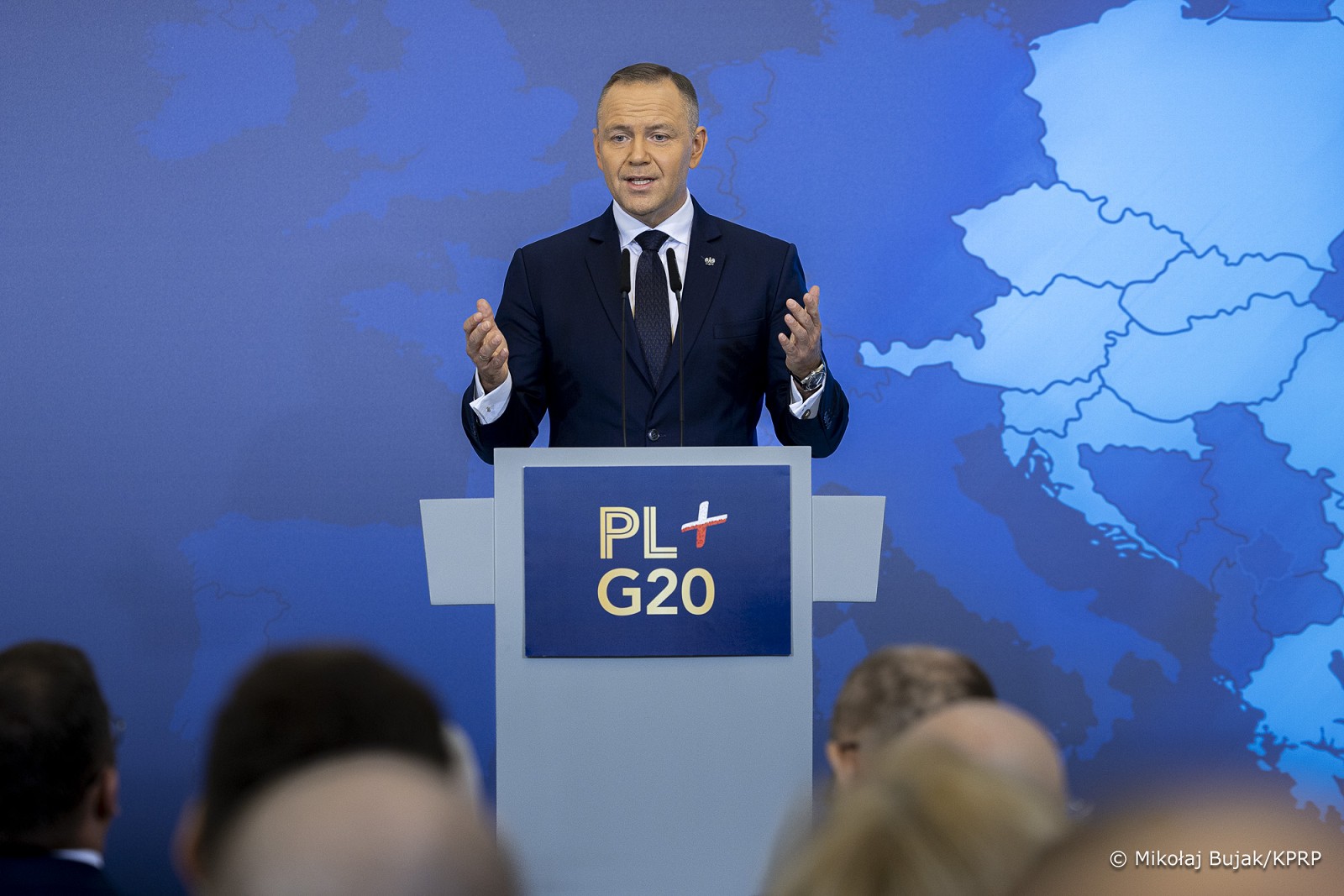
President Karol Nawrocki will not invite Maciej Berek to take the oath as a Constitutional Tribunal judge until doubts over his formal qualifications are resolved, his spokesman has said, extending an institutional dispute over a candidate already elected by Poland’s parliament.
The Sejm elected Berek to the Constitutional Tribunal on 4 September. Parliamentary records show that the chamber adopted the resolution appointing him, which was subsequently published in the official Monitor Polski.
The unresolved issue concerns the next stage of the process: the presidential receipt of Berek’s oath.
- Find more news from Poland on our Homepage .
Rafał Leśkiewicz, spokesman for President Nawrocki, said the presidential office wants documentation showing that Berek has actually practised as a legal adviser for at least 10 years, rather than simply having been entered on the professional register.
“Until such a document reaches President Karol Nawrocki’s desk, there will be no invitation to take the oath at the Presidential Palace,” Leśkiewicz told Polish Radio, according to Polish media.
The distinction is central to the dispute.
Polish law states that a Constitutional Tribunal judge must have the qualifications required for appointment as a judge of the Supreme Court or Supreme Administrative Court. The relevant Supreme Court rules include a requirement for at least 10 years of service in specified legal positions or, alternatively, at least 10 years practising in Poland as an advocate, legal adviser or notary.
The presidential office argues that the Sejm has not provided sufficient documentation demonstrating that Berek satisfies that professional-experience test.
That position is disputed by Berek and parliamentary authorities.
Berek said on Wednesday that his professional activity is recorded in the register of legal advisers and argued that the president does not have the power to carry out an additional verification of a judge already elected by the Sejm. He said he planned to write to Nawrocki stressing the president’s obligation to receive the oath.
The dispute does not amount to a court finding that Berek is legally unqualified for the post. Nor has he been convicted, formally disqualified by a court or rejected by the Constitutional Tribunal.
It is instead a disagreement over whether the documentation accompanying his election sufficiently proves that he satisfies statutory eligibility requirements, and over whether the president has the authority to demand further proof before accepting the oath.
Sejm rejects presidential demand
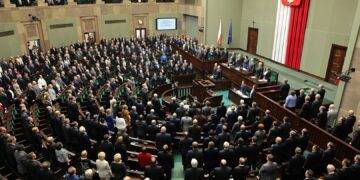
The Sejm has already challenged the presidential office’s position.
In a letter sent to Nawrocki, Sejm Chancellery head Marek Siwiec said the Speaker of the Sejm expected the president to accept Berek’s oath without delay and described the demand for additional documentation as lacking a legal basis.
Sejm Speaker Włodzimierz Czarzasty has likewise argued that the president cannot overturn or reassess parliament’s decision to elect a Constitutional Tribunal judge.
The presidential office takes the opposite view, saying questions about whether the candidate meets the statutory requirements must be resolved before the oath is administered.
The result is that Berek has been elected by the Sejm but has not completed the oath stage required before he can begin functioning as a Constitutional Tribunal judge.
Jan Grabiec, head of the Prime Minister’s Chancellery, said the government was waiting for the president to receive the oath, describing that as Nawrocki’s constitutional duty.
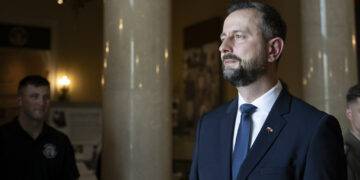
Who is Maciej Berek?
Berek is a lawyer and former senior government official who served in Donald Tusk’s government before his election to the tribunal.
His candidacy was submitted to the Sejm in August and received a positive opinion from the parliamentary Justice and Human Rights Committee on 3 September. The Sejm elected him the following day.


The vote itself reflected Poland’s wider political divisions. Most governing-coalition MPs supported Berek, while opposition MPs largely voted against him.
The current dispute should nevertheless be distinguished from broader political arguments over Berek’s previous government role.
The specific issue cited by the presidential office is whether his professional record demonstrates the required period of practising as a legal adviser.
That remains contested rather than legally settled.
Why the oath matters
Under Poland’s system, election by the Sejm and the taking of the oath are separate stages in the process of becoming a functioning Constitutional Tribunal judge.
That distinction has become politically significant because the tribunal has for years been at the centre of disputes over judicial appointments, constitutional review and Poland’s rule-of-law relationship with European institutions.
In Berek’s case, the immediate question is narrower: whether the president can withhold the oath while seeking further evidence that a candidate chosen by parliament meets the statutory qualifications.
As of 17 September, no oath had been publicly confirmed and neither side had indicated that it was withdrawing its position.
Unless additional documents are produced or one of the institutions changes course, Berek’s status is therefore likely to remain procedurally unresolved.