

The story of Poland regaining its independence in 1918 is a compelling narrative of resilience, strategic diplomacy, and the unyielding spirit of a nation. For 123 years, Poland was wiped off the map of Europe, partitioned between three empires: Russia, Prussia, and Austria. This period, marked by foreign domination, was a testament to the Polish people’s enduring struggle for sovereignty. The re-emergence of Poland as an independent nation in the aftermath of World War I is not just a historical event; it is a saga of national perseverance and the triumph of hope over despair.
The late 18th century was a tumultuous period for Poland. The country, weakened by internal conflicts and ineffective governance, became a target for its powerful neighbors. The first partition in 1772 was a result of the opportunistic maneuvers of Russia, Prussia, and Austria, who capitalized on Poland’s vulnerability. This was followed by two more partitions in 1793 and 1795, which eventually erased Poland from the map of Europe. The Polish people, however, did not accept this loss passively. The partitions ignited a flame of resistance and a strong sense of national identity.
Throughout the 19th century, Poles repeatedly rebelled against their oppressors. The November Uprising of 1830-31 and the January Uprising of 1863-64 were significant attempts to regain independence. Although these uprisings were ultimately crushed, they played a crucial role in keeping the Polish spirit of independence alive. These insurrections also garnered international sympathy for the Polish cause, laying the groundwork for future support.
- Find more news from Poland on our Homepage .
World War I: A Turning Point
The outbreak of World War I in 1914 created a new geopolitical landscape. Poland found itself in a unique position, with its lands divided among the warring factions of the Central Powers and the Entente. Poles were conscripted into the armies of their partitioning powers, often finding themselves fighting against fellow countrymen. However, this conflict also presented an opportunity for the Polish cause.
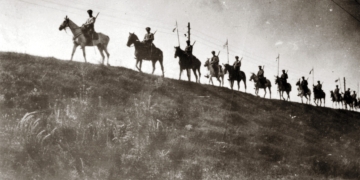
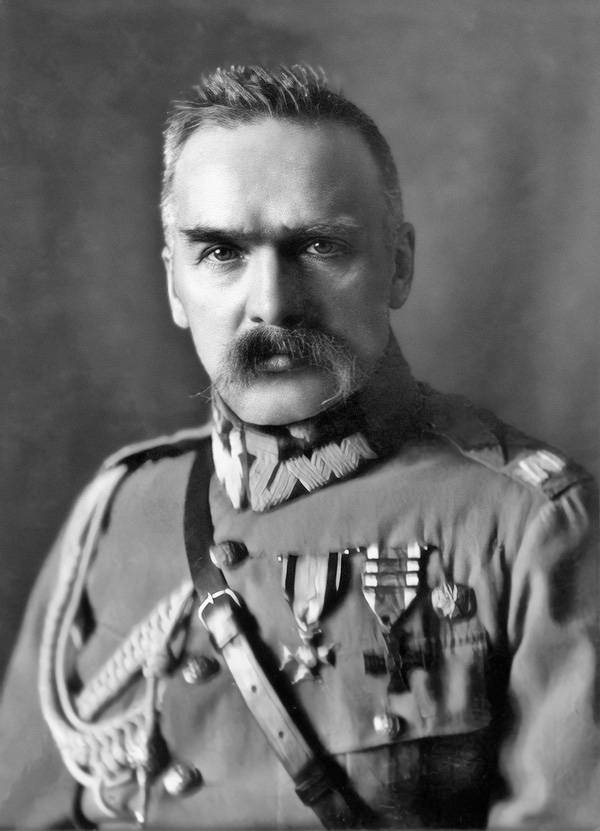
A central figure in Poland’s fight for independence was Józef Piłsudski. Initially, Piłsudski formed the Polish Legions to fight alongside the Austro-Hungarian army against Russia, with the strategic aim of weakening one of Poland’s oppressors. However, Piłsudski’s vision extended far beyond mere military alliances; he envisaged an independent Polish state. His leadership and military acumen were instrumental in galvanizing the Polish national movement.
During World War I, the Polish cause gained significant international traction. The Allies, particularly France and the United Kingdom, began to see the potential of an independent Poland as a buffer against German and Russian expansionism. In 1917, the United States President Woodrow Wilson articulated the principle of national self-determination in his Fourteen Points, which included an independent Polish state with access to the sea. This international endorsement was crucial in legitimizing Poland’s quest for sovereignty.
As World War I neared its end, and the Central Powers faced imminent defeat, the situation became favorable for Poland. In November 1918, with the armistice on the horizon, Piłsudski returned to Warsaw after being detained by the Germans. He was greeted as a hero and quickly took control of the Polish military forces, asserting Poland’s right to self-governance.
The Proclamation of Independence
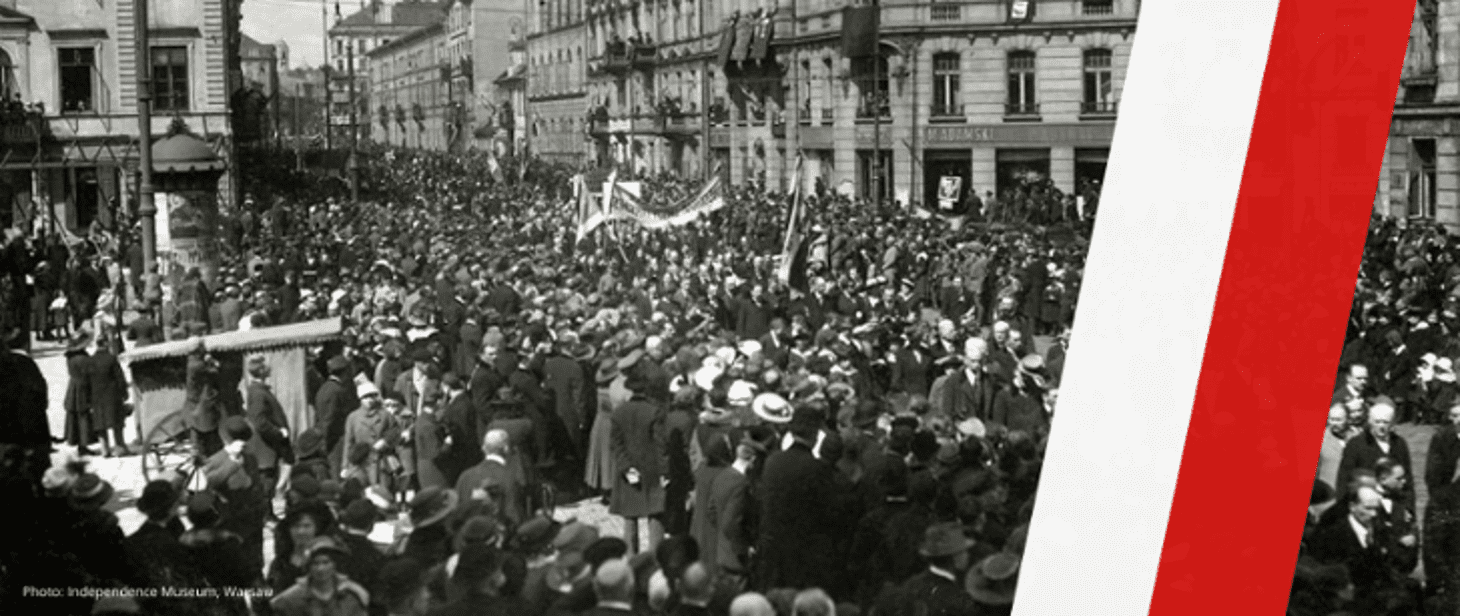
On November 11, 1918, a historic moment unfolded. Poland declared its independence, an act that coincided with the end of World War I. This day marked the culmination of years of struggle, sacrifice, and unwavering determination. Józef Piłsudski was entrusted by the Regency Council to form a government, symbolizing the restoration of Polish sovereignty.
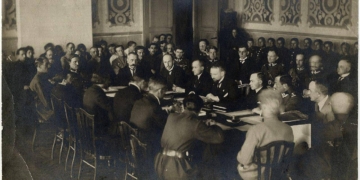
The Treaty of Versailles in 1919 formally recognized Poland’s independence, marking a significant victory for the Polish nation. However, the newly established state faced enormous challenges. The borders of Poland were not clearly defined, leading to conflicts with its neighbors, most notably the Polish-Soviet War (1919-1921). Additionally, the country had to grapple with economic hardships and the daunting task of unifying territories that had been under different administrations for over a century.
The interwar period was a time of nation-building for Poland. Despite the challenges, it was a period marked by significant cultural and intellectual growth. Poland developed its economy, education system, and military, striving to solidify its place among the nations of Europe. The era saw the emergence of prominent Polish figures in various fields, contributing to the cultural and scientific landscape of Europe.
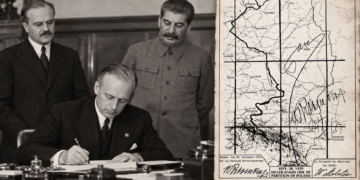
Unfortunately, Hitler and Stalin had different plans for Poland when Nazi Germany decided to attack Poland on 1st of September 1939, followed by the Soviet Union on 17th of September. WWII caused massive destruction of newly rebuilt country. World War II was devastating for Poland, both in terms of human loss and the destruction of its cities and infrastructure. It’s estimated that about 6 million Polish citizens died during the war, which was approximately 20% of Poland’s pre-war population. This figure includes both military personnel and civilians, with a significant number of the civilian deaths resulting from war crimes, the Holocaust, and other atrocities committed by Nazi Germany and the Soviet Union.
After World War II, Poland fell under the Soviet occupation and only became a free nation again in 1989.
The rebirth of Poland in 1918 is a story of a nation’s unbreakable will. It is a narrative that spans over a century of struggle, highlighting the resilience and determination of the Polish people. The re-establishment of Poland as an independent nation was not just the end of one journey; it was the beginning of another. It marked the start of a new chapter in Polish history, one where Poland could finally chart its own course as a sovereign nation. The legacy of 1918 continues to inspire and shape the Polish national identity, serving as a reminder of the power of collective resolve and the enduring spirit of freedom.