Imagine placing several women’s names beneath your pillow, falling asleep and believing that the name you pull out the next morning will belong to your future wife.
For generations of unmarried Polish men, this was one way of trying to discover what marriage might have in store.
The occasion was called Katarzynki, a traditional evening of fortune-telling held on 24 November, the eve of St Catherine’s Day.
- Find more news from Poland on our Homepage .
While millions of Poles today recognise Andrzejki, the late-November celebration associated with fortune-telling games and parties, its less familiar male counterpart has largely disappeared from everyday tradition.
Yet Katarzynki was once part of Poland’s calendar of courtship customs, when young men and women attempted to predict whom they would marry and whether they would find happiness in love.
The two occasions were traditionally separated by just five days.
The November night when men searched for their future wives
Katarzynki took place on the night of 24–25 November, immediately before the feast of St Catherine of Alexandria.
Traditionally, it was unmarried men who took part.
Five nights later, on 29 November, unmarried women observed Andrzejki, the eve of St Andrew’s Day.
Both customs were associated with marriage divination, although the practices differed and varied between regions.
According to the Regional Museum in Jasło, Katarzynki rituals often centred on dreams and the belief that a man’s future wife might reveal herself while he slept.
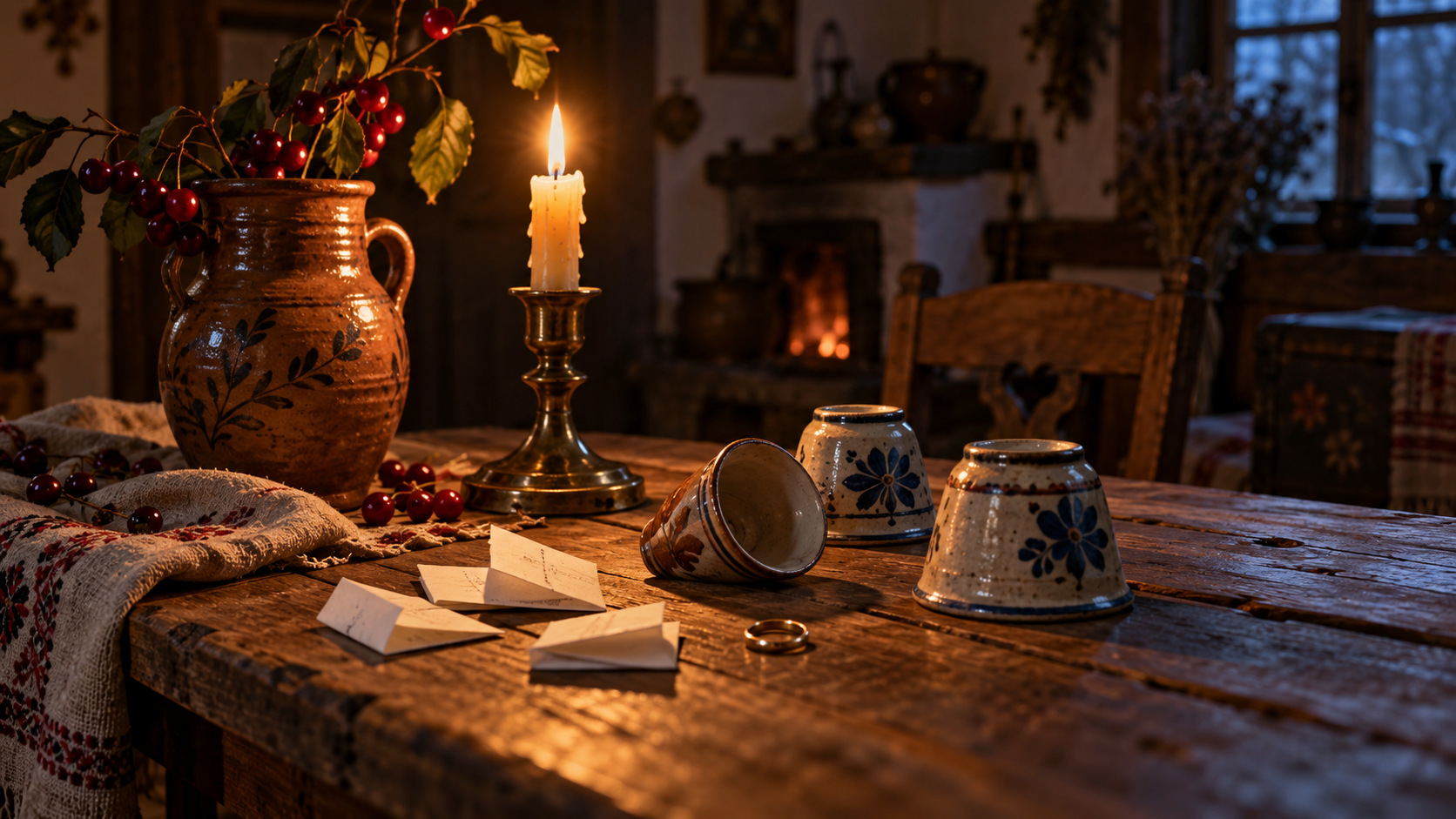
One particularly simple method involved writing women’s names or initials on separate pieces of paper.
The slips were placed beneath a pillow before bedtime. On waking, the young man selected one, believing it would reveal the identity of his future bride.
Other customs were rather more peculiar.
Some men placed items of women’s clothing beneath their pillows or bedsheets, hoping that the owner would appear in their dreams.
Ethnographic accounts even describe young men secretly taking an item belonging to a woman they admired, believing it would improve their chances of dreaming about her.
Such practices reflected folk beliefs rather than any genuine ability to predict the future.
Dreams themselves also carried supposed meanings.
A white hen could suggest marriage to an unmarried woman, while a black hen was interpreted as a sign of marrying a widow.
A hen accompanied by chicks represented a widow with children.


Perhaps most ominously, dreaming of a grey horse was said to predict remaining unmarried.
These interpretations are documented by Poland’s Museum of Wałcz and in ethnographic explanations published by the University of Wrocław.
Cherry branches, hidden rings and predictions of marriage
Not every Katarzynki ritual required sleep.
Another tradition involved cutting a branch from a cherry or sweet cherry tree and placing it in water.
If the branch blossomed by Christmas, the young man believed his romantic hopes would be fulfilled, potentially leading to marriage.
A different game used cups concealing small symbolic objects.
A ring represented marriage, a coin suggested prosperity and grain symbolised abundance.
An empty cup, however, could indicate continued bachelorhood or an uncertain future.
As the National Museum in Wrocław explains, these practices belonged to a wider collection of folk customs through which unmarried people attempted to discover their matrimonial prospects.
The rituals were not uniform across Poland, nor is there evidence that everyone practised them.
Nevertheless, their preservation in ethnographic accounts reveals how closely marriage, family expectations and seasonal traditions were connected.
Why Katarzynki disappeared while Andrzejki survived
The difference between the two occasions reveals something about the expectations placed on young people in traditional Polish society.
Marriage was often an important social and economic milestone, particularly for women whose opportunities and social standing could be closely linked to family life.
In an interview published by the University of Wrocław, ethnologist Dr Małgorzata Michalska explains that men’s fortune-telling practices were generally fewer and less popular than those associated with women.
The two celebrations also looked different from many present-day festivities.
Originally, marriage divination could be a serious and private undertaking rather than the entertainment it later became.
As social customs changed, Andrzejki gradually developed into an occasion for shared games and parties attended by both sexes.
Katarzynki, meanwhile, became increasingly uncommon.
The Ethnographic Museum in Rzeszów notes that the men’s custom was already rare by the beginning of the twentieth century.
The Podlasie Museum of Folk Culture similarly describes how the separate male tradition faded while Andrzejki evolved into a celebration for mixed groups.
Some forms of divination survived within the more familiar occasion.
Others, particularly the dream rituals associated with Katarzynki, became historical curiosities.
Two traditions at the threshold of Advent
The placement of Katarzynki and Andrzejki near the end of November was significant.
Both belonged to the traditional calendar surrounding Advent, the Christian period of preparation for Christmas.
In Polish rural society, late autumn was often associated with weddings and celebrations following the completion of agricultural work.
Advent, by contrast, traditionally involved greater restraint, making the preceding weeks a natural time for courtship customs and festivities.
St Catherine and St Andrew became associated with these occasions, although ethnographers caution that the precise origins of the marriage-divination traditions remain uncertain.
The link to saints’ feast days should not be confused with an official religious endorsement of fortune-telling.
Today, Andrzejki survives mainly as entertainment, with predictions about love and the future treated as games rather than serious beliefs.
Katarzynki is different. Its name and customs are now more likely to be encountered through museums, cultural education and explanations of Poland’s traditional calendar.
But every year, before the familiar Andrzejki celebrations arrive, 24 November still marks the night once associated with a young man’s hope of discovering whom he might marry.
For a tradition that has largely vanished, its most memorable detail remains wonderfully simple: a few names beneath a pillow, a night’s sleep and the possibility that tomorrow might reveal a future bride.