Poland is moving ahead with plans to acquire an artificial intelligence-powered military decision-support system from American technology company Palantir, in a significant step towards integrating AI into the Polish Armed Forces. Known as Saturn, the system would help commanders analyse intelligence, monitor battlefield developments and evaluate possible military responses.
The Polish Defence Ministry scheduled a contract-signing ceremony with Palantir Technologies Poland for Friday, 27 November, at the Polish Army Museum in Warsaw. Defence Minister Władysław Kosiniak-Kamysz was due to attend, with Poland’s Cyberspace Defence Forces Component Command representing the military in the agreement.
The ministry confirmed the planned signing but, at the time of verification, a post-ceremony announcement confirming that it had taken place was not yet available. The announcement did not disclose the value of the contract or an implementation timetable.
- Find more news from Poland on our Homepage .
What is the Saturn military AI system?
Saturn is the name intended for Poland’s deployment of Palantir’s Maven Smart System, a platform designed to support military command and operational planning.
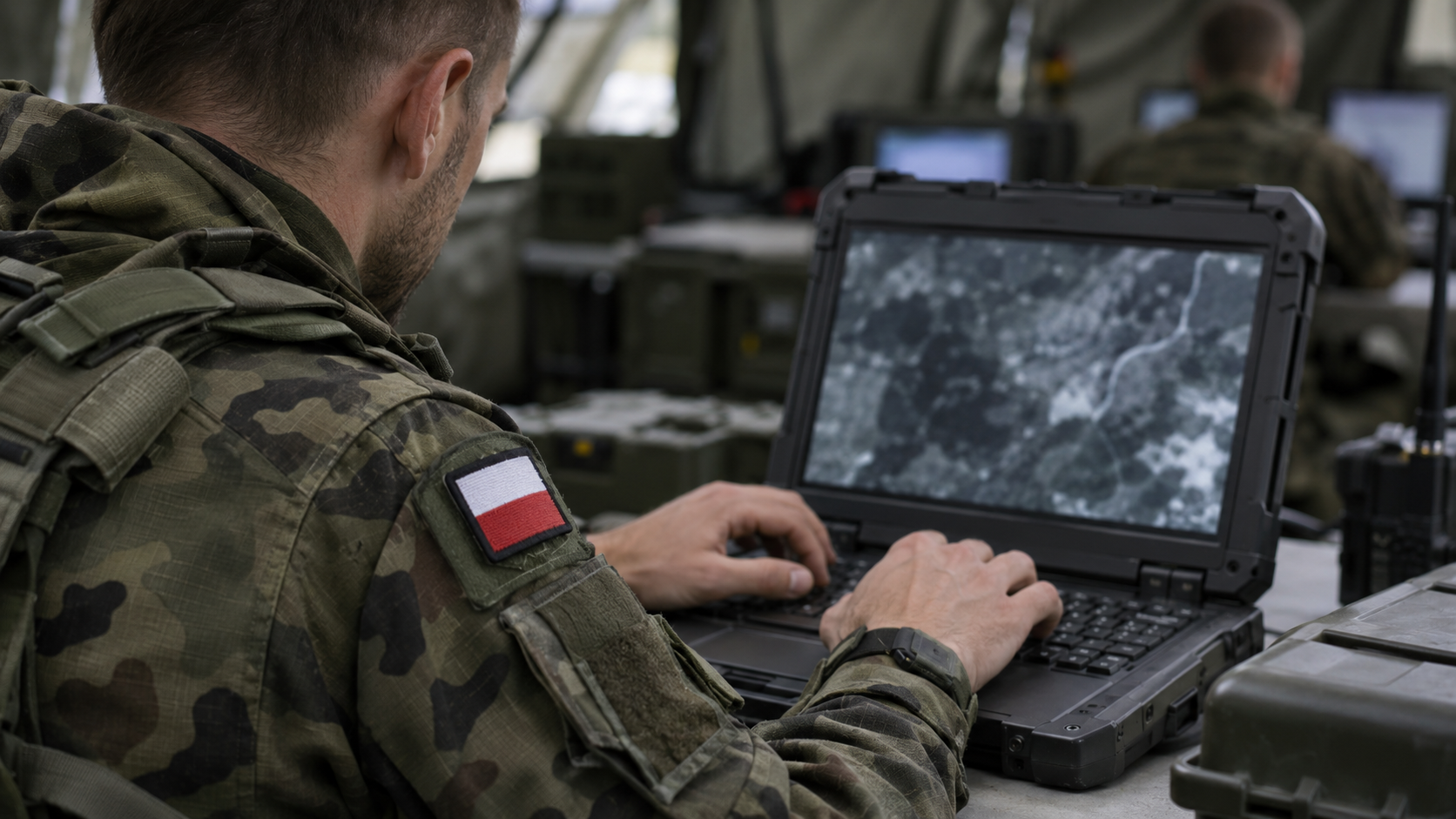
According to the military publication Polska Zbrojna, the software can combine information from multiple sources, including satellites, drones, radar installations and military reconnaissance systems. Artificial intelligence can then help analyse the information, identify significant developments and classify objects detected by military sensors.
The system is also designed to assist commanders in assessing potential threats and comparing possible responses. For example, information showing the movement of opposing forces could be combined with intelligence about their location and strength, allowing commanders to evaluate different operational options.
The objective is to improve how quickly and effectively military personnel can interpret large quantities of information. Importantly, the software is intended to support human decision-making, rather than independently determine military actions.
Poland expands its cooperation with Palantir
The planned agreement follows several years of cooperation between Poland’s military and the American technology company.
In December 2024, the Defence Ministry and Palantir established a framework for cooperation in artificial intelligence, information technology and cybersecurity. That relationship was expanded in October 2025, when Kosiniak-Kamysz and Palantir representatives signed a letter of intent covering potential military applications of the company’s technology.
At the time, the minister emphasised the growing importance of data analysis and artificial intelligence in modern warfare. The ministry also confirmed that Polish military personnel had already participated in testing and evaluating Palantir’s products.
The proposed Saturn acquisition would move the relationship beyond preliminary cooperation towards supplying software for military use.
Questions over sensitive military data
The agreement has also attracted scrutiny over the handling of sensitive information and Poland’s reliance on technology supplied by a foreign company.
Campaigners and some politicians have called for greater transparency about the planned cooperation and stronger assurances that Polish authorities will retain control over information processed by the system.
In October, Poland’s human rights ombudsman, Sylwia Gregorczyk-Abram, asked the Defence Ministry for explanations about potential privacy implications. Her questions concerned the scope of data processing, the possibility of access by foreign entities and whether the planned cooperation would involve personal information or public-security activities.
The ministry has sought to address those concerns. According to information provided to Polska Zbrojna, Polish military authorities evaluated Palantir’s products with the involvement of security services, the General Staff and military cybersecurity specialists.
The ministry maintains that the Polish Armed Forces will retain control over access to Saturn and the information processed within it. It also says Palantir will not receive encryption keys, remote access rights or permission to inspect or download military data.
These assurances represent the ministry’s position; the detailed contractual safeguards have not been independently assessed in the material reviewed.
A wider shift towards AI-powered defence
The Saturn project forms part of Poland’s broader efforts to introduce artificial intelligence into military operations. The Defence Ministry has been developing an AI implementation framework covering intelligence analysis, command systems, logistics and cybersecurity.
Such systems are increasingly important to modern armed forces because they can help process information from numerous military sensors and platforms. For Poland, the challenge involves not only acquiring advanced software but also ensuring that it can be integrated securely into existing military infrastructure.
The financial value of the Palantir agreement and the timetable for Saturn’s full operational deployment have not been publicly established in the ministry’s announcement.


The project therefore marks a significant planned step in Poland’s military modernisation, although its eventual capabilities will depend on implementation, testing and integration within the armed forces.