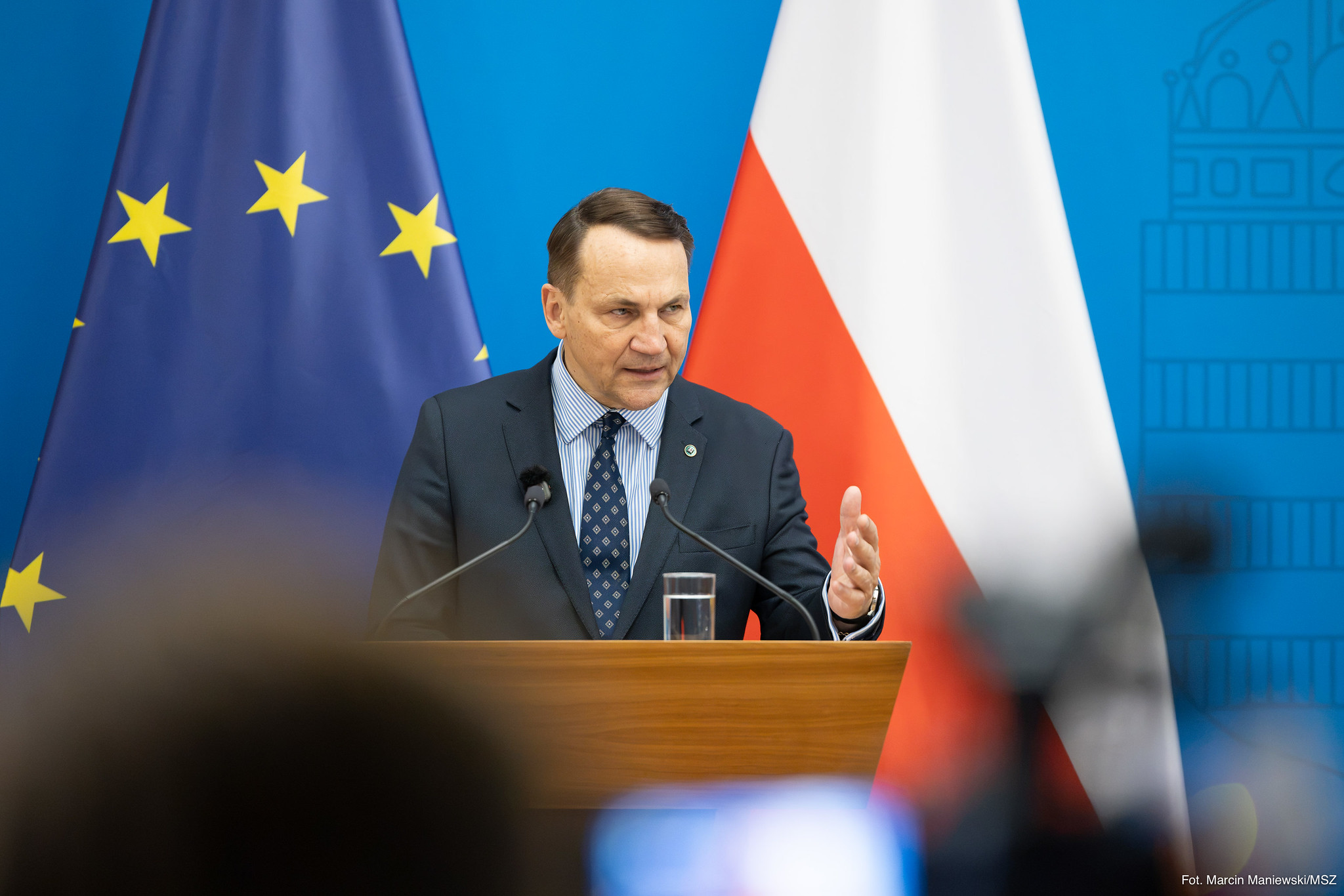
Poland has allocated more than PLN 500 million to cooperation with Polish communities abroad in 2026, Foreign Minister Radosław Sikorski announced on Thursday, 26 November. Addressing the Polish Senate, Sikorski outlined the government’s priorities for millions of people of Polish origin living around the world, including greater support for Polish-language education, stronger ties with the homeland and initiatives encouraging members of the diaspora to move to Poland.
The announcement formed part of Sikorski’s annual presentation on government policy towards Polonia, the term commonly used for Polish communities living outside the country.
According to the official account of his address published by the Polish Senate, the funding comes from several government ministries and public institutions rather than the Foreign Ministry alone.
- Find more news from Poland on our Homepage .
The figure covers budgetary allocations for 2026, not a newly announced grant or a confirmed total of money already distributed.
More than half a billion złoty for Polish communities worldwide
Sikorski said that coordinating spending across different institutions was essential to ensuring that government support produced lasting benefits.
The funding falls within Poland’s broader strategy for cooperation with its diaspora between 2025 and 2030.
That strategy, adopted by the Polish government in April 2025, identifies several priorities, including preserving Polish identity, improving access to education, supporting community organisations and encouraging return migration.
The government had previously set out an ambition to maintain approximately PLN 600 million annually in overall diaspora-related funding. Thursday’s announcement therefore does not, by itself, demonstrate an increase in spending compared with previous years.
Sikorski said the effectiveness of the policy should be judged by its long-term results, including whether younger generations continue learning Polish, participate in community organisations and maintain connections with their ancestral homeland.
An interministerial working group coordinates the activities of different government departments, with representatives of the Senate also participating.
The Foreign Ministry plans to prepare a mid-term assessment in 2027, examining the effectiveness of the strategy, its financing and cooperation between government institutions.
Poland wants stronger Polish-language education abroad
One of the government’s central priorities is expanding opportunities for children and young people of Polish descent to learn their ancestral language.
Sikorski said Poland was working to integrate Polish-language teaching more closely into the education systems of countries with substantial Polish communities.
He cited Ireland as an example of a country where Polish can be studied as a foreign language within the national education system.
The minister said Warsaw wanted to develop similar arrangements in the United Kingdom, home to one of Europe’s largest Polish communities.
The remarks concern the wider integration of Polish-language education into national school systems. They do not constitute an announcement that British examination rules have changed.
Sikorski also highlighted difficulties faced by some students educated abroad when applying to Polish universities.
He argued that admission procedures should better accommodate differences between national education systems, particularly where examination results are issued after Polish university application deadlines.
The government wants to make studying in Poland more accessible to young people of Polish origin without reducing academic requirements.
Encouraging Poles abroad to return home
The Foreign Minister also reaffirmed the government’s commitment to encouraging return migration.


Poland’s economic development has made the country increasingly attractive to some citizens who previously moved abroad, he argued.
The government’s strategy includes measures intended to help people of Polish origin pursue employment, education and professional opportunities in Poland.
These initiatives form part of a broader effort to strengthen relationships with overseas Polish communities while recognising that many will continue living permanently in their countries of residence.
Sikorski also praised the Senate-backed Polonia Camp initiative, which brings together young people of Polish descent from around the world.
According to the Senate’s official report on Polonia Camp 2026, more than 1,500 participants from 50 countries attended this year’s gathering in Warsaw.
The event aims to strengthen cultural connections, encourage cooperation between young diaspora leaders and develop their involvement in Polish community organisations.
Proposed changes to the Polish Card
Sikorski also announced work on tightening the rules governing the Karta Polaka, or Polish Card.
The document recognises a person’s connection to the Polish nation and provides certain rights and benefits, but does not itself confer Polish citizenship.
The minister expressed concerns about the reliability of some certificates issued by Polish and diaspora organisations that are used to support applications.
He said the Foreign Ministry was preparing legislative changes that would remove the possibility of obtaining a Polish Card on the basis of such organisational certificates and expand the documentation requirements for applicants.
Sikorski also emphasised that applicants would continue to be required to demonstrate knowledge of the Polish language, history and traditions.
These changes remain proposals under preparation. They have not been adopted as binding law.
Supporting Polish minorities in neighbouring countries
The minister’s address also focused on Polish communities in Central and Eastern Europe, whose circumstances often differ significantly from those of more recent emigrants.
Sikorski raised concerns about access to Polish-language education and minority rights in Lithuania and Latvia, while acknowledging the particularly difficult conditions facing Polish communities in Ukraine during Russia’s continuing invasion.
He also reaffirmed Poland’s support for ethnic Poles in Belarus and those facing restrictions on cultural and community activity.
The government regards support for these communities as an important part of protecting Polish cultural heritage and maintaining longstanding connections across national borders.
A long-term approach to Poland’s diaspora
The government intends to place greater emphasis on evaluating the effectiveness of support programmes rather than measuring success solely by the amount of money allocated.
The planned 2027 review will assess whether funding and cooperation between institutions are producing meaningful outcomes.
For Polish communities in Britain, the United States, Canada and elsewhere, the strategy’s priorities include language education, opportunities for younger generations and maintaining connections with Poland.
For communities in neighbouring countries, the focus also includes minority rights, education and cultural preservation.
Sikorski’s announcement confirms the considerable scale of Poland’s financial commitment to its diaspora in 2026, while underlining that the long-term impact of the spending remains an important test of government policy.