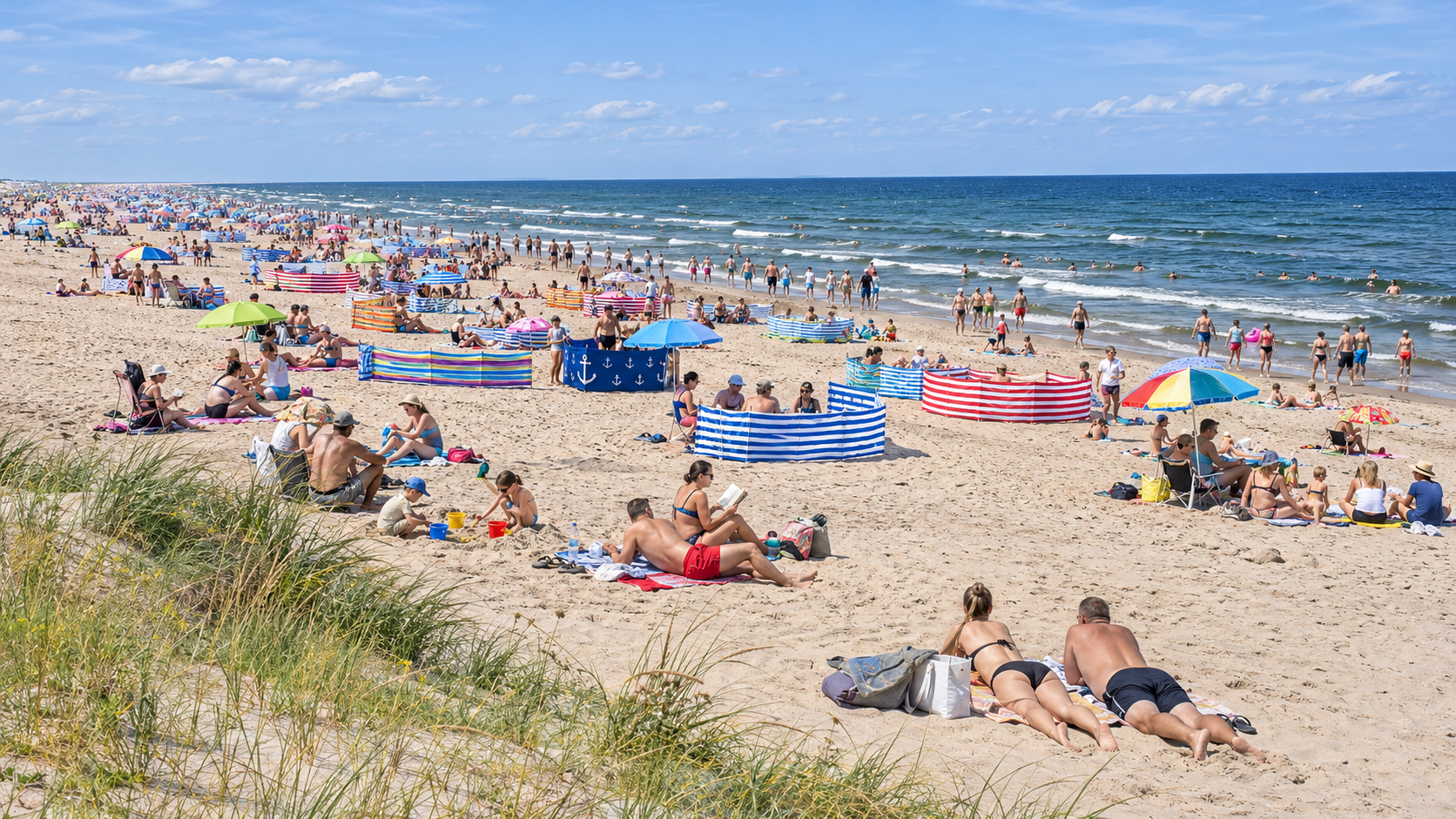
Poland is enjoying a record-breaking tourism year, with foreign visitor numbers continuing to grow and the country gaining attention as a destination for cooler summer holidays.
The latest Statistics Poland (GUS) accommodation figures show that approximately 854,000 international guests stayed in registered tourist accommodation in September 2026. Across domestic and international travellers, the establishments recorded around 4.07 million guests that month.
The figures follow a record summer season, strengthening Poland’s position as an increasingly popular European holiday destination.
- Find more news from Poland on our Homepage .
Foreign tourism grows faster than domestic travel
According to the Polish Tourism Organisation, 10.1 million tourists used registered accommodation during July and August 2026. That represented an increase of 2.5% compared with the same period in 2025 and the highest summer total in the comparable series.
International tourism recorded particularly strong growth. Foreign guest numbers increased by 5.7% to approximately 2.2 million, while overnight stays by international visitors rose by 8.4%. Domestic guest numbers grew by 1.6%.
The upward trend was already evident in the first half of 2026, when 4.2 million foreign guests used registered accommodation, a 10.5% annual increase.
Poland’s accommodation sector also outperformed the wider European market. Overnight stays in Poland rose by 5.2% during the first six months of the year, compared with an average increase of 1.7% across the European Union, according to tourism organisation figures based on Eurostat data.
Could cooler summers be part of the attraction?
One possible explanation for growing international interest is the emerging coolcation trend, in which holidaymakers choose destinations with milder summer temperatures rather than the hottest traditional Mediterranean resorts.
Poland’s Baltic coastline, lakes, forests and historic cities offer alternatives to destinations affected by intense summer heat. Accommodation-search data presented by the Polish Tourism Organisation suggest that interest is spreading beyond Poland’s traditional visitor markets.
Between June and August, searches for Polish accommodation originating from Spain increased by 52.9% compared with the previous year. Searches from Italy rose by 37.3%, while those from Slovakia increased by 33.5%.
These figures measure online searches, not confirmed bookings or completed visits, and do not establish how many travellers chose Poland specifically because of the climate.
Magdalena Krucz, president of the Polish Tourism Organisation, told Rzeczpospolita that the relatively cool Baltic coastline can be an advantage for visitors seeking relief from higher temperatures at home.
Germans remain Poland’s largest foreign visitor group
German holidaymakers remain the largest group of international visitors recorded in Poland’s tourist accommodation, accounting for approximately 22% of foreign guests.
Around 873,000 German tourists were recorded between June and September 2026, according to figures reported by Rzeczpospolita. The Baltic coast is particularly popular, including resorts such as Świnoujście, Międzyzdroje and Kołobrzeg.
Hanna Mojsiuk, president of the Northern Chamber of Commerce in Szczecin, attributed Poland’s appeal to German holidaymakers to competitive prices, good-quality tourism services and a reputation for safety. In her assessment, hotels and restaurants offer visitors from Germany particularly attractive value for money.
Geographical proximity is another advantage for the Baltic resorts, which are accessible to many German holidaymakers by road.
Warsaw, Kraków and emerging destinations benefit
The tourism boom extends beyond the coast. In summer 2026, Mazowieckie, which includes Warsaw, accounted for approximately 24% of foreign accommodation guests. Małopolskie, home to Kraków, attracted another 23%, while the Baltic region of Zachodniopomorskie accounted for around 12%.
There are also signs of growing interest in lesser-known destinations. Accommodation searches for Podlasie increased by 37.2%, while searches for Silesia rose by 34.4%, the Polish Tourism Organisation reported.
The economic impact is substantial. Statistics Poland’s preliminary estimates indicate that domestic travel spending and expenditure by foreign visitors increased by approximately 8.9% between January and August 2026, adding around PLN 8 billion compared with the corresponding period in 2025.
While Warsaw, Kraków and the Baltic resorts remain central to Poland’s appeal, rising interest in regional destinations and milder summer breaks could create further opportunities for the country’s tourism industry.