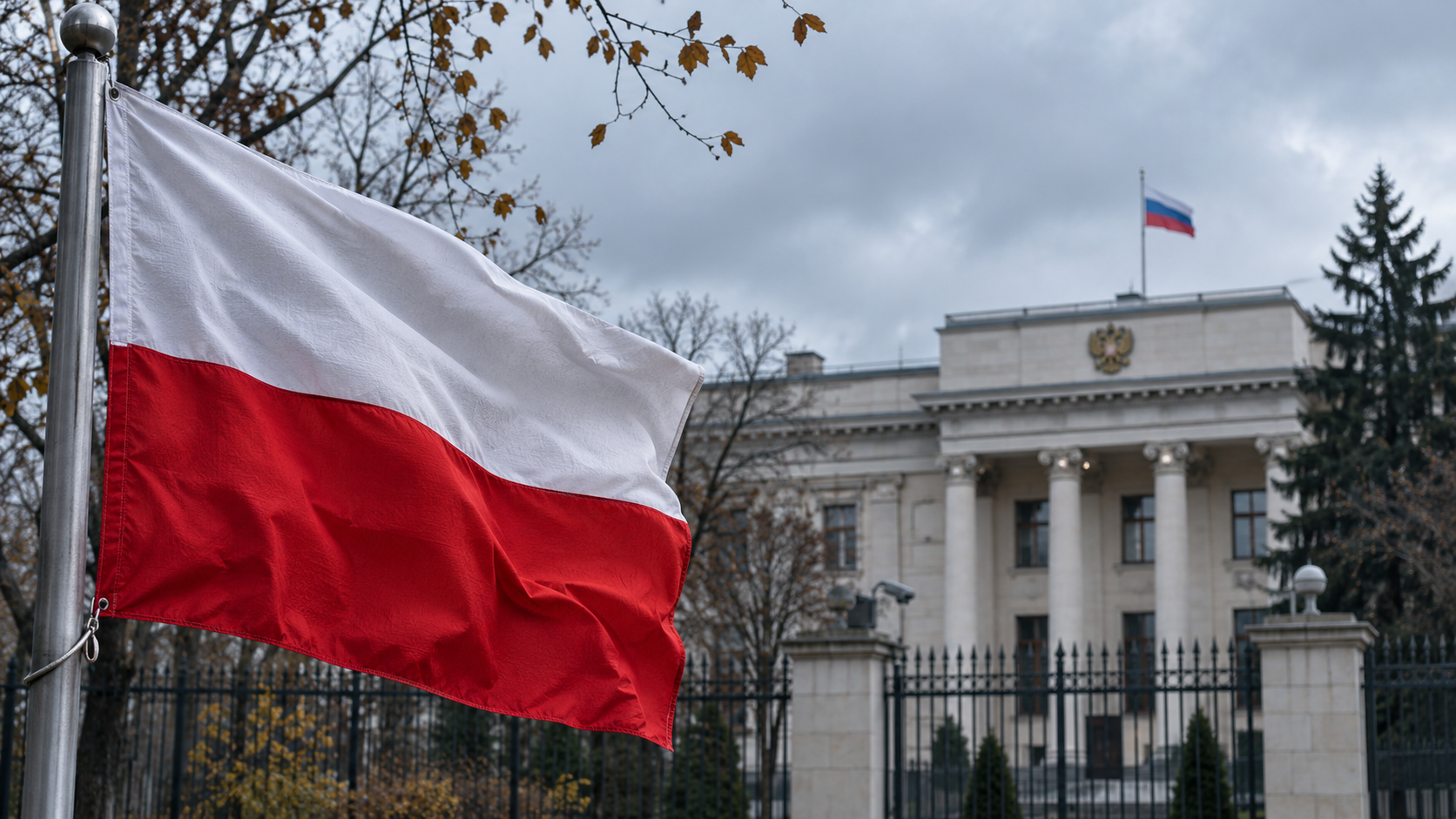
Poland is keeping open the possibility of expelling Russia’s ambassador following a series of Russian missile and drone incursions into Polish airspace, Foreign Minister Radosław Sikorski has confirmed, although Warsaw has decided against taking that step for now.
Speaking to public broadcaster Polish Radio’s Trójka station on Wednesday, 25 November, Sikorski acknowledged that removing Moscow’s top diplomat was among the diplomatic measures available to the Polish government.
However, he warned that Russia would probably retaliate by expelling Poland’s ambassador from Moscow, further damaging already strained relations between the two countries.
- Find more news from Poland on our Homepage .
The comments follow an official diplomatic protest delivered to Russia over three cruise missiles that entered Poland during a large-scale attack on Ukraine on 20 November.
Sikorski: Expulsion remains an option
During an interview on Polish Radio’s Trójka, Sikorski was asked whether Poland should respond more forcefully to Russia’s repeated violations of its airspace.
The foreign minister confirmed that expelling the Russian ambassador was a possibility but emphasised that the government was not yet prepared to implement it.
He explained that such a decision would almost certainly prompt reciprocal action against Poland’s diplomatic representative in Russia.
Sikorski also expressed frustration with Moscow’s response to the missile incidents, accusing Russian officials of misrepresenting the circumstances and attempting to shift responsibility away from their own military operations.
The remarks come amid increasing pressure for a stronger diplomatic response to Russia’s actions near NATO territory.
Russian ambassador summoned over missile incident
On Tuesday, 24 November, Poland’s Foreign Ministry summoned Russia’s ambassador-designate, Georgy Mikhno, following the entry of three Russian cruise missiles into Polish airspace four days earlier.
The Russian diplomat was presented with a strongly worded diplomatic protest.
In its official statement on the diplomatic summons, the ministry condemned the airspace violations and warned that they endangered Polish residents.
Warsaw demanded that Moscow stop activities threatening Polish citizens and warned against further escalation along NATO and European Union borders.
The ministry also reaffirmed Poland’s commitment to working with its allies to strengthen the country’s air defences.
Following the meeting, Mikhno publicly disputed Poland’s account, maintaining that Russia’s responsibility for the missiles had not been convincingly established.
Polish officials rejected that position, citing evidence collected by investigators.
Three Russian missiles entered Poland
The diplomatic dispute follows the events of Friday, 20 November, when three Russian Kh-101 cruise missiles entered southeastern Poland during a major Russian attack on western Ukraine.
Polish authorities identified the locations where missile debris was found as Nowy Lipowiec, Rudnik nad Sanem and Mołodycz.
No injuries were reported in Poland.
The incident triggered an extraordinary meeting of the North Atlantic Council on 23 November at Warsaw’s request.


According to the Polish government’s account of the NATO meeting, Poland called for stronger monitoring and additional reconnaissance capabilities to protect its airspace.
Tensions increased further when a Russian drone briefly crossed into Polish airspace late on Monday, 23 November.
Polish military authorities subsequently explained that the drone had been tracked and that permission to engage it had been granted. The aircraft was not shot down after it changed course towards Ukraine, with commanders considering the potential risks to civilians.
Polish officials divided over diplomatic consequences
The question of expelling Russia’s ambassador has prompted differing assessments among Polish officials.
Deputy Defence Minister Stanisław Wziątek warned on Tuesday that such a move could produce a dangerous escalation in relations with Moscow.
He argued that removing the Russian representative would likely lead to retaliatory measures against Poland’s diplomatic mission.
Tomasz Siemoniak, the minister responsible for coordinating Poland’s security services, also highlighted the importance of maintaining diplomatic representation to protect Polish interests and citizens in Russia.
Other politicians have advocated a more forceful response, arguing that repeated Russian incursions require stronger consequences.
The disagreement centres on whether expelling Moscow’s representative would meaningfully deter further Russian actions or primarily reduce the remaining diplomatic channels between the two countries.
Relations between Warsaw and Moscow remain severely strained
Poland and Russia have maintained diplomatic relations despite a series of expulsions, restrictions and closures affecting their respective diplomatic missions.
In recent years, Warsaw has closed Russia’s consular operations in Poland in response to suspected Russian sabotage activities.
Moscow subsequently imposed reciprocal restrictions on Polish consulates in Russia.
The latest controversy adds to tensions stemming from Russia’s full-scale invasion of Ukraine and a succession of security incidents affecting NATO countries.
For now, the Polish government has stopped short of expelling Russia’s ambassador.
Sikorski’s comments nevertheless leave open the possibility of further diplomatic measures if Moscow continues actions that Warsaw considers threatening to Polish security.