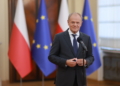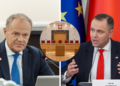
NATO Secretary-General Mark Rutte is expected to visit Warsaw on Saturday, 21 November, following Russian airspace violations that prompted Poland to seek stronger allied air-defence protection. Prime Minister Donald Tusk announced the planned visit after speaking with Rutte on Friday, as NATO confirmed that allied aircraft had been scrambled in response to the incident.
The visit was announced hours after Polish authorities reported that three Russian-origin aerial objects had entered the country’s airspace during a large-scale Russian attack on Ukraine.
Tusk said he had discussed the incident with Rutte and other European leaders, with consultations focusing on how Poland and its allies should respond.
- Find more news from Poland on our Homepage .
Speaking at a press conference on Friday, the Polish prime minister said the NATO chief would be in Warsaw the following day and would have an opportunity to answer journalists’ questions about the alliance’s intentions.
The announcement was reported by Polish Radio and confirmed by other news organisations covering Tusk’s remarks.
NATO chief condemns airspace violations
Rutte confirmed that he had spoken with Tusk about what he described as serious violations of Polish airspace.
In a statement published on his official X account, the NATO secretary-general said allied fighter aircraft had been scrambled in response.
He described the incident as dangerous and linked it to Russia’s continuing war against Ukraine.
Rutte pledged continued solidarity with Poland and said NATO would strengthen its ability to deter threats and defend allied territory.
His statement also reaffirmed NATO’s commitment to supporting Ukraine.
The response came as Polish authorities investigated the circumstances in which Russian-origin objects crossed into Poland and came down in three locations in the country’s southeast.
Poland seeks additional NATO air-defence support
Rutte’s planned visit coincides with calls from the Polish government for greater military support from its NATO allies.
Defence Minister Władysław Kosiniak-Kamysz said on Friday that he intended to request additional forces and equipment to strengthen NATO’s Eastern Sentry operation.
Eastern Sentry was established in September 2025 to reinforce allied security along NATO’s eastern flank following Russian drone incursions into Polish airspace.
According to the Polish Ministry of Defence’s official statement, Kosiniak-Kamysz said Poland needed stronger allied support to counter recurring aerial threats.
In particular, he identified a need for additional air-defence, aviation and reconnaissance capabilities.
Specialist defence publication Defence24 reported that the minister had specifically raised the need for AWACS airborne early-warning aircraft and allied F-35 fighter jets.
Such assets could strengthen Poland’s ability to detect aerial threats and respond to potential incursions.
However, the minister’s statements represent requests for additional support rather than confirmation that NATO has approved new deployments.
Three Russian objects entered Polish airspace
The diplomatic developments followed a major Russian aerial assault on Ukraine overnight on 19–20 November.


Polish officials reported three violations of national airspace, involving objects believed to be two missiles and a drone.
The objects came down near Nowy Lipowiec in Lublin Voivodeship and Rudnik nad Sanem and Mołodycz in Subcarpathian Voivodeship.
One was identified as a Russian Kh-101 cruise missile. The precise classification of the remaining objects was still being investigated.
According to the Polish Prime Minister’s Office, the incidents occurred during Russian attacks against targets in Ukraine.
Polish F-16 fighters and Swedish Gripen aircraft participated in the allied aerial response. Ground-based air-defence systems, including Patriot batteries, were also activated.
The defence ministry reported no casualties in Poland and no damage to critical infrastructure.
Tusk suspects deliberate Russian provocation
Tusk said he believed the timing and location of the incidents suggested a deliberate Russian provocation.
The objects came down in south-eastern Poland as forces from 11 countries participated in multinational military exercises near Nowa Dęba.
The exercises, known as Coalition 26.2, were organised to test preparations for a potential multinational force supporting Ukraine after a ceasefire or peace agreement.
The Ministry of Defence confirmed that the exercises continued despite the airspace violations.
Kosiniak-Kamysz said the incidents reinforced the need for greater allied preparedness and closer military co-operation.
However, the suggestion that Russia deliberately timed the violations to coincide with the exercises remains an assessment by Polish officials, rather than a conclusively established finding.
Warsaw awaits NATO discussions
Rutte’s expected arrival represents the next diplomatic development following Friday’s international response.
NATO, Britain, Lithuania and other European partners have already expressed solidarity with Poland, as detailed in Poland-24’s earlier report on the international reaction.
The focus now turns to whether discussions with the NATO secretary-general will produce additional measures to strengthen Poland’s air defences.
Tusk has indicated that he expects concrete decisions concerning the protection of Polish airspace and the alliance’s eastern flank in the coming days and weeks.
As of Friday evening, NATO had not publicly confirmed a new deployment specifically resulting from the latest incidents.
Rutte’s Warsaw visit remains scheduled for Saturday, with further details of the programme and any resulting agreements still to be announced.