On 19 November 1854, Jan Sztolcman was born in Warsaw, beginning a life that would take him from the forests of South America to one of Europe’s earliest international wildlife conservation campaigns.
A zoologist, ornithologist and explorer, Sztolcman spent years studying wildlife in Peru and Ecuador, contributing valuable specimens and research to scientific collections across Europe.
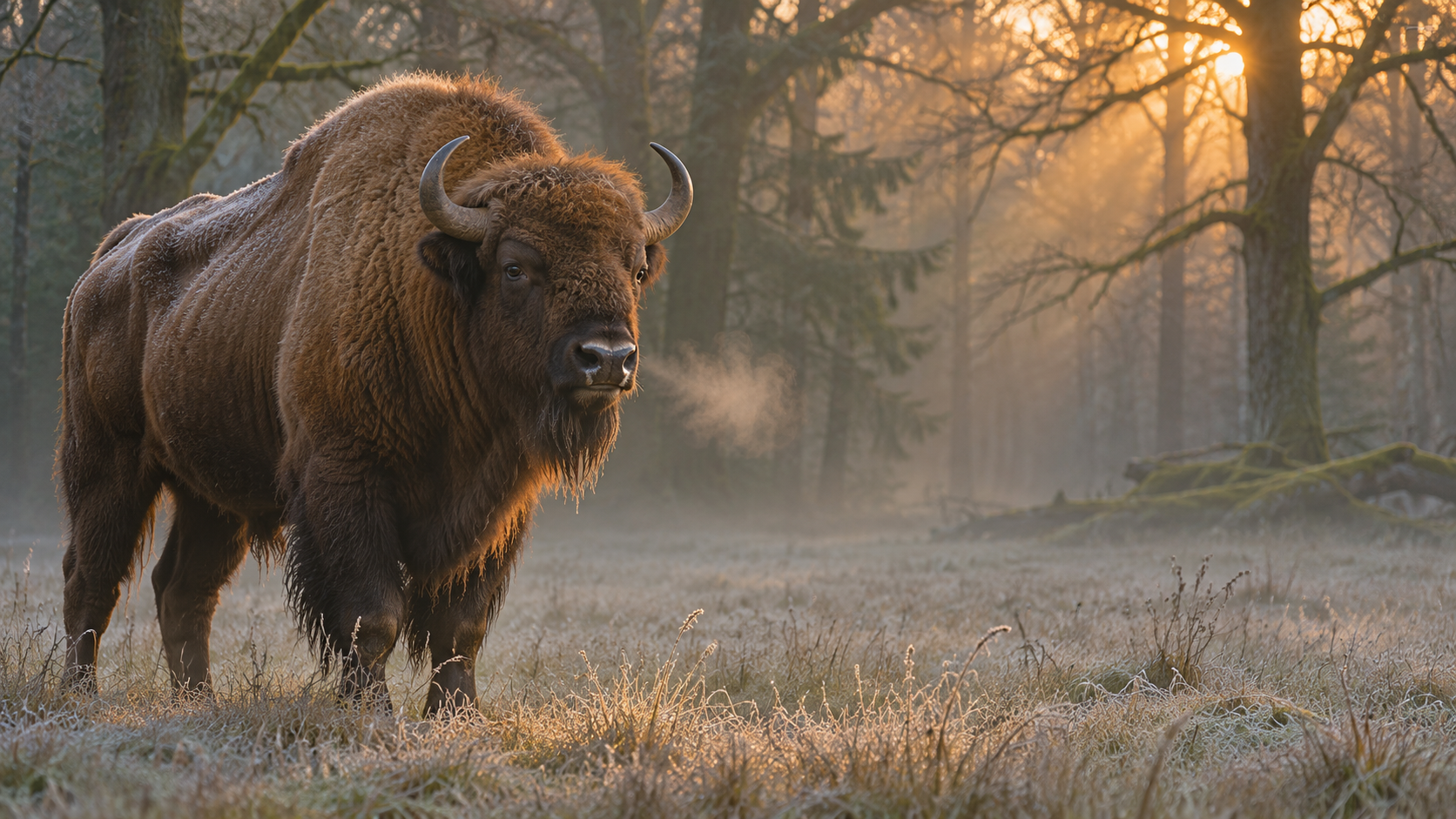
But one of his most enduring achievements came much later, when he helped launch an international effort to prevent the extinction of the European bison — the żubr, an animal closely associated with Poland’s Białowieża Forest.
- Find more news from Poland on our Homepage .
His proposal in 1923 helped bring scientists, zoological institutions and conservationists together at a time when the species’ future was in serious doubt.
The 172nd anniversary of his birth recalls a Polish scientist whose career connected nineteenth-century exploration with the beginnings of modern international wildlife conservation.
From Warsaw to the forests of South America
Sztolcman was born when Warsaw was under Russian rule, during the period in which Poland had been divided between neighbouring powers.
He developed an early interest in natural history and began studying zoology at the University of Warsaw in 1872.
That same year, he became associated with the Warsaw Zoological Cabinet, an important scientific institution whose collections included specimens obtained from distant parts of the world.
There, he worked under the influential ornithologist Władysław Taczanowski, helping prepare bird specimens and organise collections of insects.
In 1875, at the age of 20, Sztolcman interrupted his studies and travelled to Peru.
He spent several years exploring the country’s varied landscapes, from the Andes to tropical regions, collecting animals and documenting their characteristics and habitats.
His work contributed to the identification and scientific description of bird species previously unknown to European zoologists.
He also made observations of hummingbirds living in the Andean valleys, including species that attracted considerable scientific interest.
The collections he assembled were sent to Warsaw and other European research institutions, helping establish the Zoological Cabinet as an important centre for the study of South American birds.
Sztolcman returned to Warsaw in 1881, but his travels were not finished.
In 1882, he departed for Ecuador, where he continued his research into local animals and plants until 1884.
His South American expeditions contributed to a growing body of European scientific knowledge about the region’s extraordinary biodiversity.
A scientist who returned to Poland
After returning to Warsaw, Sztolcman became closely involved in the development of Polish zoological institutions.
In 1887, he took charge of the Branicki Zoological Museum, an important private collection supported by the Branicki family.
Following Poland’s restoration of independence in 1918, he became deputy director of the national natural-history institution established through the merger of the Warsaw Zoological Cabinet and the Branicki Museum.
His career extended beyond museum work.
In 1899, he established Łowiec Polski, a periodical devoted to hunting and wildlife, which he edited for the rest of his life.
His interests reflected the scientific culture of his era, when hunting, collecting animal specimens and studying wildlife were often closely connected.
But Sztolcman also became increasingly involved in organised nature conservation.
That work would eventually bring him to the problem of an animal facing disappearance from the European landscape.
The crisis facing the European bison
The European bison, or Bison bonasus, is the continent’s largest living land mammal.
For centuries, Białowieża Forest, spanning what is now eastern Poland and western Belarus, had been one of its most important strongholds.
By the early twentieth century, however, the species had suffered severe losses through hunting, habitat pressures and the disruption caused by the First World War.
The last surviving wild bison in the Białowieża Forest was killed in 1919.
A small number of animals remained in zoos and private collections elsewhere, but the population was dangerously limited.
By the early 1920s, conservationists recognised that the species could disappear altogether without coordinated intervention.
Sztolcman believed that individual zoological institutions could not solve the problem alone.
Protecting the remaining animals required cooperation across national borders, careful breeding and the exchange of scientific knowledge.
He drew inspiration from conservation efforts in North America, where the American Bison Society had worked to protect the American bison.
The proposal that helped launch a rescue
Between 31 May and 2 June 1923, an international congress devoted to nature conservation took place in Paris.
Sztolcman attended as a representative of Poland’s State Nature Conservation Commission.
On 2 June, he presented a proposal for an international organisation dedicated to saving the European bison.
His argument was straightforward: the remaining animals were so few that their survival required action by institutions and governments working together.
The congress endorsed the proposal.
Later that year, on 25–26 August, the International Society for the Protection of the European Bison held its inaugural meeting in Berlin.
The organisation brought together conservationists and zoological institutions from several countries to coordinate the species’ recovery.
Its first president was Kurt Priemel, director of Frankfurt Zoo.
Sztolcman continued supporting the initiative through research, publications and international meetings.
In 1926, he published a book devoted to the European bison’s history, behaviour and future, bringing together his knowledge of the species and the challenges it faced.
A conservation success he did not live to see
Sztolcman died in 1928, before the European bison returned to Białowieża Forest.
In September 1929, the first animals were brought into a specially prepared breeding reserve there.
Over subsequent decades, conservationists developed breeding programmes, coordinated animal transfers and worked to rebuild the population.
The restoration required contributions from many scientists, zoo directors, breeders and conservation organisations. It was not the achievement of one individual.
The programme eventually made it possible for European bison to return to free-ranging populations, including in Białowieża.
Today, the species survives in protected areas and managed populations across several European countries, although conservation challenges remain.
Sztolcman’s role lies particularly in the early international response: recognising the danger, proposing collective action and helping establish the structures through which conservationists could cooperate.
His scientific legacy also survives through his South American research, publications and museum collections.
Born in Warsaw 172 years ago, Jan Sztolcman is remembered both as an explorer who helped expand zoological knowledge and as a Polish advocate of a conservation programme that helped prevent the disappearance of one of Europe’s most remarkable animals.