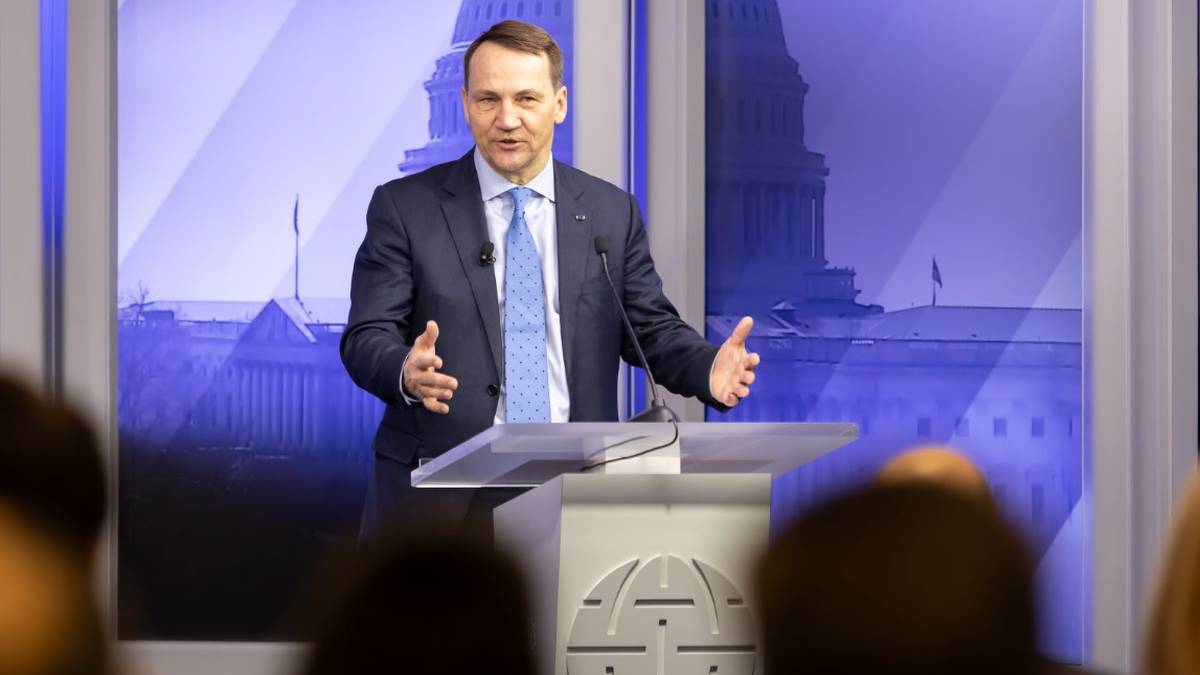
Polish Foreign Minister Radosław Sikorski has said Ukraine currently holds the advantage on the battlefield against Russia, while insisting that any attempt to end the war must begin with a ceasefire and respect Kyiv’s right to determine its own future.
Speaking in Warsaw on Friday, 6 November, Sikorski said no peace settlement could be imposed on Ukraine without its consent, and European countries must be involved in discussions affecting the continent’s security.
His comments followed a meeting of foreign ministers from the Council of the Baltic Sea States, attended by Ukrainian Foreign Minister Andrii Sybiha and the European Union’s foreign policy chief, Kaja Kallas.
- Find more news from Poland on our Homepage .
The remarks came as preparations continued for US-mediated negotiations involving Ukraine and Russia in Abu Dhabi on 10–11 November.
Sikorski says Ukraine has the advantage
Sikorski told journalists that Kyiv currently had the upper hand in the fighting, according to Polsat News’ report of his remarks.
The Polish foreign minister’s assessment was part of a broader argument that Ukraine should not be forced to negotiate while Russian attacks against its civilian population continue.
He insisted that decisions about Ukraine’s future required the participation and agreement of its government.
Sikorski’s description of the battlefield balance was a political and military assessment rather than a detailed operational analysis. He did not present figures or independent evidence establishing an overall Ukrainian advantage across the entire front.
The war remains contested, and developments in individual sectors do not necessarily establish that either side holds a decisive advantage overall.
Nevertheless, his remarks signalled confidence in Ukraine’s ability to resist Russian military pressure and reinforced Poland’s argument against a settlement dictated to Kyiv.
Poland demands ceasefire before peace negotiations
The Polish government has welcomed renewed diplomatic initiatives aimed at ending the conflict but wants a particular sequence of events.
According to the Foreign Ministry’s official account of the Warsaw meeting, Sikorski argued that a ceasefire should come first, followed by negotiations on a lasting settlement.
Only afterwards, he said, should governments consider rebuilding European security arrangements and restoring arms-control mechanisms.
The distinction is important because negotiations about territorial control, security guarantees and future relations with Russia could reshape European security for decades.
Sikorski argued that countries on NATO’s eastern flank, including Poland and the Baltic states, would be particularly affected by any agreement.
Warsaw therefore wants the countries most directly exposed to Russian security threats to have a meaningful role in determining the terms of a settlement.
The foreign minister also reiterated that Europe could not be excluded from negotiations about its own security.
France confirms European participation in Abu Dhabi talks
A new development on Sunday, 8 November, appeared to strengthen Europe’s prospects of participating in the diplomatic process.
French Foreign Minister Jean-Noël Barrot announced that European representatives, including France, would attend the forthcoming Ukraine negotiations in Abu Dhabi.
Barrot told French broadcaster RTL that France would be represented at the discussions, although he did not identify the person who would attend.
His comments, reported by Reuters on Sunday, followed earlier announcements that Washington would convene Ukrainian and Russian delegations in the United Arab Emirates on 10–11 November.
The talks are expected to address possible steps towards ending Russia’s invasion, de-escalation and post-war security arrangements.
The announcement establishes France’s intention to participate, but it does not yet confirm the full list of European representatives or whether Poland will have a direct seat at the negotiating table.
That distinction matters because Warsaw has repeatedly argued that Eastern European countries should be represented in any negotiations with consequences for their future security.
Poland announces another PLN 8 million for Ukraine
Alongside the diplomatic discussions, Sikorski announced additional Polish support for Ukraine’s electricity infrastructure ahead of winter.
Poland will allocate PLN 8 million, approximately €1.8 million, to the Energy Community for the purchase of electricity generators for Ukraine.
The announcement followed discussions about continued Russian attacks on Ukrainian civilian and energy infrastructure.
The Polish Foreign Ministry confirmed the commitment, presenting it as part of wider efforts to strengthen Ukraine’s resilience during the winter months.
The funding is a newly announced allocation, rather than confirmation that generators have already been purchased or delivered.
Poland also reaffirmed its commitment to military and financial support for Kyiv.
Sikorski referred to planned military exercises involving the Coalition of the Willing in Poland during November as another demonstration of Warsaw’s role in supporting European security.
EU and Ukraine reject settlement imposed by Russia
At the Warsaw meeting, Kaja Kallas argued that any agreement ending the war must prevent Russia from rebuilding its forces and launching another attack.
Ukraine’s foreign minister, Andrii Sybiha, similarly rejected the idea that European security should be determined through arrangements granting Russia a sphere of influence over neighbouring countries.
As Polish Radio reported from the joint press conference, Sybiha emphasised that Ukraine’s sovereignty, territorial integrity and independent foreign policy choices must be respected.
Poland and its regional partners also called for continued sanctions against Russia, action against vessels used to circumvent restrictions on Russian oil exports, and further consideration of using frozen Russian assets to support Ukraine.
Those proposals remain policy positions and potential measures, not evidence that new sanctions or asset-transfer arrangements were adopted at the meeting.
What happens next?
The next major diplomatic test is scheduled for Tuesday and Wednesday, 10–11 November, when Ukrainian, Russian and American representatives are expected to meet in Abu Dhabi.
France has confirmed its intention to participate, while the precise arrangements for wider European involvement remain unclear.
The negotiations may provide an opportunity to discuss de-escalation and security guarantees, but the participating governments remain divided on key issues.
For Poland, the central concern is not simply whether an agreement can be reached, but whether it protects Ukraine’s sovereignty and provides credible security for the countries most exposed to future Russian aggression.
Sikorski’s comments make clear that Warsaw believes Ukraine should negotiate from a position of strength, without accepting terms imposed through continued military attacks.
Whether the forthcoming talks can produce a ceasefire or meaningful progress towards peace remains uncertain.