Archaeologists at Westerplatte, the site of one of Poland’s most famous acts of resistance during the opening days of the Second World War, have discovered human remains that may belong to a Polish soldier whose burial place has been unknown for 87 years.
The discovery, made on 5 November 2026 near Gdańsk, could bring researchers closer to identifying Mieczysław Krzak, a rifleman who died during the German assault on Westerplatte in September 1939.
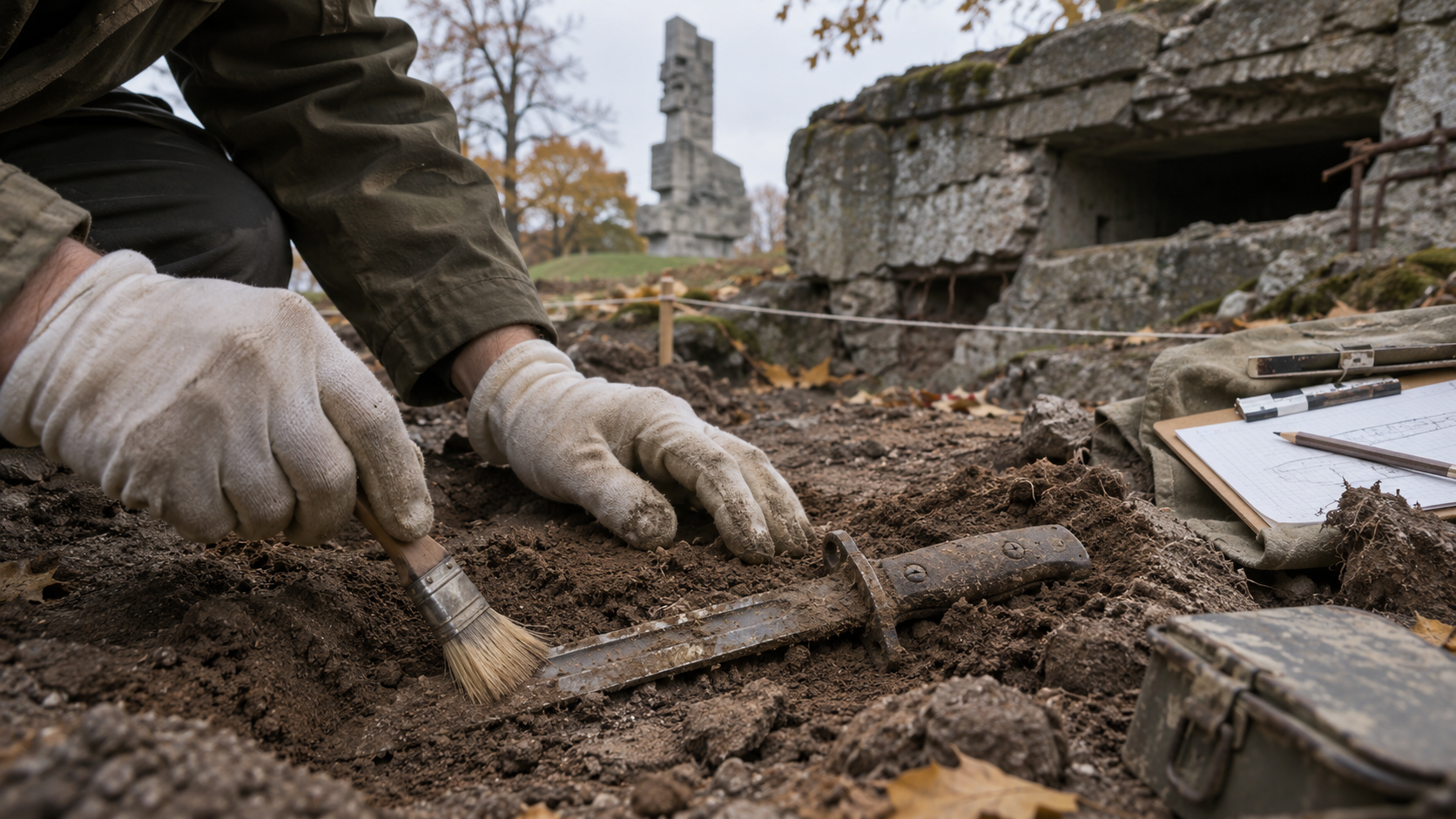
The remains were uncovered by archaeologists from the Museum of the Second World War in Gdańsk while monitoring earthworks connected with construction of the new Westerplatte Museum.
- Find more news from Poland on our Homepage .
Although the location and military equipment found alongside the bones point towards Krzak, researchers emphasise that his identity has not yet been confirmed.
Polish military equipment discovered beside remains
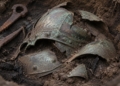
According to the Museum of the Second World War’s official announcement, the skeleton was found approximately 2.5 metres below the present ground level, near a former Polish defensive position known as Fort.
The remains lay about half a metre from the northern wall of a reinforced-concrete shelter built in 1911, which became part of Westerplatte’s defensive system during the German invasion.
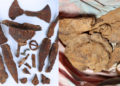
Archaeologists uncovered a Polish model 1929 bayonet, its scabbard, remnants of a leather belt attachment and two Polish military buttons of a type worn by ordinary soldiers during the 1920s.
These discoveries are significant because Krzak is believed to have died in the vicinity of the Fort position during the fighting.
Filip Kuczma, head of the museum’s archaeological department, said the combination of location and recovered objects suggests that the team may finally have located the soldier’s burial place after years of searching.
However, he stressed that the identification remains a hypothesis and can only be established through genetic testing.
Museum director Professor Rafał Wnuk also urged caution, saying it would be premature to determine whose remains had been discovered.
Who was Mieczysław Krzak?
Mieczysław Krzak was born on 29 January 1915 in Boiska, a village in what is now Poland’s Mazowieckie region.
According to the museum’s historical biography of the soldier, he served in the 4th Legions Infantry Regiment in Kielce and arrived at Westerplatte on 5 April 1939.
He was assigned to operate mortars, part of the small Polish garrison’s preparations to defend the military transit depot against a possible German attack.
When German forces invaded Poland on 1 September 1939, the soldiers stationed at Westerplatte found themselves confronting a far larger attacking force.
Following the destruction of Polish mortar positions and Guardhouse No. 5 during the German assault, Krzak was reassigned to defensive positions near the railway tracks and warehouses.
Researchers believe he was killed in the area around the Fort position, probably on or shortly after 2 September.
Historical accounts differ about the precise date and circumstances of his death, and his burial location remained unknown after the battle.
If the newly discovered remains prove to be his, they could help resolve a mystery that has persisted since 1939.
Why Westerplatte remains so important to Poland
Westerplatte occupies a central place in Polish national memory.
On 1 September 1939, the German battleship Schleswig-Holstein opened fire on the Polish military transit depot, marking one of the opening attacks of Nazi Germany’s invasion of Poland.
Approximately 200 Polish defenders held out against repeated German attacks for seven days, despite being heavily outnumbered and subjected to artillery fire, infantry assaults and aerial bombardment.
The garrison eventually surrendered on 7 September.
As the Institute of National Remembrance explains in its historical account, the defence became an enduring symbol of Polish resistance during the Second World War.
For decades, however, the burial places of some soldiers who died during the fighting remained unknown.
DNA testing could finally establish soldier’s identity
Archaeological work at Westerplatte has already helped identify several Polish soldiers who died in 1939.
The Institute of National Remembrance (IPN) confirmed that nine sets of soldiers’ remains were exhumed during investigations in 2019, with seven individuals subsequently identified through genetic comparisons.
The institute is now overseeing work at the newly discovered burial site through its Gdańsk prosecutorial division, with archaeological and anthropological specialists involved.
Analyses planned at the Pomeranian Medical University in Szczecin are expected to help establish the identity of the individual and potentially clarify the circumstances of death.
IPN has also appealed for information about Krzak’s surviving relatives, which could assist the identification process.
According to the museum, historical evidence suggests that the remains of two other defenders may still be buried somewhere on the Westerplatte peninsula.
The discovery therefore represents another possible step towards accounting for soldiers whose final resting places have remained unknown for generations.
For now, archaeologists are awaiting scientific confirmation.
If DNA analysis establishes that the remains belong to Mieczysław Krzak, it would finally allow one of Westerplatte’s fallen defenders to be identified and given a known resting place, 87 years after the battle.