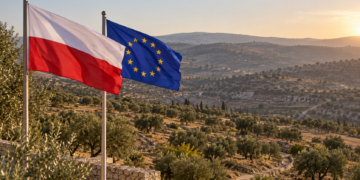
Polish Foreign Minister Radosław Sikorski has publicly challenged US Defence Secretary Pete Hegseth over remarks questioning the combat contribution of America’s NATO allies in Afghanistan, invoking the Polish military personnel who lost their lives during nearly two decades of deployment.
The dispute emerged after Hegseth told military cadets and recruits at the University of Tennessee on Saturday, 17 October, that although dozens of countries had contributed to the NATO-led International Security Assistance Force (ISAF), only a small number had participated in combat operations.
Sikorski, who also serves as Poland’s deputy prime minister, responded on Sunday by drawing attention to the sacrifices made by Polish troops responsible for security in Ghazni, one of Afghanistan’s most difficult provinces.
- Find more news from Poland on our Homepage .
In a statement reported by Polish news outlet Onet, Sikorski challenged the American defence chief to repeat his assessment to the families of 44 Polish service personnel who died during the mission.
The response renewed a disagreement over the historical contribution of European NATO allies to the US-led campaign in Afghanistan.
What Pete Hegseth said about NATO’s Afghanistan mission
Hegseth made his remarks on 17 October while addressing Reserve Officers’ Training Corps (ROTC) cadets and new military recruits in Knoxville, Tennessee.
During the speech, the former US Army officer recalled his own deployment to Afghanistan, where he served as a captain.
He described visiting NATO’s headquarters in Kabul and seeing flags representing approximately 50 countries participating in the international mission.
Hegseth acknowledged the symbolism of the multinational deployment but questioned the extent to which participating countries had contributed to combat operations.
According to reporting by Ariana News, he suggested that perhaps five countries made meaningful combat contributions and that towards the end of the mission only one or two were involved in what he described as kinetic operations.
The expression kinetic operations is military terminology referring broadly to operations involving the use of force, rather than activities such as training, logistics or intelligence support.
He also referred to a joke among American service personnel interpreting the abbreviation ISAF as I Saw Americans Fighting, reflecting frustration over what some US troops perceived as an unequal combat burden.
The US Department of War’s official account of the Knoxville visit confirms the speech and its wider focus on military service, although its written summary does not reproduce the disputed Afghanistan remarks.
Hegseth did not single out Poland in the reported remarks or state explicitly that Polish troops had avoided combat.
Nevertheless, his broad description of the coalition’s combat involvement prompted a response from Warsaw.
Sikorski invokes Poland’s fallen soldiers
Sikorski responded through a public post on X on Sunday, addressing the American defence secretary directly.
Tell that, Mr Defence Secretary, to the families of the 44 Polish soldiers who died securing the difficult province of Ghazni.
The English rendering above reflects the meaning of Sikorski’s Polish-language statement as reported by Wprost.
His reference to Ghazni was significant because Polish forces were not simply providing administrative or logistical support during the NATO mission.
They were responsible for maintaining security in an area where insurgent attacks, roadside bombs and military operations posed a continuing threat.
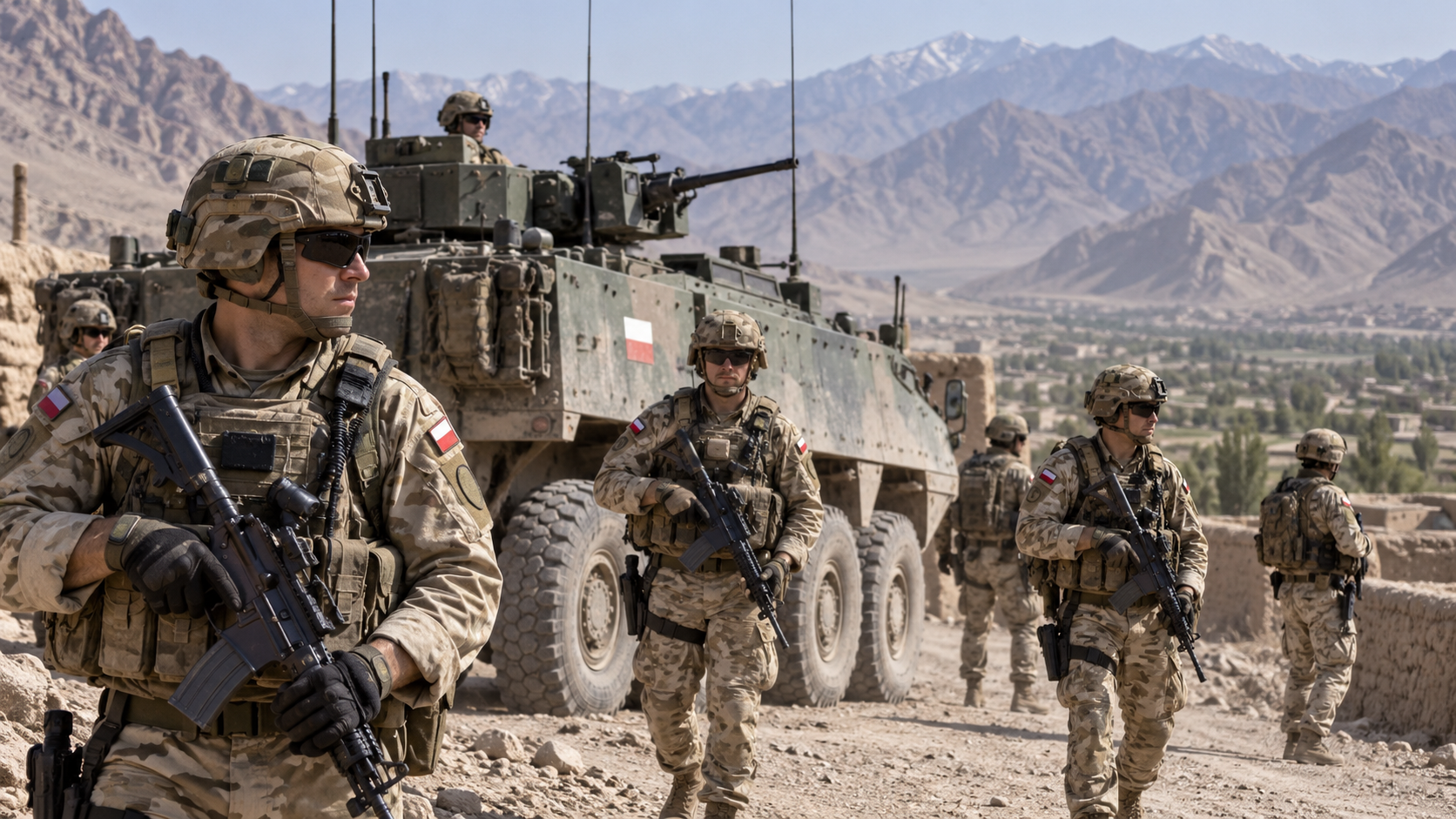
Polish forces operated alongside American and Afghan units, conducting patrols, supporting security operations and protecting infrastructure.
Sikorski’s response was therefore a challenge to the implication that most participating NATO countries made little meaningful contribution to frontline operations.
What the official records show about Poland’s mission
Poland’s involvement in Afghanistan began in 2002 and continued through different international missions until 2021.
According to the Polish Ministry of National Defence’s official account, more than 33,000 Polish soldiers and defence ministry employees participated during that period.
Their responsibilities included combat operations, security patrols, training Afghan forces, counter-terrorism activities and reconstruction assistance.
Polish troops operated at 26 bases, camps and other military locations during the deployment.
At one stage, Poland assumed responsibility for security throughout Ghazni province.
This role is independently documented in NATO’s own historical records.
During a visit to Afghanistan in March 2009, NATO ambassadors travelled to Ghazni, where Polish forces were leading security operations.
The delegation received briefings from the Polish commander and US personnel supporting local reconstruction efforts.
Poland’s responsibility for the province was therefore a formally recognised component of the NATO operation, not simply a retrospective national claim.
The human cost of Poland’s involvement
Poland’s Afghanistan deployment came at a substantial human cost.
The Polish Armed Forces’ official veterans register records 43 soldiers and one civilian military employee who died during the mission.
This explains a distinction in Sikorski’s comments: although he referred to 44 Polish soldiers, the official total of 44 includes one civilian employee.
The figure also covers the Afghanistan mission as a whole, rather than establishing that every death occurred in Ghazni.
One of the deadliest incidents occurred on 21 December 2011, when five Polish soldiers were killed by an improvised explosive device near Rawza in Ghazni province.
The attack was claimed by the Taliban.
According to a Polish Military Counterintelligence Service account, Polish intelligence officers subsequently investigated the attack and identified people suspected of involvement.
The loss of Polish personnel during such operations provides direct evidence of the risks taken by troops deployed to Afghanistan.
It does not, however, establish precisely how many countries were conducting combat operations during each phase of the wider NATO mission — a distinction relevant to assessing Hegseth’s specific remarks.
NATO’s mission changed over time
NATO’s operation in Afghanistan evolved considerably between 2001 and 2021.
The International Security Assistance Force was established in December 2001 under a United Nations mandate, with NATO assuming command in August 2003.
Its initial focus was security in Kabul, but operations expanded into other provinces as the coalition confronted a growing Taliban insurgency.
According to NATO’s official history of ISAF, the force grew to more than 130,000 personnel from 51 NATO and partner countries at its peak.
As Afghan security forces gradually assumed more responsibility, NATO’s mission shifted towards training, advice and assistance.
ISAF formally ended in December 2014.
It was replaced in January 2015 by Resolute Support, a smaller NATO-led mission focused primarily on training and advising Afghan security forces.
Resolute Support was not designated a combat mission, although coalition personnel still faced security threats.
This change matters when interpreting Hegseth’s reference to the final stages of the operation.
His comments could refer to a particular period in which coalition combat responsibilities had become more limited. However, they do not erase the documented combat roles undertaken by Polish and other allied troops earlier in the war.
Earlier dispute over Trump’s comments on NATO allies
The latest disagreement follows another controversy involving the contribution of NATO partners to the Afghanistan campaign.
Earlier in 2026, US President Donald Trump questioned the military assistance provided by America’s allies during the conflict.
In an interview with Fox News, Trump suggested that allied troops had generally remained away from the front lines.
Those comments prompted criticism in Poland, where politicians and military veterans pointed to the country’s operational record and the personnel who had died.
As TVP World reported at the time, Sikorski rejected the suggestion that Polish forces had avoided dangerous assignments.
US Ambassador to Poland Tom Rose subsequently emphasised Washington’s respect for Poland’s military service and its support for American-led operations.
The latest remarks from Hegseth have reopened the issue, although there is no indication from the reporting reviewed that the exchange has resulted in a formal diplomatic dispute.
A question of alliance solidarity
Poland regards its Afghanistan deployment as an important demonstration of commitment to NATO collective security.
The operation followed the September 11, 2001 terrorist attacks against the United States, after which NATO invoked Article 5 of its founding treaty for the first time.
Poland had joined the alliance in 1999 and was still a relatively new member when it began contributing forces to Afghanistan.
Its deployment formed part of a wider effort to demonstrate that NATO’s members were prepared to assist one another in major international security operations.
For Poland, the experience also influenced military training, equipment development and cooperation with other allied armed forces.
Hegseth’s remarks have now placed the historical record of that cooperation back in the spotlight.
Although NATO countries contributed different numbers of personnel and undertook different tasks, Polish military records establish that Poland performed demanding operational duties and suffered fatalities.
Sikorski’s intervention reflects the sensitivity surrounding how those sacrifices are remembered.
No public clarification or direct response from Hegseth to Sikorski’s Sunday post had been established in the sources reviewed for this article.