


Polish military investigators have launched an investigation after fragments of an unidentified flying object resembling a drone were discovered on a beach in northern Poland, prompting police to secure the area and notify military prosecutors. The object’s origin remains unknown, although preliminary media reports suggest it may belong to the Polish armed forces.
The discovery was made on Tuesday, 13 October, in Karwia, a coastal resort in Poland’s Pomeranian region, on the southern shore of the Baltic Sea.
According to police, a member of the public found the suspicious object on the beach and contacted the emergency services.
- Find more news from Poland on our Homepage .
Officers from the Puck district police headquarters received the report at approximately 6.20pm local time and dispatched personnel to the scene.
The Military Gendarmerie subsequently confirmed that it was investigating the discovery under the supervision of a prosecutor from the military division of the District Prosecutor’s Office in Gdańsk.
The incident comes less than a month after a Russian-made drone was recovered from another beach on Poland’s Baltic coast, although no connection between the discoveries has been established.
Police secure beach after discovery
The first alert came from a person who encountered an object partly buried in sand on the beach at Karwia.
Agnieszka Selewska, a spokesperson for the Puck district police, confirmed that the emergency notification centre had informed officers about an object resembling a drone.
Police were sent to the location, where they secured the surrounding area and notified the prosecutor’s office and other relevant authorities.
According to reporting by RMF FM, the object was approximately two metres long.
The broadcaster reported that bomb-disposal specialists, military personnel and officers from police counterterrorism units had been alerted. Poland’s Internal Security Agency and Military Counterintelligence Service were also notified, according to the report.
The presence of specialist security services does not establish that explosives were found or that the incident involved hostile activity.
Such precautions allow authorities to assess unidentified equipment without exposing personnel or members of the public to unnecessary risks.
Military prosecutors investigate unidentified wreckage
The Military Gendarmerie confirmed its involvement in a statement released later on Tuesday.
Its spokesperson, Lieutenant Colonel Dariusz Rozkosz, said personnel were investigating fragments of an unidentified flying object discovered on the beach.
The investigation is being conducted under the supervision of a prosecutor from the military division of the District Prosecutor’s Office in Gdańsk.
The Military Gendarmerie said additional information would be released as findings became available.
Authorities have not confirmed the object’s manufacturer, operator, original location or how it reached the beach.
Nor have they publicly established whether the wreckage contains hazardous components.
Could it belong to the Polish military?
One potentially important development concerns the object’s possible ownership.


RMF FM journalist Krzysztof Zasada reported that preliminary information suggested the aircraft could be equipment belonging to the Polish military.
However, the broadcaster explicitly cautioned that the assessment still required confirmation from the relevant services and armed forces.
The possibility would significantly change how the discovery is understood.
If the wreckage originated from Polish military activity, investigators would still need to establish how it was lost and whether appropriate procedures had been followed.
But it would not, by itself, indicate an intrusion by a foreign aircraft.
For now, military ownership remains an unverified media report rather than an official finding.
Russian-made drone recovered from another Baltic beach in September
The latest discovery follows a separate incident involving an unmanned aircraft recovered from the Baltic Sea near Rusinowo, on Poland’s northwestern coast, on 14 September.
In that case, Polish naval personnel observed a drone drifting in the water before it washed ashore.
The incident prompted an investigation involving military prosecutors and specialist units.
According to an official account published by the District Prosecutor’s Office in Poznań on 1 October, preliminary examinations identified the recovered aircraft as a Russian-made Gerbera drone.
Specialist personnel separated a warhead containing a potential explosive charge from the aircraft and carried out a controlled detonation.
Prosecutors said the drone was undergoing further examination to establish its possible flight origin, destination and route.
They had not determined exactly where it entered the sea or how it reached Polish waters.
That earlier case heightened attention to unidentified aircraft found along Poland’s coastline.
However, the Russian origin of the Rusinowo drone does not establish the origin of the object discovered at Karwia.
The two investigations must be treated separately unless authorities identify a connection.
What investigators must establish
The next stage of the Karwia investigation will be to determine precisely what was recovered.
That includes establishing whether the fragments belong to an unmanned aircraft, identifying the equipment and determining how it reached the beach.
Any conclusions about its origin or possible security implications will depend on those findings.
The Military Gendarmerie has not announced a timetable for completing its examination.
For now, the confirmed facts are that an unidentified object was discovered on a Polish Baltic beach, police secured the location, and military investigators are examining the circumstances.
Whether it is part of a Polish military aircraft or something else remains unresolved.
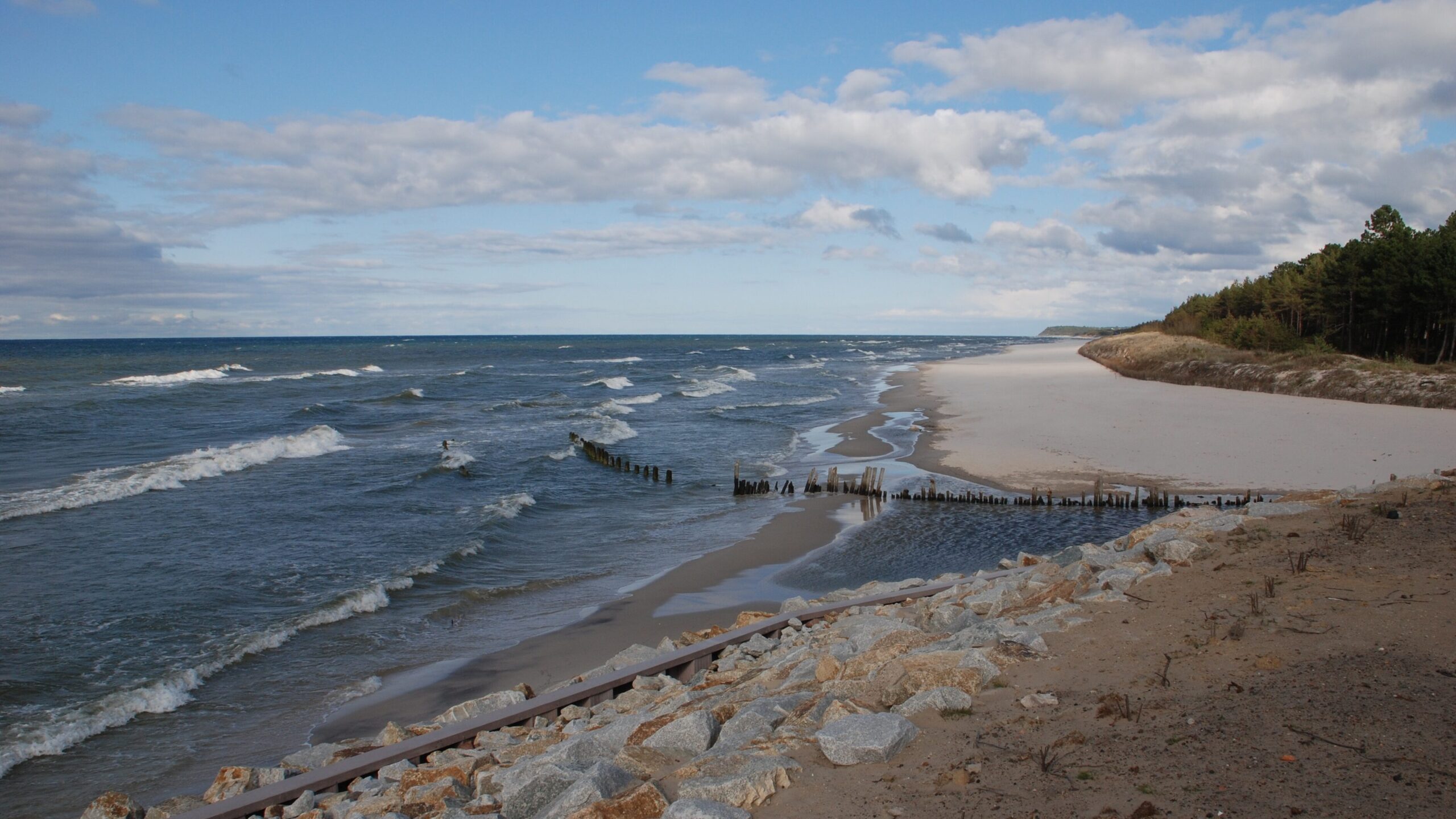
Featured image: Archive photograph of the Baltic coastline at Karwia, taken in May 2016 by Henryk Bielamowicz / Wikimedia Commons, under CC BY-SA 4.0. Cropped to 16:9 and shared under the same licence. The image does not depict the October 2026 investigation.










.jpg)
